
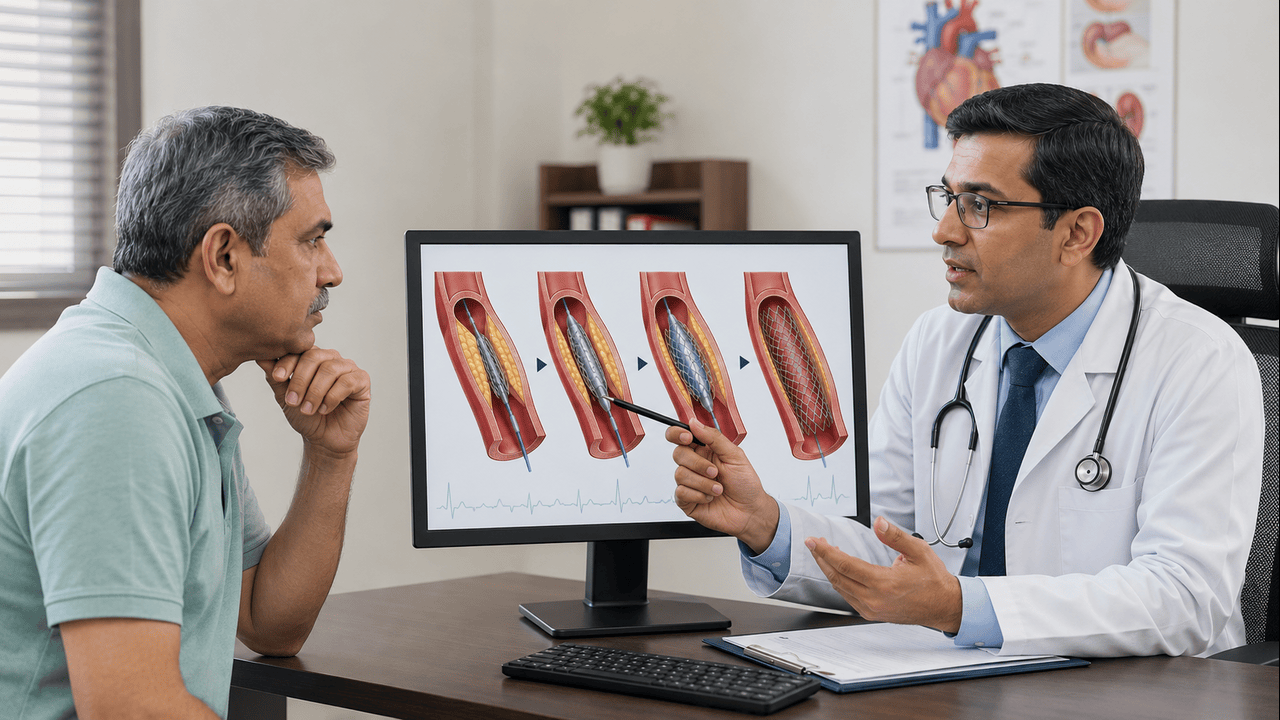
Rotational Atherectomy is an adjunct plaque-modification therapy during an angioplasty procedure. To better understand RA, let us first learn about Coronary Artery Disease (CAD) and Angioplasty. CAD is a heart condition in which, over time, fatty deposits, also known as plaque, collect in the artery and obstruct or block the blood supply to the heart, causing heart attack symptoms.
One of the most common cardiology procedures to treat CAD is Angioplasty. In this procedure, a thin wire, guided by the catheter, is directed toward the blocked spot in the artery. This thin wire supports a tiny balloon at its tip, which is then inflated to open the blocked site of the artery, making room for the removal of plaque. After the plaque is removed and before the balloon is withdrawn, a metal stent is often placed to keep the artery open and prevent restenosis (re-narrowing of the artery).
Unfortunately, sometimes the simple procedure is not that easy to perform. In some cases, when the plaque that is built up inside the arteries over time remains in the artery for too long, its calcification happens. Simply put, it turns into hardened calcified plaque, which the balloon can’t get through. This is precisely where the Rotational Atherectomy procedure comes into the picture, and is used as an adjunct to the Angioplasty procedure.
Rotational Atherectomy Treatment
Rotational Atherectomy, also known as Rotablation, is a technique specifically designed to modify calcified plaque. Rotational Atherectomy treatment, just like in Angioplasty, a special catheter is used to guide a thin wire to the narrowed or blocked site of the artery, with a tiny drill at its tip instead of the balloon. The drill uses a high-speed rotating burr that effectively scrapes, smooths, and removes the unyielding calcium deposits from the artery and makes space for the Angioplasty procedure.
Rotational Atherectomy Procedure
Procedure Steps:
- A guidewire, with the help of a catheter, is inserted into the affected coronary artery to guide the procedure.
- With the guidewire, the Rotablation device is directed toward the narrowed spot.
- The Rotablation burr rotates at high speeds and grinds away the Calcium deposits, enlarging the arterial lumen.
- After the calcified plaque is removed, the physician evaluates the vessel’s size and condition.
- After a successful Rotablation procedure, Balloon Angioplasty and stent placement can then be performed effectively.
Rotational Atherectomy is highly effective in modifying the hardened, heavily calcified plaque, enabling better stent deployment and improved long-term outcomes of Angioplasty.
How Arteries Become Calcified
As we age, calcium can gradually accumulate within our arteries, especially in people with underlying cardiovascular risk factors, including:
- High Cholesterol
- Diabetes
- High BP
- Smoking
- Chronic Kidney Disease
- Family History of Heart Disease
Calcified arteries are much harder than typical artery blockages. The reason why the conventional Angioplasty procedure fails to treat them effectively. Not only that, but calcified plaque also increases the complexity of emergencies.
When Is Rotational Atherectomy Recommended
This procedure is usually considered when the imaging test results show significant calcium deposits in the arteries. This procedure may be recommended for patients who:
- Have heavily calcified arteries
- Have hardened blockages that may not be properly treated with the standard Angioplasty procedure
- Need a better way than conventional Angioplasty to prepare the artery before placing a stent
Benefits Of Rotational Atherectomy
- Highly effective procedure on heavily calcified arteries
- Better preparation for stent placement
- Improved blood flow restoration to the heart
- Minimally invasive procedure
Rotational Atherectomy makes difficult, hardened blockages easily manageable. The procedure also showcases a great success rate and long-term outcomes.
Recovery After Rotablation
No two patients have the same speed or recovery time. Many patients return home within a day or two of the procedure, depending on their overall health condition. Doctors may recommend medications, a heart-healthy lifestyle, and diet changes to support heart health after the procedure. Treating the blockage and restoring the blood flow is only half of the journey. Long-term outcomes depend more on managing risk factors and following a heart-healthy lifestyle.
RA, It’s Not That Hard
With newer, minimally invasive treatment modalities, modern technological advancements in cardiology are simplifying the management of complex heart conditions. For patients with heavily calcified blocked arteries, rotational atherectomy offers an effective way to prepare the artery for successful treatment. Understanding rotational atherectomy procedures can help patients feel more confident when discussing their CAD treatment options with their cardiologist. Remember, trusting your cardiologist is good, but knowing and understanding your treatment procedure is much better.