
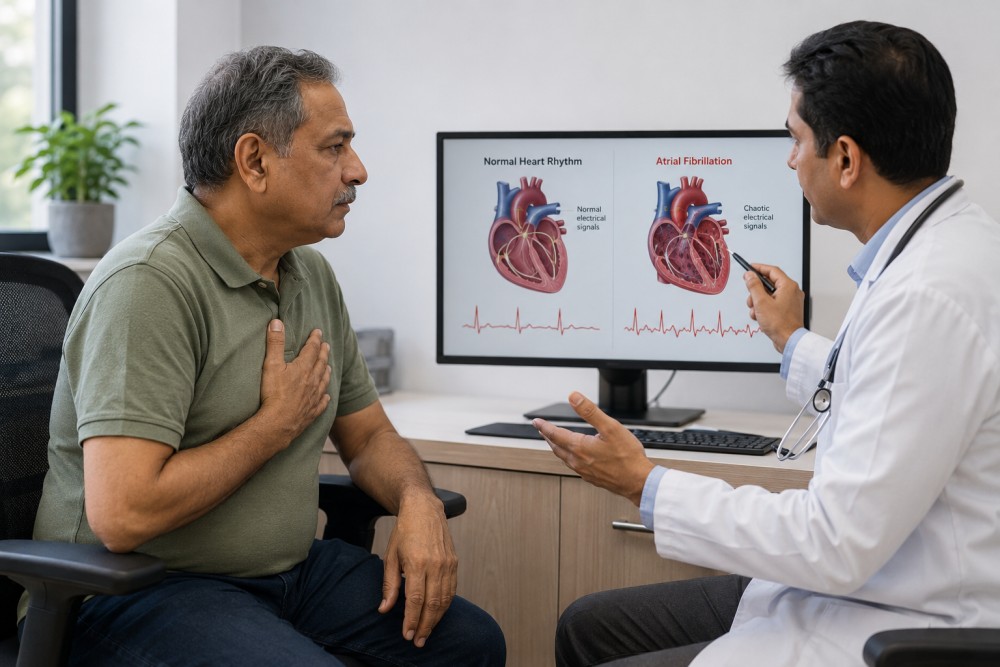
Atrial fibrillation is also referred to as AFib; it is one of the most common types of irregular heartbeat in millions of people around the globe. This arrhythmia can disrupt normal blood flow, heightening the risk of severe complications, including stroke and heart failure. Let’s find out what AFib is, what causes it, and its symptoms. There are options for atrial fibrillation treatment that can help manage it and support a healthier heart.
What is Atrial Fibrillation?
Atrial fibrillation is an arrhythmia where the upper chambers of the heart, called the atria, are beating in a very irregular and fast rhythm. Rather than pumping the normal, steady beat that the heart should create through its electrical signals. Someone with AFib discovers that those signals have become disorganized, so he or she experiences a really erratic heartbeat. Blood does not flow into the ventricles (the lower chambers of the heart) in this situation, with a risk of blood pooling and clotting. This abnormal heart rhythm can lead to serious health complications if treatment for atrial fibrillation is not provided.
The AFib attacks may be different from one another. Some patients experience them randomly, and others suffer from persistent abnormal heart rhythms. Though not fatal on its own, left untreated, AFib may cause higher complications, including a fivefold increased risk of stroke.
Causes and Risk Factors
Various triggers might be the reason for developing atrial fibrillation. Due to these triggers, a patient might be saved from such an occurrence in several cases or might even get rid of a treatment worse than this scenario. Those very common triggering causes for AFib are discussed in further text below:
Age: AFib usually occurs with a mature-age condition, with the risks increasing significantly above the age of 65.
Heart Diseases: Patients suffering from a previous condition involving high blood pressure and diseases of the heart valves. In some cases, a heart attack may lead to chances of suffering from AFib.
High Blood Pressure: This puts pressure on the heart and thus is very likely to suffer from AFib.
Lifestyle Causes: Alcohol consumption above and beyond norms, smoking, excessive amount of caffeine intake, as well as other recreational drugs are said to induce AFib.
Sleeping Disorders: The sleeping disorder referred to here is called obstructive sleep apnea that also predisposes a person to it.
Chronic Diseases: These consist of diabetes, obesity, and hyperthyroidism-overactive thyroid conditions that are said to have more chances of having AFib.
Genetic Predisposition: A family history can significantly increase the risk of the same disease.
Understanding these risk factors is important because it helps with early AFib diagnosis and supports preventive measures.
Symptoms of Atrial Fibrillation
The symptoms of atrial fibrillation are different and can be mild or severe. Recognizing them early is vital to obtaining proper atrial fibrillation treatment and to prevent complications. Some of the most common symptoms are:
Heart Palpitations: A racing or irregular heartbeat that may give the impression that the heart skips a beat or races.
Fatigue: AFib patients generally feel tired, especially after performing slight exertion due to the incapacity of the heart to pump blood.
Chest Pain: Someone with underlying problems may experience chest pain or anguish, but others can also get it.
Shortness of Breath: Even at rest, patient can experience breathlessness or a difficult time catching their breath because the flow of blood and oxygenated blood is reduced.
Dizziness or Fainting: Low blood pressure during AFib episodes results in light-headedness or dizziness and fainting at times.
Weakness: People who suffer from AFib can easily get weak or be less active in performing other routine tasks.
Not every patient suffering from AFib will show all of the symptoms. Some may show no symptoms, especially in their early stages.
Types of Atrial Fibrillation
There are numerous varieties of AFib depending on the frequency and the permanency of the episode. This is an important basis for choosing appropriate atrial fibrillation treatment.
Paroxysmal Atrial Fibrillation: The attack commences suddenly and resolves in a few hours or days. The attack can recur at any moment but also self-terminate.
Persistent Atrial Fibrillation: The rhythm does not revert spontaneously during a period of a week and has to be medically converted back to a normal sinus rhythm.
Chronic Recurrent AFib: Episodes that last for more than a year and require a more aggressive approach.
Permanent Atrial Fibrillation: This is when the AFib is constant, and heart rhythm cannot be restored; treatment is to control the symptoms.
Determining the type of AFib can help doctors create specific treatment plans for the nature and frequency of the arrhythmia.
Complications Linked to Atrial Fibrillation
If untreated, atrial fibrillation can be dangerous. The most significant risks are:
Stroke: The irregular heartbeats in AFib allow blood to collect in the upper chambers of the heart, which may lead to clotting. When such a clot travels to the brain, it results in a stroke.
Heart Failure: The inefficiency of heart function during AFib might weaken the heart muscle over time and result in heart failure.
Other Blood Clots: AFib can increase the likelihood that clots may form in other places in the body to cause a pulmonary embolism if they go on to the lungs.
Managing atrial fibrillation to control heart rate, rhythm, and prevent clots ensures these risks are kept substantially low.
Diagnosis and Tests
The diagnosis is confirmed through various tests. These include;
Electrocardiogram (ECG): The initial test aimed at detecting irregular heart rhythm.
Holter Monitoring: This is portable equipment recording the heart activity over a period of 24 to 48 hours in case irregularities occur.
Echocardiogram: This is an imaging test using sound waves to see the structure of the heart and the functioning of its components.
Stress Test: To evaluate how the heart works when one is undergoing physical exertion.
Blood Tests: Checking whether some conditions that might trigger AFib are present or not, such as thyroid disease.
Once a diagnosis of atrial fibrillation has been confirmed, there is an appropriate treatment by addressing the needs of every patient.
Preventing Atrial Fibrillation and Its Complications
Prevention of atrial fibrillation is possible if one can control the risk factors and can remain healthy by maintaining a healthy lifestyle for heart health. Some proactive measures include the following:
Regular Medical Check-ups: Routine check-ups help in detecting the early signs of AFib or any other heart conditions.
Controlling Blood Pressure: High blood pressure increases the risk of AFib. Therefore, controlling it is highly important.
Controlling Blood Sugar: Diabetes is also associated with AFib. So, controlling blood sugar is required.
Maintaining Healthy Weight: A healthy weight reduces the workload on the heart and minimizes the chances of developing AFib.
Proactive habits with respect to heart health and medical care can minimize the chances of developing AFib and its complications.
Living with Atrial Fibrillation
It is difficult to live with atrial fibrillation, but with the right treatment of atrial fibrillation and lifestyle, one can cope. Here are some tips on how to cope:
Education: Understanding AFib and treatment options for atrial fibrillation enables the patient to make an informed decision.
Support Networks: Contacting family, friends, or a support group may be encouraging and provide advice.
It allows for observing changes in the response to treatment, in case of complications, as well as recognizing developing complications.
It assists someone living with AFib to maintain a stress-free life, which mainly presents along with AFib, as it always is, and with anxiety; therapy is also a great help for relaxation, or even better yet, the patient could be counsel with his/ her personal choices that one must find healthy relief.
Understanding what atrial fibrillation is and what options for the treatment of atrial fibrillation exist empowers a person to take charge of their heart health. Through education, healthy lifestyle choices, and working closely with healthcare professionals, management of AFib and a healthy life with a heart are well within reach.
Source: Indibloghub