
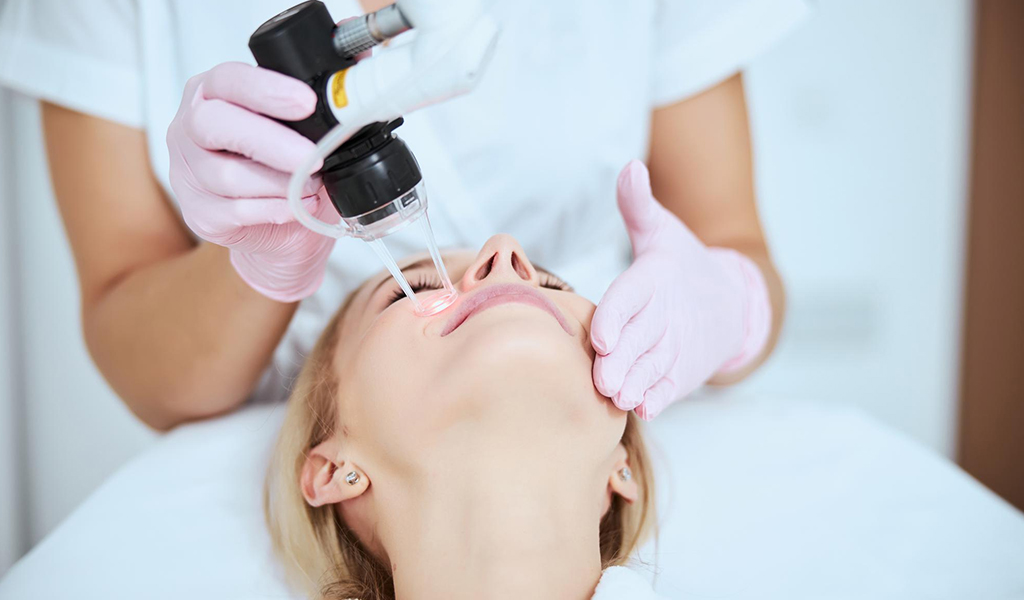
Knowing what to expect from a skin treatment makes the experience less stressful. If you are considering blue light therapy or CO2 laser resurfacing, understanding the process from start to finish can help you prepare and feel more confident walking into your appointment.
Before Your Blue Light Therapy Session
Blue light therapy requires minimal preparation. Your dermatologist may ask you to avoid certain skincare products for a few days before treatment, particularly anything that increases sun sensitivity. Arriving with clean skin, free of makeup and moisturizers, helps the light penetrate effectively.
If you are receiving blue light therapy for actinic keratoses rather than acne, the process includes an additional step. A photosensitizing solution is applied to the treatment area and left to absorb for about an hour before the light exposure. This solution makes abnormal cells more responsive to the treatment.
Anyone researching blue light therapy Altamonte Springs should ask about this distinction during their consultation. The preparation and experience differ slightly depending on what condition is being treated.
During Blue Light Therapy
The treatment itself is straightforward. You will sit or lie comfortably while a blue light device is positioned over the treatment area. The light exposure typically lasts 15 to 30 minutes, depending on the size of the area and the specific condition being addressed.
Most people describe the sensation as mild warmth or a slight tingling. For acne treatment, discomfort is minimal. For actinic keratosis treatment with a photosensitizing agent, you may feel more intense warmth or a stinging sensation, but it remains tolerable for most people.
Protective eyewear is provided to shield your eyes from the light. You can relax during the session, and there is no need for anesthesia or sedation.
After Blue Light Therapy
Recovery from blue light therapy in Altamonte Springs sessions is quick. You can return to normal activities immediately, though some redness and mild swelling may occur. These effects typically resolve within a few hours to a day.
For actinic keratosis treatment, the treated areas may crust and peel over the following week as damaged cells slough off. This is a normal part of the healing process. Your dermatologist will provide aftercare instructions, including sun protection guidelines.
Before Your CO2 Laser Resurfacing Session
CO2 laser resurfacing requires more preparation than blue light therapy. In the weeks leading up to treatment, your dermatologist may ask you to:
- Avoid sun exposure and tanning
- Stop using retinoids and certain other skincare products
- Discontinue blood-thinning medications if medically appropriate
- Begin antiviral medication if you have a history of cold sores
If you are considering CO2 laser resurfacing Altamonte Springs, plan for recovery time. Arrange to take at least a week off from work and social obligations, and have someone available to drive you home after the procedure.
During CO2 Laser Resurfacing
Before treatment begins, your provider will cleanse the skin and apply a topical anesthetic or administer local anesthesia to ensure your comfort. For full-face treatments, sedation may be offered.
The laser handpiece is then passed over the treatment area, delivering precise pulses of energy. You may feel warmth or a snapping sensation, but the anesthesia keeps discomfort manageable. Treatment time varies based on the size of the area, ranging from 30 minutes to over an hour for comprehensive facial resurfacing.
Modern fractionated CO2 laser resurfacing in Altamonte Springs technology treats only a fraction of the skin surface at a time, leaving healthy tissue between treatment zones.
After CO2 Laser Resurfacing
Recovery from CO2 laser resurfacing takes longer than most other treatments. Immediately after the procedure, your skin will appear red and feel similar to a sunburn. Swelling is common, particularly around the eyes.
Over the following days, the treated skin will ooze and crust as it heals. Your dermatologist will provide specific wound care instructions, which may include gentle cleansing and application of healing ointments.
The results develop gradually as new collagen forms beneath the surface. Continued improvement is common for three to six months following treatment.
Making Your Decision
Understanding what each treatment involves helps you choose the right option for your concerns and lifestyle. Blue light therapy fits easily into a busy schedule with virtually no downtime. CO2 laser resurfacing demands more commitment upfront, but delivers more dramatic results. A board-certified dermatologist in the Altamonte Springs, Longwood, Maitland, or greater Orlando area can evaluate your skin and help you decide which approach makes the most sense for your goals.