
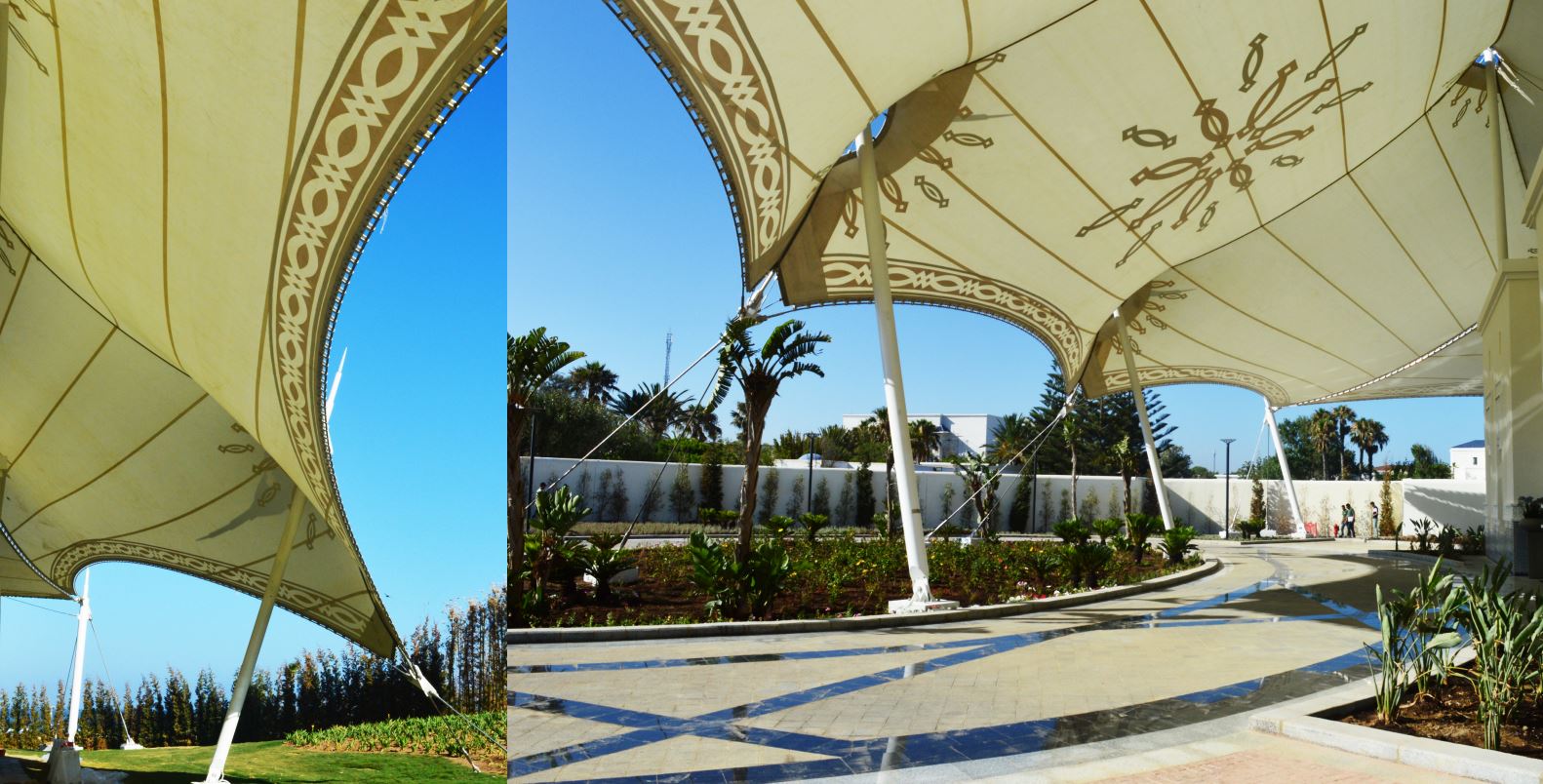
Modern architecture continues to evolve with innovative construction methods that combine functionality, aesthetics, and sustainability. Among the most versatile solutions available today are Tensile Fabric Structures, which have become a preferred choice for architects, engineers, and developers worldwide. Their lightweight design, exceptional strength, and ability to create large, column-free spaces make them ideal for commercial, hospitality, sports, and public projects.
From iconic stadium roofs to elegant entrance canopies and expansive airport terminals, Tensile Fabric Structures have transformed the way buildings are designed and constructed. Companies like CForce are leading this transformation by delivering advanced engineering, fabrication, and installation solutions across Saudi Arabia and the GCC.
What Are Tensile Fabric Structures?
Tensile Fabric Structures are architectural systems that use high-performance fabric membranes stretched under tension and supported by steel cables, masts, or structural steel frames. Unlike conventional roofing systems that rely on compression, tensile structures maintain their stability through carefully engineered tension.
This unique structural principle enables architects to create lightweight yet highly durable roofs and canopies capable of spanning large distances without requiring numerous supporting columns.
The result is a visually impressive structure that offers excellent functionality while maximizing open spaces.
How Do Tensile Fabric Structures Work?
The strength of Tensile Fabric Structures comes from the balance between tension and structural support. The fabric membrane is stretched tightly across a supporting framework, distributing loads evenly throughout the structure.
These systems typically include:
- High-strength fabric membrane
- Steel cables
- Structural steel framework
- Support masts or arches
- Connection hardware
- Foundation system
Every component works together to ensure stability against wind, rain, and environmental loads while maintaining the desired architectural form.
Common Materials Used
The performance of Tensile Fabric Structures depends largely on the membrane material selected for the project.
PVC-Coated Polyester
PVC-coated polyester is widely used because it offers:
- Cost-effectiveness
- Flexibility
- Weather resistance
- Long service life
- Easy maintenance
It is commonly selected for commercial canopies, parking shades, walkways, and public facilities.
PTFE-Coated Fiberglass
PTFE membranes provide:
- Exceptional durability
- Excellent fire resistance
- High UV resistance
- Long lifespan
- Superior structural performance
These membranes are often used in airports, stadiums, and landmark buildings.
ETFE Systems
For projects requiring maximum daylight and transparency, ETFE systems provide:
- Outstanding light transmission
- Lightweight construction
- Energy efficiency
- Excellent insulation
- Long-term durability
Although ETFE differs from traditional fabric membranes, it is frequently incorporated into advanced architectural envelope solutions.
Benefits of Tensile Fabric Structures
Lightweight Construction
One of the greatest advantages of Tensile Fabric Structures is their extremely low weight compared to conventional roofing systems.
The lightweight membrane reduces:
- Structural steel requirements
- Foundation loads
- Transportation costs
- Installation time
This leads to greater construction efficiency.
Design Flexibility
Architects appreciate the creative freedom offered by Tensile Fabric Structures.
They can create:
- Curved roofs
- Cone-shaped canopies
- Saddle forms
- Barrel vaults
- Free-form architectural designs
This flexibility allows every project to achieve a distinctive visual identity.
Large Column-Free Spaces
Because the membrane works in tension, Tensile Fabric Structures can span large distances without internal columns.
This creates spacious environments ideal for:
- Stadiums
- Airports
- Exhibition halls
- Shopping malls
- Public plazas
Open spaces improve both functionality and user experience.
Weather Resistance
Modern membrane materials are designed to withstand demanding environmental conditions, including:
- UV radiation
- Heavy rainfall
- Strong winds
- High temperatures
- Humidity
- Dust and sand
This makes Tensile Fabric Structures suitable for projects throughout Saudi Arabia and the GCC.
Energy Efficiency
Many membrane materials transmit natural daylight while reducing solar heat gain.
Benefits include:
- Lower lighting costs
- Improved indoor comfort
- Reduced energy consumption
- Enhanced sustainability
These features support environmentally responsible construction practices.
Low Maintenance
Unlike conventional roofing materials, Tensile Fabric Structures require minimal maintenance.
Most membrane surfaces are designed to resist dirt accumulation and remain attractive for many years with simple periodic cleaning and inspections.
Applications of Tensile Fabric Structures
Today, Tensile Fabric Structures are used across numerous industries because of their versatility and architectural appeal.
Popular applications include:
- Commercial buildings
- Shopping malls
- Hotels and resorts
- Sports stadiums
- Airports
- Railway stations
- Educational institutions
- Healthcare facilities
- Public parks
- Entertainment venues
- Walkways
- Entrance canopies
- Parking shades
- Exhibition centers
Their ability to combine functionality with striking design makes them suitable for projects of every size.
Why Tensile Fabric Structures Are Popular
The demand for Tensile Fabric Structures continues to grow because they offer an ideal balance between performance and aesthetics.
Developers benefit from:
- Faster project completion
- Reduced structural weight
- Modern architectural appearance
- Long-term durability
- Lower maintenance costs
- Sustainable construction solutions
These advantages make tensile architecture an increasingly attractive investment for commercial developments.
Factors to Consider Before Choosing Tensile Fabric Structures
Selecting the right Tensile Fabric Structures requires careful planning.
Important considerations include:
Project Purpose
Different applications require different structural designs and membrane materials.
Climate Conditions
Environmental factors such as wind, rainfall, sunlight, and temperature influence material selection and structural engineering.
Membrane Material
Choosing between PVC, PTFE, or ETFE depends on the project’s performance, durability, and aesthetic requirements.
Structural Engineering
Proper engineering ensures long-term stability, safety, and compliance with applicable design standards.
Installation Expertise
Professional installation is essential to maintain membrane tension, structural integrity, and overall performance.
Sustainability Advantages
Sustainability has become a major priority in modern construction, and Tensile Fabric Structures contribute significantly to environmentally responsible building practices.
They support sustainability by:
- Reducing material usage
- Lowering transportation emissions
- Maximizing natural daylight
- Improving energy efficiency
- Offering recyclable material options
- Extending service life with minimal maintenance
These benefits help developers achieve sustainable construction goals while reducing operational costs.
Why Choose CForce?
Choosing an experienced engineering partner is essential for the success of any tensile membrane project.
CForce is a specialized engineering and contracting company delivering complete solutions for Tensile Fabric Structures across Saudi Arabia and the GCC. From concept development and BIM engineering to structural design, fabrication, procurement, and professional installation, CForce provides comprehensive turnkey services tailored to each project’s unique requirements.
With expertise in architectural membrane structures, ETFE systems, steel structures, and aluminum & glass systems, CForce delivers innovative solutions that combine engineering precision, premium materials, and exceptional craftsmanship. The company’s commitment to quality, sustainability, and timely project execution has made it a trusted partner for commercial, hospitality, sports, public, and landmark developments throughout the region.
Conclusion
Tensile Fabric Structures have revolutionized modern architecture by offering lightweight, durable, and visually striking solutions for a wide variety of applications. Their ability to create expansive, column-free spaces, withstand challenging environmental conditions, and support sustainable construction makes them one of the most effective building systems available today.
As demand for innovative architectural solutions continues to grow, partnering with an experienced company like CForce ensures every project benefits from expert engineering, precision fabrication, and professional installation. Whether for commercial complexes, sports facilities, hospitality developments, or public infrastructure, Tensile Fabric Structures provide a future-ready solution that combines performance, efficiency, and architectural excellence.