
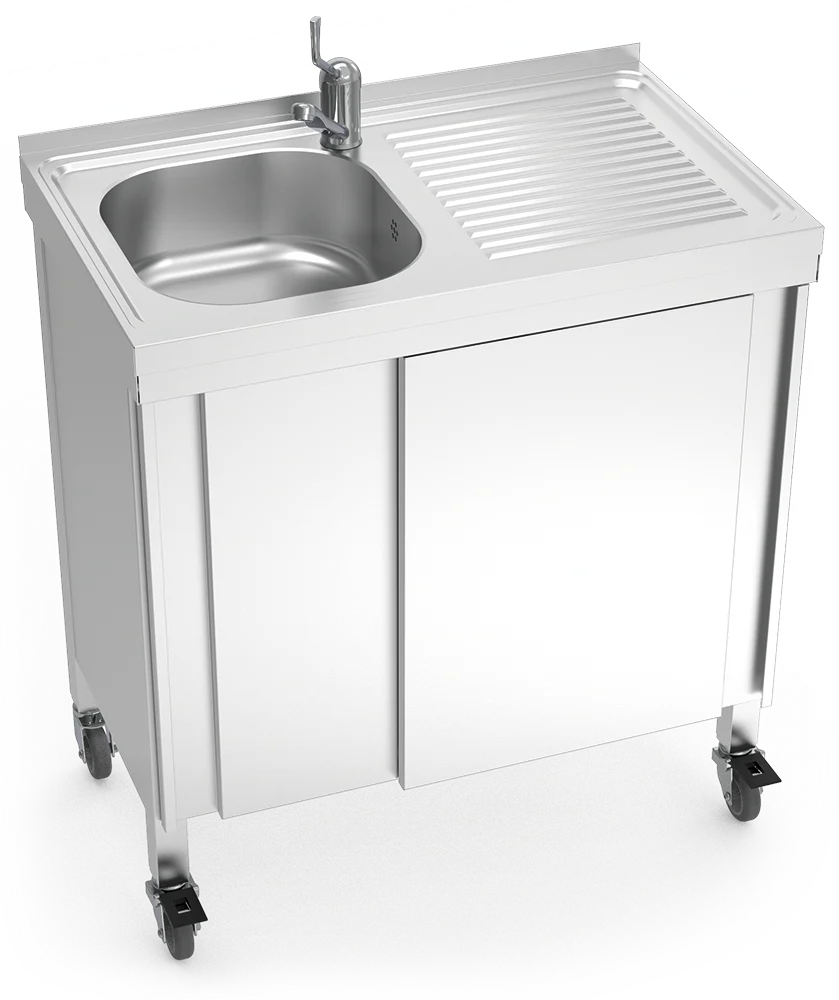
A lunch rush doesn’t leave much room for equipment problems. When a mobile hand wash station runs low on water, or a pump starts acting up mid-service, that’s not a minor inconvenience – it’s a hygiene gap right when the truck is busiest. Keeping the station running properly through a full shift comes down to a handful of habits, not a complicated maintenance schedule.
Why Proper Maintenance Matters During Busy Shifts
Staff need consistent access to handwashing throughout service, not just at the start of the day. A station that’s running low on water or acting up mid-shift creates exactly the kind of gap health inspectors’ flag, and customers notice, even if they can’t say why something feels off. Beyond compliance, a station that’s actually working smoothly just makes the whole shift run better – nobody’s waiting around or improvising because the sink stopped working during the busiest hour.
Essential Maintenance Tips for a Mobile Hand Wash Station
Start every shift with a full inspection. Check both the freshwater and wastewater tanks before service opens, and make sure pumps and faucets are actually working the way they should. Five minutes here saves a much bigger headache two hours into service.
Monitor water levels throughout the day. Freshwater should get refilled before it runs low, not after someone notices nothing is coming out. Wastewater capacity needs the same attention – a tank that fills up mid-shift forces a scramble nobody wants during a rush.
Keep soap and paper towels stocked. Peak hours burn through supplies fast, and running out during the busiest stretch defeats the entire point of having the station. Keep everything positioned where staff can grab it without breaking stride.
Clean high-touch areas regularly. Sink surfaces and the area around them collect grime fast in a food truck environment. Wiping down spills and debris as they happen keeps things from building up into a bigger cleaning job later.
Address minor issues immediately. A small leak or a pump that’s making an odd sound now turns into real downtime later if it’s ignored. Fixing it the moment it’s noticed is a lot easier than fixing it after it’s failed completely during service.
A mobile hand wash station for food trucks built with quality components – the kind Lioninox designs into their portable units – tends to need less of this kind of firefighting in the first place, since the tanks and pumps are made to handle repeated daily use without breaking down mid-shift.
End-of-Shift Maintenance Best Practices
Once service wraps, empty and clean the wastewater tank rather than leaving it for the next morning. Sanitize the sink surfaces properly, not just a quick wipe. Refill supplies so the next shift starts ready to go instead of scrambling. And take a minute to check components for wear – catching a small issue at the end of a shift is a lot better than discovering it mid-service the next day.
Conclusion
A little routine maintenance keeps a mobile hand wash station running the way it’s supposed to through even the busiest shifts. Staying ahead of water levels, supplies, and small repairs means fewer disruptions and a station that lasts. Choosing a well-built unit to begin with makes this easier too – Lioninox’s mobile stations are designed for exactly this kind of daily, high-demand use, which takes some of the maintenance burden off busy food truck crews from day one.
FAQs
How often should a mobile hand wash station be cleaned?
Daily, with extra wipe-downs during busy shifts to keep hygiene standards up throughout the day.
Why is a mobile hand wash station for food trucks important?
It gives staff a reliable way to wash their hands on the go, which supports food safety and helps customers trust the truck they’re ordering from.