
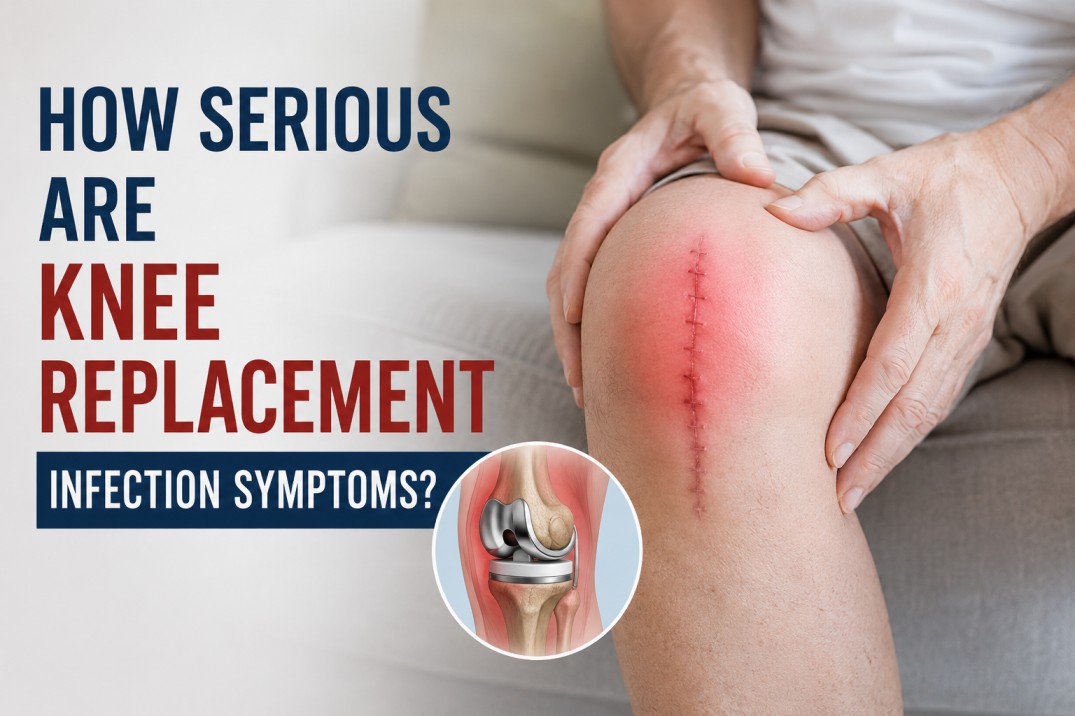
Knee replacement surgery can be life-changing for people struggling with chronic knee pain, arthritis, or limited mobility. Most patients recover successfully and enjoy significant improvements in their quality of life. However, like any major surgical procedure, knee replacement carries certain risks, and infection is one of the most important complications to be aware of.
Understanding knee replacement infection symptoms can help patients seek treatment early and avoid more serious health issues. Whether you have recently undergone surgery or are considering a Knee replacement in Panchkula, knowing the warning signs can make a significant difference in your recovery journey.
What Is a Knee Replacement Infection?
A knee replacement infection occurs when bacteria enter the surgical site and affect the tissues around the artificial joint. In some cases, the infection remains near the skin and incision area. In more severe situations, it can spread deeper and affect the implant itself.
Although infections after knee replacement surgery are relatively uncommon, they should never be ignored. Early diagnosis and treatment are essential for protecting the new joint and preventing further complications.
Common Knee Replacement Infection Symptoms
After surgery, some swelling, discomfort, and stiffness are completely normal. However, certain symptoms may indicate that an infection is developing.
1. Persistent or Increasing Pain
Pain is expected during the recovery process, but it should gradually improve over time. If pain suddenly worsens or continues to increase instead of decreasing, it may be a warning sign of infection.
2. Redness Around the Surgical Site
Mild redness near the incision is common immediately after surgery. However, spreading redness, increasing warmth, or irritation around the knee should be assessed by a medical professional.
3. Excessive Swelling
While swelling is a normal part of healing, significant swelling that does not improve with rest, elevation, or medication may indicate a problem.
4. Fever and Chills
One of the most common knee replacement infection symptoms is the development of a fever. If fever occurs alongside knee pain, swelling, or redness, prompt medical attention is recommended.
5. Drainage From the Wound
Any unusual discharge from the surgical incision, especially if it appears yellow, cloudy, or has an unpleasant smell, should be evaluated immediately.
6. Stiffness and Difficulty Moving the Knee
Many patients gradually regain mobility after surgery. If movement becomes increasingly difficult or the knee suddenly feels stiff after initial improvement, infection could be a contributing factor.
How Serious Can a Knee Replacement Infection Become?
The severity of a knee replacement infection depends largely on how quickly it is detected and treated.
If left untreated, an infection may:
- Damage surrounding tissues
- Affect the stability of the artificial joint
- Delay recovery significantly
- Require additional surgery
- Increase the risk of implant failure
In rare cases, severe infections may spread beyond the knee joint and affect overall health.
The good news is that most infections can be managed effectively when diagnosed early.
When Can Symptoms Appear?
Many patients assume infections only occur immediately after surgery, but that is not always the case.
1. Early Infections
These usually occur within the first few weeks after surgery and often present with obvious symptoms such as swelling, redness, pain, and wound drainage.
2. Late Infections
Some infections develop months or even years after the procedure. Patients may notice persistent pain, joint instability, or reduced function without obvious signs of infection.
This is why regular follow-up appointments remain important even after recovery appears complete.
Who Is More Likely to Develop an Infection?
Certain factors may increase the risk of infection following knee replacement surgery.
These include:
- Diabetes
- Smoking
- Obesity
- Weakened immune system
- Rheumatoid arthritis
- Previous joint infections
Patients with these risk factors should carefully follow post-operative care instructions and attend all scheduled follow-up visits.
How Are Knee Replacement Infections Treated?
Treatment depends on the severity and timing of the infection.
Options may include:
- Antibiotic therapy
- Surgical cleaning of the joint
- Removal of infected tissue
- Revision knee replacement surgery in severe cases
The earlier treatment begins, the greater the chance of preserving the implant and achieving a successful outcome.
Tips to Reduce Infection Risk
Patients can take several steps to support a healthy recovery:
- Keep the surgical area clean and dry
- Follow wound-care instructions carefully
- Take medications as prescribed
- Attend all follow-up appointments
- Report unusual symptoms immediately
- Maintain good overall health and nutrition
Final Thoughts
Although infection after knee replacement surgery is uncommon, it remains one of the most serious complications patients can face. Recognizing knee replacement infection symptoms early can help prevent more complex treatments and improve recovery outcomes.
If you are considering a Knee replacement in Panchkula or have recently undergone the procedure, staying aware of symptoms such as persistent pain, swelling, fever, redness, and wound drainage is essential. Prompt medical attention can often stop an infection from becoming a major problem and help ensure the long-term success of your knee replacement.