

Walk into an office that still runs on old fluorescent tubes and you can usually feel it before you even look up. The buzz, the slight flicker, that dull yellowish cast that makes everyone look a little tired by 3 p.m. Then walk into a space that’s been redone, and it’s just… different. Cleaner light, no hum, no headache by the end of the day. That change isn’t luck. It’s the result of hiring led lighting retrofit contractors who know what they’re doing and don’t treat a commercial building like an oversized version of someone’s living room. A lot of business owners don’t realize how much their old lighting setup is costing them until someone actually walks through the building and points it out fixture by fixture. Swapping out bulbs is the easy part. The real work is in the wiring, the panel capacity, sometimes pulling permits, and making sure none of it interferes with whatever the building is actually used for day to day. Owners who’ve been through it tend to say the same thing afterward — they wish they’d called someone two or three years sooner than they did.
The Real Cost Savings Behind An LED Retrofit
Here’s the part that usually gets people to actually pick up the phone: money. Old metal halide fixtures and fluorescent banks pull way more power than they need to, and most owners never question it because it’s just been that way for a decade or two. Switching over to LED can knock somewhere in the range of fifty to seventy percent off the lighting portion of a utility bill, and that’s not a rounded-up sales figure — it’s roughly what utility companies themselves report when they track these retrofits. There’s also the maintenance side, which people forget about until they’re not dealing with it anymore. No more sending someone up a ladder every month because a ballast died again. Most led lighting retrofit contractors will actually sit down with you and run the payback math before a single fixture gets ordered, and in a lot of commercial buildings that math lands somewhere around two years, sometimes less. If your lights are running sixteen hours a day in a warehouse, that number adds up faster than most people expect, and it keeps paying off long after the invoice is closed out.
What Actually Happens During a Lighting Retrofit Project
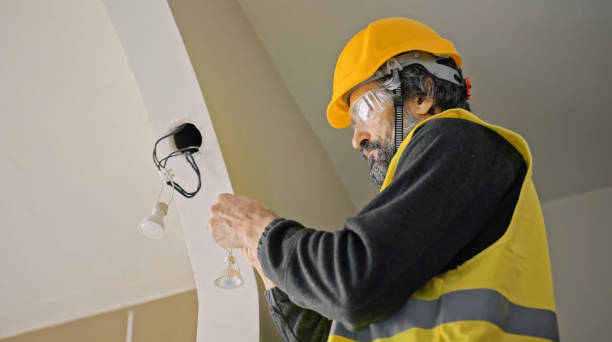
Most people picture a retrofit as a guy walking around with a box of bulbs, and that’s not really it. It usually starts with a walkthrough — someone documents every fixture, checks the wattage, figures out where a motion sensor or daylight harvesting setup would actually make sense instead of just being a nice-sounding upsell. From there, a plan gets put together that matches the right fixture to the right space, because what works in a parking lot isn’t what belongs above a conference table. Once that’s approved, installation tends to move quicker than owners expect, especially with a crew that’s done this more times than they can count. Old ballasts come out, wiring gets checked, new fixtures go in, and a decent crew will schedule around business hours so a store or office doesn’t lose operating time over it. This is the part where the difference between experienced led lighting retrofit contractors and someone just changing bulbs on a ladder becomes obvious pretty fast. By the time the job wraps up, there’s usually a final walkthrough to check brightness and color temperature against what was promised before anyone signs off.
Signs Your Facility Is Overdue for an Upgrade
Not every building needs this right now, but there are some fairly obvious tells. Lights flickering, some areas noticeably dimmer than others, bulbs burning out every couple of months instead of every couple of years — those are the early flags. If a facilities manager is buying replacement bulbs on what feels like a monthly grocery run, the system’s basically telling you it’s done. Utility bills creeping up without any real change in how the building is used is another one, and lighting is often the quiet reason behind that, even though nobody thinks to check it first. Some older systems also fall out of step with current safety codes, which can turn into a real problem during an inspection or an insurance review. And then there’s the stuff that doesn’t show up on a spreadsheet at all — employees working under harsh, buzzing light for years, not realizing how much it’s wearing on their focus and mood. That’s usually around when people start calling led lighting retrofit contractors for an actual assessment instead of just patching things one bulb at a time. Once two or three of these signs show up together, it’s worth getting someone out to look before it gets worse.
How To Pick The Right Team For The Job
Not every electrical company can actually handle a retrofit at commercial scale, and that’s worth knowing before signing anything. Licensing and insurance are the baseline — that part’s non-negotiable — but past that, experience with larger commercial jobs matters a lot more than people assume. Someone who’s great at rewiring houses might be completely out of their depth in a 300-fixture warehouse with multiple panels feeding different sections of the building. It’s fair to ask for references, photos from past jobs, and a clear answer on what the warranty actually covers, both labor and the fixtures themselves. The better led lighting retrofit contractors will also bring up rebate programs on their own, since a lot of utility companies offer incentives that can cover a real chunk of the project. A contractor worth hiring won’t rush the quote either — they’ll walk the property, ask how the space actually gets used, and build something specific instead of handing over a generic package. Comparing two or three options before committing usually saves both money and a headache down the road.
Why EV Charging Is the Next Step for Many Properties
Once a building’s lighting gets sorted out by led lighting retrofit contractors, the conversation about electrical capacity tends to keep going, and that’s usually where EV charging comes up. More employees and customers are driving electric now, and property owners are starting to treat charging stations less like a perk and more like something people just expect to see in the lot. A building that’s already been through a lighting retrofit usually has a much clearer picture of its panel capacity, which makes adding chargers a lot less of a guessing game. Anyone specifically searching for EV charger installation sunrise fl has probably noticed how much that search has picked up recently, as EV adoption keeps climbing across South Florida. A good number of the people looking into ev charger installation sunrise fl are the same owners who already redid their lighting and want to keep that momentum going with a second project worth the investment. Bundling both under one electrical plan tends to make more sense financially and logistically than tackling them months apart. Fewer permit trips, fewer separate site visits, one timeline instead of two.

Conclusion
Upgrading a property’s lighting and electrical setup isn’t really about chasing a trend. It’s about running a building that costs less to operate and holds up better over time, whether that means lower energy bills, meeting updated code, or getting a parking lot ready for EV charger installation down the road. Lighting and EV charger installation sunrise fl end up sharing a lot of the same electrical groundwork, which is exactly why so many owners end up doing both around the same time instead of treating them as separate projects. TNS Electric, Inc. has built its name around this kind of work specifically, pairing lighting expertise with EV infrastructure knowledge so owners aren’t stuck juggling two or three different vendors for jobs that overlap anyway. If you’re on the fence about whether it’s the right time, it usually is — the sooner it gets done, the sooner the savings actually start showing up.
FAQs
How long does a commercial LED lighting retrofit typically take?
Usually anywhere from a few days to a couple of weeks, depending on the size of the property and how many fixtures are involved. Most crews work around business hours so daily operations aren’t interrupted.
Are LED retrofits eligible for utility rebates?
Often, yes. A lot of local utility companies run rebate programs that can cut down the upfront cost noticeably, and a solid contractor will bring those options up during the quote instead of waiting to be asked.
Can lighting and EV charger installations be done at the same time?
In a lot of cases, yes. Both usually require a look at existing electrical capacity anyway, so combining them into one plan tends to save on permits, site visits, and overall cost compared to doing them separately.
How do I know if my building’s electrical panel can support an EV charger?
A licensed electrician can run a load capacity check to see whether the current panel can handle the extra demand, or whether it needs an upgrade first.
What’s the average lifespan of LED fixtures compared to older lighting?
LED fixtures generally last two to three times longer than fluorescent or metal halide bulbs, which cuts down on maintenance visits and replacement costs quite a bit over time.