
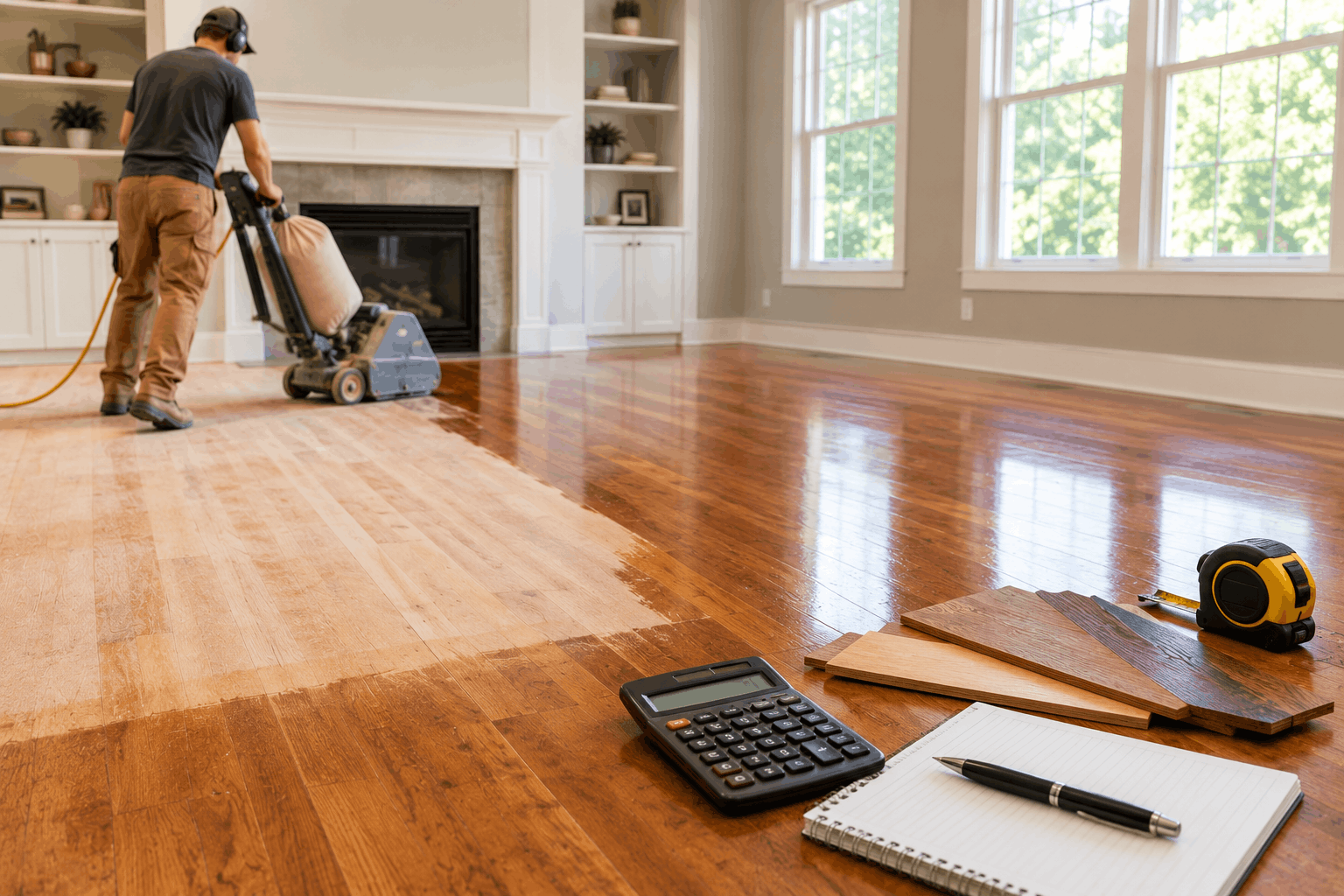
You know that feeling when you pull back an old area rug and realize the hardwood underneath is actually still beautiful? Or the opposite moment when you finally notice just how scratched, dull, and gray your once-gorgeous floors have become? Either way, you are probably wondering the same thing right now. How much is this going to cost to fix?
Hardwood floor refinishing is one of those home improvement projects where the price range is genuinely wide, and the honest answer is that it depends on several factors working together. But that does not mean you have to go in blind. There are real numbers to work with, real variables to understand, and real ways to make sure you get good value for every dollar you spend.
Whether you are dealing with flooring portland projects in a Craftsman bungalow or a newer build on the east side, this guide gives you a clear, practical picture of what refinishing actually costs and what drives those numbers in both directions.
What Drives the Cost of Hardwood Floor Refinishing?
Refinishing is not a flat-rate service. The price you pay depends on a combination of factors that are specific to your floor, your home, and the scope of work involved. Understanding what moves the needle helps you budget accurately and compare estimates properly.
1. Square Footage and Room Size
The most straightforward cost driver is how much floor you are refinishing. Most contractors price refinishing work by the square foot, so a larger project costs more in total. But square footage also affects the per-square-foot rate in the opposite direction. Larger open floor plans are more efficient to sand and finish than small rooms with lots of corners, closets, and tight spaces that require more detail work and more time per square foot.
A single bedroom of 150 square feet will typically cost more per square foot than an open living and dining area of 600 square feet, even though the total dollar amount for the bedroom is lower. This is something worth understanding when you are comparing estimates from different contractors.
2. Floor Condition and Prep Work Required
The condition of your floor before any sanding begins has an enormous impact on how much labor the project requires and therefore what it costs. A floor that is scratched and dull but structurally sound and free of major damage is a straightforward refinishing job. A floor with deep gouges, multiple old finish layers that need to come off, black water stains that require bleaching, or boards that have started to cup from moisture exposure is a much more involved project.
Prep work that goes beyond standard sanding adds labor hours, and labor is where most refinishing costs actually live. When a contractor gives you a higher-than-expected estimate, the floor condition is usually the explanation rather than the contractor padding the number.
Why Damaged Floors Cost More to Refinish
Think of it like bodywork on a car. A car that needs a fresh paint job costs a certain amount. A car that needs dents pulled, rust cut out, and panels straightened before painting costs significantly more, even though the end result might look similar from the curb. Floors with significant damage require that same extra work before the refinishing itself can even begin, and that work is reflected directly in the final price.
Average Hardwood Floor Refinishing Costs You Should Know
Now for the actual numbers. These figures reflect real-world pricing for quality professional refinishing work rather than the absolute cheapest quote you could find online.
1. National Average vs. Local Portland Pricing
Nationally, professional hardwood floor refinishing runs between three and eight dollars per square foot for labor, with the finished project cost for a typical home falling somewhere between $1,000 and $4,500 depending on square footage and scope. In Portland specifically, pricing tends to sit in the mid-to-upper portion of that national range because of local labor rates and the cost of operating a quality business in the Pacific Northwest market.
For a standard 500-square-foot main floor refinishing project in Portland, most quality contractors charge between $1,500 and $3,500 for a complete refinish including sanding, staining, and two to three coats of finish. That range reflects real differences in floor condition, stain complexity, and finish system quality rather than arbitrary pricing variation.
2. Cost Breakdown by Project Type
Not all refinishing projects are the same scope, and the type of work you need affects the price significantly. A full refinish, which means sanding to bare wood and applying new stain and finish, is the most comprehensive option and carries the highest price. A screen and recoat, sometimes called a buff and recoat, is a lighter process that scuffs the existing finish and applies a new topcoat without sanding to bare wood. It costs less and works well when the finish is worn but the floor has no deep scratches or staining.
Spot refinishing, where only a damaged section of the floor is sanded and refinished rather than the whole room, can be the most economical option for isolated damage. Getting the spot repair to blend seamlessly with the rest of the floor requires skill and experience, but when done well it is a cost-effective solution for localized problems.
Buff and Recoat vs. Full Refinish: Price Difference Explained
A buff and recoat typically runs between one and two dollars per square foot, which is significantly less than a full refinish. The trade-off is that it only addresses finish wear, not damage in the wood itself. If your floor has scratches that go below the finish layer into the wood, water stains, or significant discoloration, a buff and recoat will not fix those problems. A full refinish will. Choosing the right service for your specific floor condition is the key decision that determines both your cost and your result.
Hidden Costs That Catch Homeowners Off Guard
The base price of sanding and finishing is only part of the total project cost. Several additional expenses regularly catch homeowners off guard when they have not refinished floors before.
1. Board Repairs and Replacement Costs
Individual boards that are cracked, deeply gouged, or water damaged beyond what sanding can address need to be repaired or replaced before refinishing begins. Board repairs are typically priced separately from the refinishing work itself and can add meaningfully to the total depending on how many boards are affected and how difficult they are to source and match.
In older Portland homes where the original flooring may be Douglas fir or a species that is no longer widely available, sourcing matching replacement boards can involve additional time and cost. Reclaimed lumber dealers and specialty flooring suppliers can often source matching material, but it requires more effort than ordering standard red oak from a local supplier.
2. Stain, Finish Type, and Sheen Upgrades
A basic clear finish over natural wood color is the simplest option and carries the standard pricing. Custom stain colors, particularly multi-step processes that involve base staining, bleaching, and toning coats to achieve a specific look, add both materials and labor time to the project. Specialty finish products like hardwax oil, which requires different application techniques than polyurethane, also carry a premium over standard finish pricing.
If you are investing in hardwood floors portland refinishing before selling your home, standard neutral stain colors in popular tones like natural, warm gray, or light brown typically deliver the best return without the cost premium of custom color work.
3. Furniture Moving and Disposal Fees
Some contractors include furniture moving in their standard pricing and some do not. This is worth confirming before you sign any estimate because moving large pieces in and out of a room, especially in a tighter Portland home, can add an hour or more of labor per room. If your project involves removing old carpet or other flooring materials before the hardwood underneath can be refinished, disposal of those materials may also be priced separately.
Stair treads, if your project includes stairs, are almost always priced per tread rather than by square foot and add meaningfully to the total for multi-story Portland homes where stairs connect two or three levels.
DIY Refinishing vs. Hiring a Professional: True Cost Comparison
Every homeowner considering refinishing eventually asks whether the DIY route saves enough money to be worth the effort and risk. The honest answer requires looking at the full cost picture rather than just the material cost.
1. What DIY Actually Costs When You Add It All Up
Drum sander rental in Portland typically runs between $60 and $80 per day, and most DIY floor refinishing projects take two to three days of sanding alone, particularly when moving from coarser to finer grits as the process requires. Add an edge sander rental, sandpaper in multiple grits, finish materials, stain, applicators, tape, plastic sheeting for dust control, and any repairs, and a 500-square-foot DIY refinishing project can easily run $500 to $900 in materials and equipment before you count your own labor hours.
The larger risk with DIY is the skill gap. Drum sanders are aggressive machines that can create dips, swirl marks, and uneven areas in minutes if operated incorrectly. Sanding too much wood off in one pass, leaving cross-grain scratches, or creating visible drum marks are mistakes that are extremely difficult to correct without starting over completely.
2. Why Professional Refinishing Saves Money Long Term
A professional refinishing job done right the first time, with proper prep, quality materials, and skilled application, routinely lasts eight to fifteen years before the next cycle is needed. A DIY job done with rental equipment and box-store materials typically shows significant wear within three to five years in a busy household. When you calculate the cost per year of useful life from each option, professional refinishing often comes out cheaper over the long run, and it comes with none of the risk of a costly mistake that requires professional correction on top of your DIY material spend.
For flooring portland homeowners who value their time and want a result that genuinely looks professional, hiring an experienced contractor is almost always the right financial decision when you look at the complete picture.
How to Get the Best Value on Hardwood Floor Refinishing
Spending wisely on refinishing is not just about finding the lowest price. It is about making choices that deliver the best result at a reasonable cost.
1. Timing Your Project to Save Money
Refinishing contractors in most markets, including Portland, are busiest in spring and early summer when homeowners are preparing homes for sale or completing renovations before the busy season. If your timeline is flexible, scheduling work in the fall or winter months can sometimes mean faster availability and occasionally better pricing from contractors looking to fill their schedules during slower periods.
Combining a refinishing project with other flooring work in the same home, such as installing new hardwood floors portland in additional rooms at the same time, can also reduce the per-room cost because the contractor mobilizes once for a larger scope of work rather than making multiple separate trips.
2. Questions to Ask Before You Sign Any Estimate
Before committing to any contractor, ask these questions directly and expect clear answers. Is subfloor prep and board repair included in the estimate or priced separately? What finish system and products are being used? How many coats are included? Is furniture moving included? What is the estimated timeline from start to when I can use the floor again? Does the estimate include stair treads if applicable?
An experienced, trustworthy contractor answers all of these without hesitation and gives you a written, itemized estimate rather than a single bottom-line number that makes it impossible to understand what you are paying for.
What Affects Price Specifically in the Portland Market
Portland homeowners face a few local factors that influence refinishing pricing beyond the national average. Labor rates in the Portland metro area reflect the regional cost of living, which means skilled trade work here costs more than in lower cost-of-living markets. The age of Portland’s housing stock also matters. Many Portland homes were built between 1900 and 1970 with original fir, oak, or pine floors that require more careful handling than modern uniform hardwood.
Moisture is another Portland-specific factor. The wet climate means subfloor moisture levels are frequently higher than the national norm, and addressing moisture before refinishing adds steps and sometimes cost to a project that would be more straightforward in a drier climate.
For flooring portland homeowners working with a contractor who knows the local market well, these factors are already accounted for in their process and their pricing rather than discovered as surprises midway through the project. The team at All Seasons Floors brings years of experience refinishing floors across Portland neighborhoods and knows exactly what each home’s floors typically need before work begins.
Conclusion
Refinishing hardwood floors is one of the most cost-effective ways to transform how your home looks and feels. The cost varies based on real factors including square footage, floor condition, stain and finish choices, and the local market you are working in. Understanding those variables puts you in a position to budget accurately, compare estimates fairly, and make confident decisions about your project. Whether you are refinishing a single bedroom or your entire main floor, the investment in quality work pays off in a floor that looks beautiful, performs well, and lasts for years before needing attention again. Get the right contractor, ask the right questions, and your refinished floors will be one of the best things that ever happened to your home.
FAQs
1. How much does it cost to refinish hardwood floors per square foot?
Professional refinishing typically costs three to eight dollars per square foot for labor, with total project costs varying based on floor condition, stain choice, and finish system.
2. Is it cheaper to refinish or replace hardwood floors?
Refinishing is almost always significantly cheaper than replacement and delivers comparable results when the wood is structurally sound.
3. How long does refinished hardwood last before needing redoing?
A professionally refinished floor with quality materials typically lasts eight to fifteen years before the next refinishing cycle is needed.
4. Does refinishing hardwood floors add home value?
Yes, refinished hardwood floors consistently improve home value and buyer perception, often returning more than the cost of the refinishing at resale.
5. How many times can hardwood floors be refinished?
Most solid hardwood floors can be refinished four to seven times over their lifespan depending on the original wood thickness and how much is removed with each sanding.