
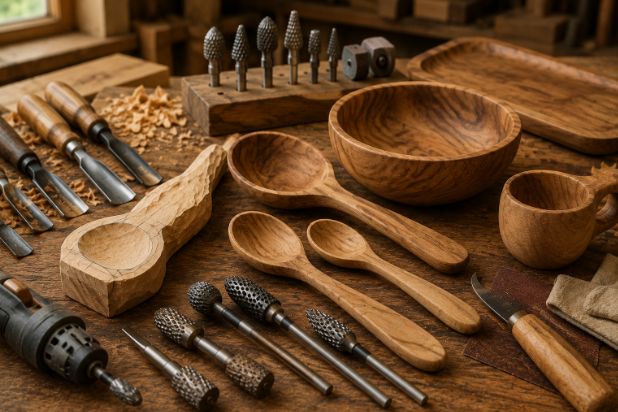
Woodworking has long been a creative craft that combines practical function with artistic expression. Among the many forms of woodworking, creating handmade kitchen items such as spoons, bowls, trays, and serving utensils has gained popularity among hobbyists and professional makers. These projects allow artisans to transform natural wood into useful objects while highlighting the beauty of grain patterns and organic shapes. Successful wooden utensil carving requires patience, proper techniques, and the right equipment to achieve smooth, durable, and functional results.
Unlike purely decorative woodworking, utensil carving requires careful attention to both appearance and usability. Since carved items often come into contact with food, makers need to consider wood selection, surface quality, finishing methods, and precision during every stage of the process.
Understanding Wooden Utensil Carving
Wooden utensil carving involves shaping pieces of wood into functional household items such as spoons, cups, bowls, spatulas, and serving tools. The process typically begins with selecting suitable wood and gradually removing material until the desired form is achieved.
The main stages of utensil carving include:
- Selecting and preparing wood
- Creating an initial design
- Removing excess material
- Refining the shape
- Smoothing surfaces
- Applying a suitable finish
Each stage requires different levels of control. Early carving focuses on removing larger sections of wood, while later steps involve detailed shaping and surface refinement.
Choosing the Right Wood for Carved Utensils
The type of wood used can influence the appearance, durability, and carving experience. Many artisans prefer hardwoods because they provide strength and a long-lasting finish.
Common choices include:
Maple
Maple is widely used because of its durability and relatively smooth grain structure. It is suitable for everyday kitchen items.
Cherry
Cherry wood develops an attractive colour over time and is valued for its workability.
Walnut
Walnut offers rich tones and distinctive grain patterns, making it popular for decorative and functional pieces.
Birch
Birch is another option often selected for its balanced strength and carving properties.
Choosing wood with suitable grain direction helps reduce splitting and improves the final appearance of the utensil.
Essential Tools for Wooden Utensil Projects
Different tools are required depending on the size, shape, and complexity of a carving project. Traditional hand tools remain valuable, while modern power carving equipment can improve efficiency.
Carving Knives
Carving knives are commonly used for shaping edges, refining details, and making controlled cuts. They provide direct contact with the material and are especially useful for smaller projects.
Gouges and Chisels
Gouges and chisels help remove wood and create curved surfaces. They are especially useful when creating hollow sections in utensils.
For example, shaping the inside of a spoon or bowl requires tools that can follow curved surfaces while maintaining control.
Rotary Carving Tools
Modern power carving equipment allows artisans to remove material faster while maintaining precision. Tools such as burrs, shaping wheels, and contour wheels can help create smooth curves, hollow areas, and detailed surfaces.
Kutzall’s utilitarian carving collection includes tools designed for shaping bowls, spoons, cutting boards, trays, and other functional wooden items. These tools are designed to assist with both rough shaping and detailed refinement.
The Process of Creating Wooden Utensils
A successful carving project usually follows a structured process.
Planning the Design
Before cutting into wood, artisans typically decide the size, shape, and purpose of the utensil. Planning helps maintain proper proportions and ensures the finished piece is comfortable to use.
Important considerations include:
- Handle thickness
- Bowl depth
- Overall balance
- Intended function
Rough Shaping
The first carving stage involves removing excess material to create the general outline. Larger tools are often useful during this stage because they allow faster material removal.
Power carving tools can be particularly helpful when creating larger forms or removing significant amounts of wood.
Refining Details
Once the basic shape is established, smaller tools help refine edges, curves, and transitions. This stage focuses on improving both appearance and usability.
Smoothing and Finishing
A properly finished utensil should have smooth surfaces without rough edges or uncomfortable areas. Sanding and finishing treatments help protect the wood while enhancing its natural appearance.
Exploring Bowl Carving Techniques
One of the most popular forms of functional woodworking is bowl carving. Wooden bowls combine artistic design with everyday practicality, making them a common project for both beginners and experienced carvers.
Creating a bowl involves:
- Selecting an appropriate wood blank
- Establishing the exterior shape
- Hollowing the interior
- Refining the rim and surface
- Applying a food-safe finish
The hollow interior requires careful control because removing too much material can weaken the structure. Power carving tools can help create consistent curves and smoother interior surfaces during this process.
Benefits of Using Power Carving Tools
While traditional hand carving remains an important skill, power tools provide additional advantages for modern woodworkers.
Benefits include:
Faster Material Removal
Large amounts of wood can be removed more efficiently during early shaping stages.
Better Control Over Curves
Specialized carving tools help create smooth transitions and organic forms.
Reduced Physical Strain
Power tools can reduce the effort required for larger projects.
Greater Design Flexibility
Artists can experiment with different shapes, textures, and forms more easily.
Power carving does not replace traditional techniques but works alongside them by making certain stages faster and more efficient.
Safety Considerations During Carving
Working with carving equipment requires proper safety practices.
Important precautions include:
- Wearing protective eyewear
- Using dust protection
- Securing the workpiece
- Maintaining sharp and functional tools
- Following equipment instructions
A safe workspace allows artisans to focus more effectively on creativity and craftsmanship.
Maintaining Carving Tools
Proper tool maintenance improves performance and extends equipment life.
Recommended practices include:
- Cleaning tools after use
- Storing equipment properly
- Checking cutting surfaces regularly
- Replacing worn components when necessary
Well-maintained tools provide smoother cuts and better control during carving projects.
Conclusion
Woodworking is a rewarding craft that allows creators to combine artistic ideas with practical functionality. Successful wooden utensil carving depends on choosing suitable materials, understanding carving techniques, and using reliable equipment throughout the process. From spoons and serving pieces to detailed bowl carving projects, the right approach helps artisans transform raw wood into durable and meaningful handmade creations. Functional woodworking allows makers to create items that are not only visually appealing but also useful in everyday life.