
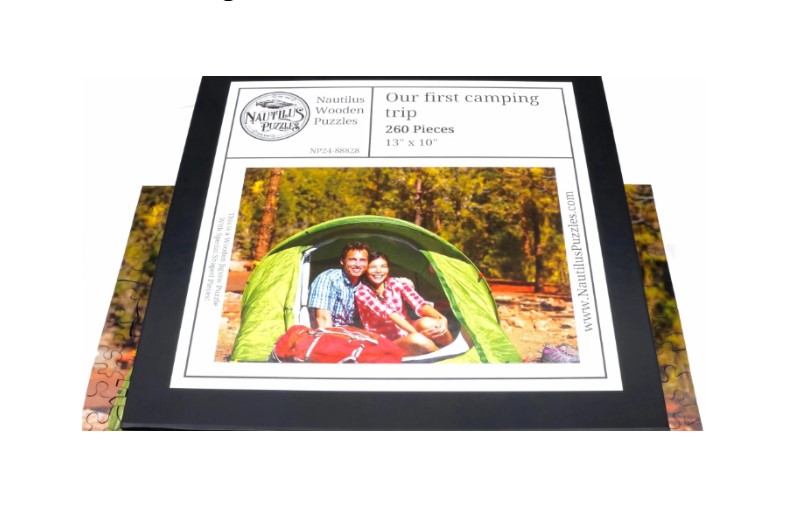
A jigsaw puzzle has long been a quiet, screen-free way to spend an evening, but the hobby has changed in recent years. Instead of choosing from a shelf of landscapes and paintings, people across the USA can now turn their own images into a finished game. This shift has made custom puzzles popular for family gatherings, anniversaries, retirement parties, and classroom activities, since the picture carries personal meaning before the first piece is placed. The result is part keepsake and part entertainment, and it works for beginners as well as seasoned puzzlers. This article explains how the process works, which image qualities matter, how piece counts affect difficulty, and what to consider when planning one as a gift.
From Photograph to Finished Puzzle
The process begins with choosing an image, and quality matters more than most people expect. Printing relies on resolution, so a sharp photo with good lighting will reproduce better than a small, blurry, or heavily compressed file. As a rough guide, images taken with a modern phone or camera at full size usually work well, while screenshots and social media downloads often lose detail. Composition is equally important. A picture with clear subjects, varied colors, and some contrast gives the solver visual landmarks, whereas a photo dominated by sky, water, or a plain wall can feel frustrating. Cropping can help, since the puzzle’s aspect ratio may differ from the original photo. When planning custom puzzles, it also helps to keep faces and text away from the edges, because borders can be trimmed slightly during cutting. Once the file is approved, it is printed onto board and cut into interlocking pieces.
Piece Counts, Sizes, and Difficulty Levels
Piece count is the biggest factor in how challenging a puzzle will feel. Smaller counts, such as 100 to 300 pieces, suit children, beginners, or anyone who wants a relaxed afternoon activity. Mid-range counts of 500 to 1,000 pieces are the traditional choice for adults, offering a satisfying challenge without demanding weeks of table space. Larger formats of 1,500 pieces or more reward patience and need a dedicated surface. Piece size matters too, since larger pieces are easier to handle for older players or those with limited dexterity. Cut style also changes the experience: classic cuts with uniform shapes are predictable, while random cuts mix up the sizes and feel more difficult. Anyone designing custom puzzles should match the piece count to the intended solver and the table where it will be assembled.
Gift Ideas and Occasions That Suit Photo Puzzles
Photo-based custom puzzles work well as gifts because they combine sentiment with an activity the whole group can share. Wedding or engagement photos, a childhood picture of a grandparent, a family tree portrait, or a map of a hometown all make memorable subjects.
Many people choose a personalized jigsaw puzzle for milestone birthdays or holidays, since it can be assembled together while stories are shared. The finished picture can also be framed afterward using puzzle glue, turning the activity into wall decor. Larger groups can split into teams to speed things up. Hobbyists and retirees often enjoy personalized puzzles that feature favorite travel destinations, vintage artwork, or hobbies. A short note tucked inside the box adds another layer of surprise, and storing the pieces with the reference image on the lid keeps the keepsake intact.
Conclusion
Creating a puzzle from a favorite image is a simple way to turn a memory into something people can handle, share, and rebuild together. The best results come from a sharp photo, a sensible piece count, and a design with enough variety to keep solvers engaged. Taking time to check resolution, crop carefully, and choose the right size prevents disappointment later. With a little planning, personalized puzzles for adults can suit every age group, from a child’s first challenge to a retiree’s long-term hobby. They also encourage conversation, patience, and teamwork, which is a welcome change from constant screen time. Before ordering, review the proof closely, confirm the dimensions, and keep a backup of the original file.