
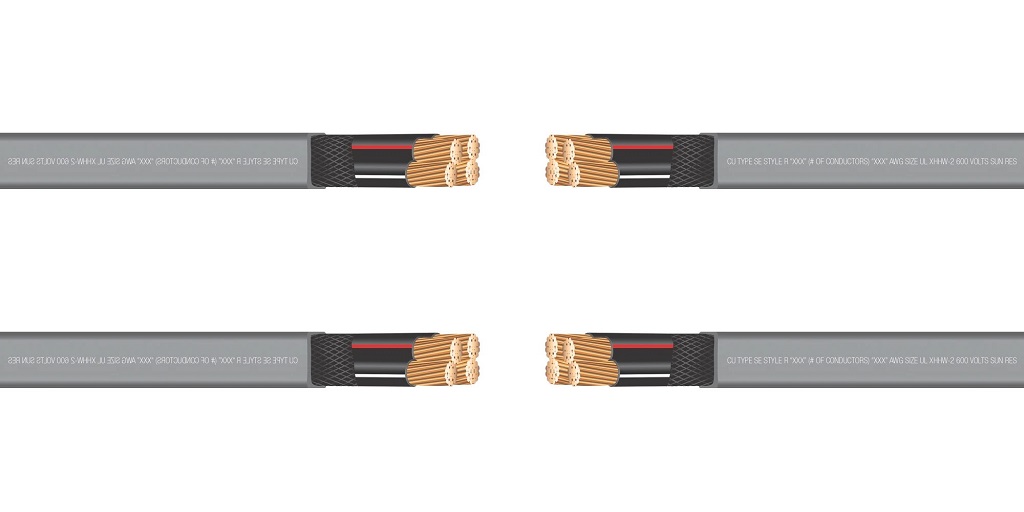
One of the most common ratings in building wire is 600 volt wire. This is, in part, because service voltage is much lower and the 600 volt rating creates a pretty large safety buffer.
Among 600 volt wire, two of the most common basic types of building wire used to wire circuits for lights, appliances, and other applications are THHN and THWN building wire. Here’s what you should know about each of them.
What Are the THHN and THWN Designations?
In THHN wire, which is one of the most common types of building wire, the acronym stands for “thermoplastic, high-heat, nylon”. This is a reference to the fact that the wire is made with PVC insulation and a nylon jacket.
Because of the high-heat designation, THHN wire is suitable for installation in locations where it will be exposed to relatively high heat. This designation makes it suitable for wiring appliances and some machine tools. THHN wire can also exhibit some degree of resistance to oil.
THWN is very similar, but instead, it has a slightly different designation of “thermoplastic, high-heat, water-resistant nylon”. It also sports PVC insulation and a nylon jacket, in addition to resistance to high-heat, but because of its resistance to water it can also be installed in wet locations.
Both THHN and THWN wire are used for the same basic applications, but because THWN has an additional water resistant rating it is slightly more versatile. They’re both resistant to 90 Celsius in dry installations and in the case of THWN, it is rated as resistant to temperatures to 75 Celsius in wet locations.
The 600 Volt Rating
These wires are commonly rated to 600 volts, which creates a fairly solid buffer against the voltages they would commonly experience, since common service entry voltages are 110V and 240V. Because of this, they are commonly used as building wire because they can be used for so many different applications.
Common uses for these types of 600 volt wire include general building wire for power circuits, appliances, lighting, and much more.
Conductor Count
THHN and THWN wire typically have one conductor, and are relatively flexible. However, conductor count is something to be aware of in building wire because it influences flexibility.
If you hold all else equal, the higher the conductor count of an electrical wire or cable, the more flexible it will be. This makes wire with higher conductor count preferable for installation in tight spaces or otherwise in areas in which a higher degree of flexibility is warranted.
Add a Reliable Supplier of 600 Volt Wire to Your Rotation
In the event that you need a new supplier of 600 volt wire, visit EWCS Wire. They carry a wide range of general purpose building wire along with specialty electrical wire and cable. Some of the types of electrical wire and cable they carry include battery cable, solar panel cable, submersible pump cable, and tray cable, among many others. Visit their website for more information and get in touch with them if you have questions.
For more information about Welding Cable and Copper Wire Supplier Please visit: Electrical Wire & Cable Specialists.