
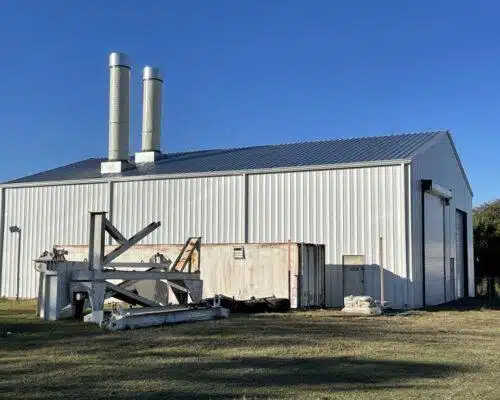
Metal wall panels can be made from steel, aluminium, zinc or copper. They can be flat, wavy, corrugated or standing-seam (as seen on many modern commercial buildings). Metal wall panels can be pre-painted or left unpainted to allow a weathered appearance. They are commonly used in warehouses, offices, restaurants and barns. However, they have become increasingly popular in domestic properties. They were originally used in industrial buildings, however due to their clean aesthetic and performance, they are becoming very popular in general. If you have seen a modern farmhouse recently with black vertical cladding, it is likely to be metal.
Why choose metal wall paneling?
Compared to other cladding options, metal wall panels will not decay, crack or develop fine fractures, as wood, vinyl and stucco can. With correct installation, they can last between 40-70 years, depending on material. As a result, they are extremely durable in comparison to other claddings. They are also resistant to termites, difficult to set on fire, and perform reasonably well in heavy hail. Maintenance is very simple and can be carried out with a hose and gentle cleaning products. Although not exciting, owners who suffer from regular painting of wooden wall panels (every 5 years) often have strong opinions on this!
Costs
Although metal wall panels can be expensive to install, they are often more cost effective in the longer term. They generally cost between 8-25 per sq ft. This varies greatly depending on gauge, paint finish and profile of panel. Copper and zinc panels can be significantly more expensive. Over 40 years however, this cost looks far more reasonable. Due to the high durability and resistance to fire and impact, you may receive a discount on insurance. Rather than paying for new paneling in 15 years, or repainting, these factors mean that over 40 years, the cost is much more reasonable.
Choosing the right metal and panel design
Steel is by far the most common option. It is strong, inexpensive, and can take a wide variety of coatings. However, if cheaper options are chosen, and the installation is done carelessly, the edges of the metal can corrode. Aluminium is completely resistant to corrosion but can dent more easily. Therefore it is a good choice for coastal areas. Zinc and copper are more expensive, but develop a natural patina.
The design of the panels can vary:
- Corrugated panels give a traditional rural/industrial look.
- Standing seam panels will create a sleek look, hiding screws.
- Flat lock panels give a modern look.
When choosing metal wall panels, we recommend seeing large samples in natural daylight, rather than small samples in a showroom. Colours can vary significantly outside, so it can be a shock to see a different colour than expected once the installers have left.
Common Issues with Installation
In most cases, issues with metal wall panels are not with the materials provided, but with the installation.
Common installation problems include:
- Failing to allow for thermal expansion is a common issue. As temperatures rise and fall, metal can expand/contract. If paneling cannot move, buckling or popping can occur.
- Failure to include a weather barrier means water can collect in the gap beneath the panels. This can go unnoticed causing the sheathing to go soft.
- Poor flashing in around window/door openings and corners is also very common. Leaks usually occur here.
Using stainless or coated fixings and appropriate sealants, and employing someone experienced with metal wall panels rather than a contractor mainly experienced with vinyl (who may think ‘how hard can it be?’), is recommended.
Issues with metal wall panels and metal roofs
Many people do not realise that metal wall panels and metal roofs are very related. Common leakage points are at junctions between wall panels and roof panels. If you can see staining in the upper part of internal walls, it is very common that this is coming from issues with the roof above. In this case, a repair may be needed on the roof. Even if only wall panels were requested, a good contractor will check both. However, a lazy contractor may simply fix the wall, and the same staining may appear next spring.
Common Issues with Leaking Metal Roofs
Leakage on metal roofs is not as bad as feared, and in most cases can be easily fixed.
Common problems include:
- Loose or missing screws, worn washers, and sealant failure in joints.
- Issues with flashing around venting, skylights and chimney stacks can also cause leakage.
- Over time, fixings can become loose due to thermal expansion.
- Corrosion in cut edges can also occur.
Repairs can be as simple as using larger fixing screws, and new sealant, or as complex as replacing damaged sections of panel. Do NOT put roofing tar on it. It will dry, crack and make problems worse when it comes to making proper repairs.
First find the cause of the leak. As water runs along the undersides of panels before dripping, the wet area inside is rarely directly below a hole. Fixing small issues in wall joints and roof fixings as soon as possible will mean that any repairs to leaking metal roofs can be easily fixed in a short amount of time. Although boring advice, this works!
Conclusion
For most people wanting to keep a building for over 10 years, metal wall panels are a great choice. Despite initial high costs, they have a long lifespan and cope well with a range of weather conditions. Aesthetically, they look great, and require very little maintenance. However, the installation can be tricky. If flashing, a weather barrier and consideration of thermal expansion are all correct, you may almost forget that you have metal wall panels. Be wary of junctions between walls and roofs as this can lead to problems. If a leak occurs, make repairs quickly. Timely metal roof leak repair and small repairs to leaking metal roofs will save you much trouble in the future, as wet sheathing can be very messy to replace. Research contractors carefully, and ask for references. Do not choose a contractor purely based on price.
Frequently Asked Questions
How long will metal wall panels last?
Most steel and aluminium panels will last between 40-60 years with minimal maintenance. Zinc and copper can last longer. The paint will usually come with its own warranty, often 20-40 years.
Are metal wall panels noisy in rainfall?
In walls, they are unlikely to be. Noise in metal roofs is more common. With good insulation and underlay, noise should be minimised. Solid backing with insulation will make for quiet wall panels.
Can metal wall panels be fitted over existing paneling?
Sometimes, depending on existing paneling. If the existing paneling is rotten or uneven, it should be removed before fitting new panels to prevent issues occurring behind.
Why is my metal roof leaking?
Most commonly due to loose fixings, damaged sealant, poor flashing and corrosion at edges. Many issues come from thermal expansion over time.
Can I make repairs to leaking metal roofs myself?
Simple repairs such as replacing a few fixings or re-sealing joints can be easily made by yourself if comfortable working on the roof. If sections of paneling or complex flashing need to be replaced, it is best to employ a professional.
How much will repairs to leaking metal roofs cost?
Repairs to minor issues can be a couple of hundred dollars. More complicated issues requiring flashing repairs or section replacement can be thousands of dollars. Correct diagnosis of the cause is key to preventing repeat visits.