
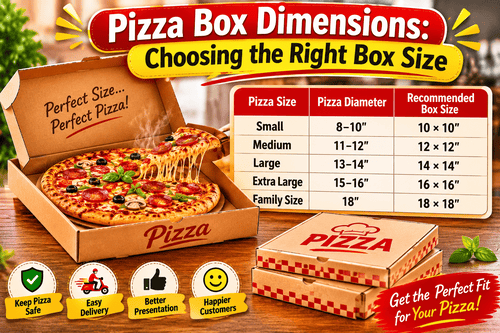
Pizza packaging plays an important role in keeping food fresh, protected, and attractive during delivery and takeaway services. Whether you own a small pizza shop or manage a large food business, selecting suitable packaging can improve customer satisfaction and make transportation easier. Understanding Pizza Box Dimensions helps business owners choose packaging that fits different pizza sizes without damaging the crust, toppings, or overall presentation. The right box also provides enough space for proper handling while maintaining the quality of the pizza. From personal pizzas to extra-large family options, choosing suitable packaging is an important part of running a successful pizza business.
Understanding Pizza Box Dimensions
Pizza boxes are available in different sizes, shapes, and materials to meet the needs of restaurants and customers. Their measurements usually depend on the diameter of the pizza they are designed to hold. A properly sized box should provide enough room for the pizza without allowing too much movement inside.
Most standard pizza boxes are square because this shape is easy to manufacture, stack, store, and transport. Although pizzas are usually round, square packaging provides convenient protection and makes delivery more practical.
Understanding box measurements also helps restaurant owners manage packaging costs, storage space, and daily orders.
Standard Pizza Box Sizes and Their Measurements
Different pizzas require different packaging sizes. Restaurants generally use small, medium, large, and extra-large boxes depending on their menu options.
Here are some common pizza box measurements:
| Pizza Size | Pizza Diameter | Recommended Box Size |
| Small | 8–10 inches | 10 × 10 inches |
| Medium | 11–12 inches | 12 × 12 inches |
| Large | 13–14 inches | 14 × 14 inches |
| Extra Large | 15–16 inches | 16 × 16 inches |
| Family Size | 18 inches | 18 × 18 inches |
Choosing the Right Box Size for Different Pizzas
Choosing the right box size is essential for maintaining pizza quality during storage and transportation. A box that is too small can damage the edges, toppings, and crust, while an oversized box may allow the pizza to move around during delivery.
For example, a small pizza needs compact packaging, whereas a large or family-sized pizza requires more space. Restaurants should consider the pizza diameter, crust thickness, and additional toppings before selecting packaging.
The following table can help pizza businesses select suitable packaging:
| Pizza Type | Suggested Box Size | Best Use |
| Personal Pizza | 10 × 10 inches | Individual meals |
| Medium Pizza | 12 × 12 inches | Small families |
| Large Pizza | 14 × 14 inches | Family orders |
| Extra-Large Pizza | 16 × 16 inches | Group gatherings |
| Family Pizza | 18 × 18 inches | Parties and events |
Selecting the correct measurements helps keep pizzas secure and makes packaging more efficient.
How Pizza Box Dimensions Affect Food Quality
Packaging does more than simply cover a pizza. It helps protect food from dust, damage, and outside contamination during transportation. The correct box size also helps prevent unnecessary movement that could affect the toppings and appearance.
Proper ventilation is another important factor. Some pizza boxes include small ventilation holes that allow excess steam to escape. This helps reduce moisture buildup and keeps the crust from becoming too soft.
Restaurants should also consider the height of their boxes. Thick-crust pizzas and pizzas with extra toppings may require deeper packaging to prevent the lid from touching the food.
Why Bizz Crave Recommends Proper Pizza Packaging
At Bizz Crave, we understand that packaging is an important part of the food service experience. Customers expect their pizzas to arrive fresh, delicious, and in excellent condition. Choosing appropriate packaging can help restaurants deliver a better experience while maintaining their brand image.
Pizza businesses should focus on durable materials, suitable measurements, proper ventilation, and convenient designs. These features can help protect food during transportation and make packaging easier for employees to handle.
Investing in quality pizza boxes can also help businesses create a professional impression and build customer trust.
Different Materials Used in Pizza Boxes
Pizza boxes are commonly manufactured using corrugated cardboard and paperboard. Both materials offer different advantages depending on business requirements.
Corrugated cardboard: This material provides extra strength and protection. It is suitable for delivery services because it can help prevent boxes from bending during transportation.
Paperboard: Paperboard is generally lighter and may be suitable for smaller pizzas or takeaway orders. It offers a simple packaging solution for restaurants.
Businesses should choose food-safe packaging materials that can handle heat and transportation conditions.
Important Factors to Consider Before Buying Pizza Boxes
Before purchasing pizza packaging, restaurant owners should consider several important factors:
- Pizza diameter: Measure the pizza before selecting a box to ensure a comfortable fit.
- Crust thickness: Deep-dish and stuffed-crust pizzas may require taller boxes.
- Material quality: Choose strong, food-safe materials that protect the pizza.
- Ventilation: Proper airflow can help reduce excess moisture.
- Storage space: Select packaging that is easy to stack and store.
- Budget: Compare prices and quality to find a cost-effective option.
- Branding: Custom printing can make packaging more recognizable and professional.
Considering these factors can help businesses avoid packaging problems and improve their daily operations.
Benefits of Using the Correct Pizza Box Size
Using properly sized pizza boxes offers several advantages for restaurants and customers.
- Better protection: Suitable packaging helps prevent pizza damage.
- Improved presentation: A well-fitted box keeps the pizza looking appealing.
- Easy transportation: Correct measurements make delivery more convenient.
- Reduced waste: Appropriate packaging can help avoid unnecessary material usage.
- Better customer satisfaction: Customers receive their orders in better condition.
- Efficient storage: Standardized sizes make stacking and organizing easier.
These benefits make packaging an important consideration for both small and large pizza businesses.
Conclusion
Selecting suitable pizza packaging is essential for maintaining food quality, protecting pizzas, and improving customer satisfaction. From personal pizzas to extra-large family options, every pizza requires packaging that provides enough room and proper support. Understanding measurements, materials, ventilation, and pizza thickness can help businesses make better packaging decisions.
Choosing the right box size is not only about fitting a pizza inside a container; it is also about creating a convenient and professional delivery experience. With suitable packaging, pizza businesses can protect their products, reduce waste, and build stronger customer relationships.
Frequently Asked Questions (FAQs)
What are the standard pizza box dimensions?
Standard pizza box dimensions usually range from 10 × 10 inches for small pizzas to 18 × 18 inches for family-sized pizzas. The exact size depends on the pizza diameter and packaging requirements.
How do I choose the right pizza box size?
To choose the right pizza box size, measure the pizza diameter and consider its crust thickness and toppings. The box should provide enough space to protect the pizza without allowing excessive movement.
What size pizza box is suitable for a large pizza?
A 14 × 14-inch pizza box is commonly used for a large pizza measuring around 13–14 inches in diameter. However, measurements may vary depending on the manufacturer.
Why are pizza boxes usually square instead of round?
Pizza boxes are usually square because they are easy to manufacture, stack, store, and transport. Their shape also provides convenient protection for round pizzas.
Which material is best for making pizza boxes?
Corrugated cardboard is a popular choice because it provides strength, durability, and protection during delivery. Food-safe paperboard is another option for lightweight pizza packaging.