
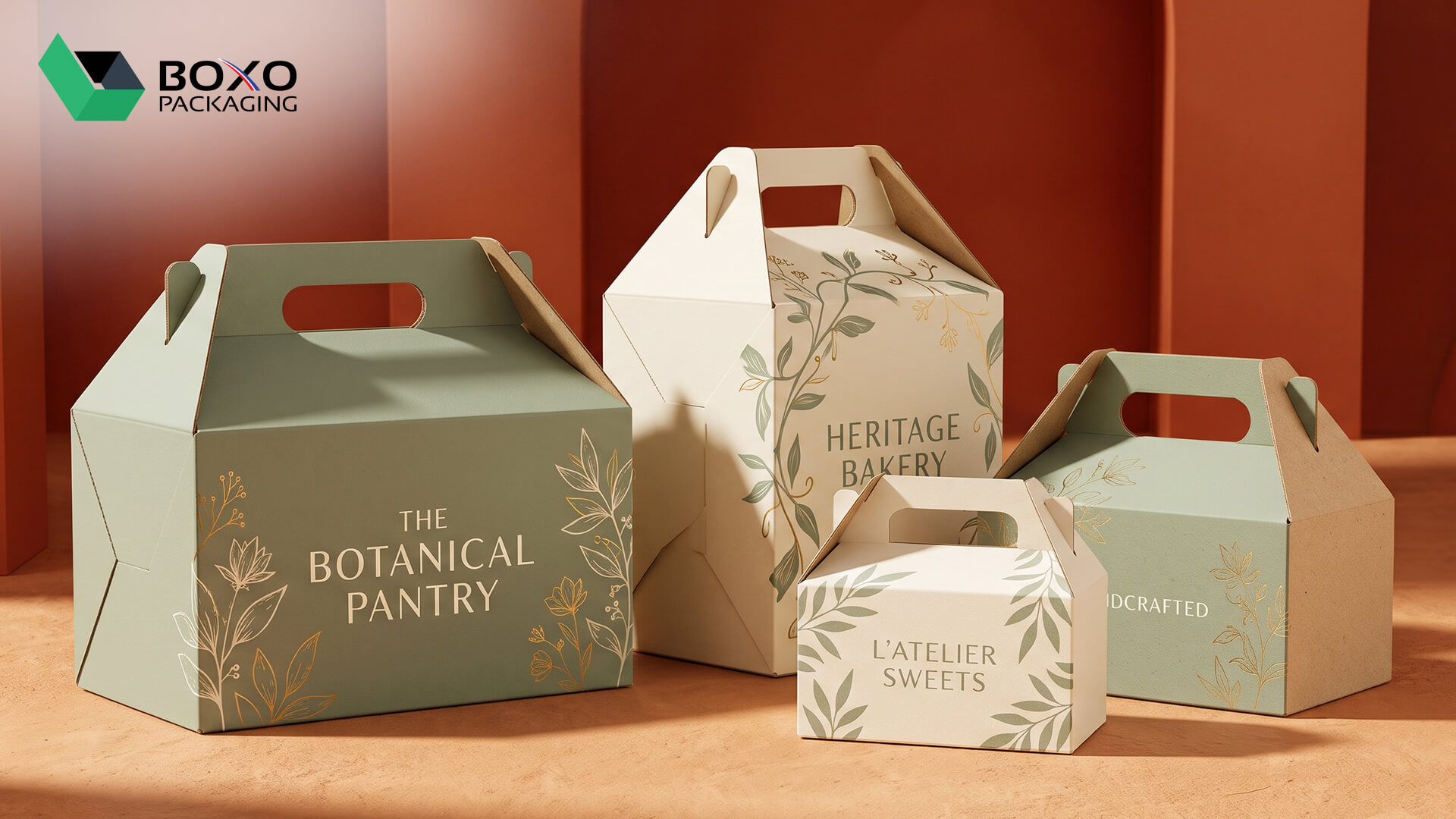
A gable carton has a sloped, roof shaped top that locks shut and works as a carry handle. Many bakers, sweet shops and gift sellers choose custom gable packaging because the shape is easy to carry and simple to spot on a counter. This guide covers the structure, materials and cost factors so you can brief a supplier clearly.
How the Carry Handle Is Built
A gable carton is a folding box with two angled panels that meet at the top and lock together. It arrives flat, so storage space stays low, and staff can assemble it by hand in seconds.
The handle is part of the structure. Its strength depends on the board weight and the contents, so light to medium products suit it best.
Products That Suit This Shape
Four uses are especially common:
- Cupcakes, cookies and pastries sold as takeaway treats.
- Sweets, chocolates and party favours packed as small gift sets.
- Small gifts and hampers where a playful shape adds appeal.
- Hot takeaway meals, provided the board is coated or lined against grease.
Size the carton around your heaviest item, then adapt it for lighter ones.
Board Choices and Food Safety
Kraft paperboard of around 300 to 350 GSM gives a natural look, while white SBS board of 300 to 400 GSM holds sharper colour. E flute corrugated board adds rigidity for heavier contents, though it is harder to fold around the handle.
For anything touching food, ask your supplier for board suitable for direct contact and confirm it meets UK food contact rules. A greaseproof liner is often safer than printing on the inner surface.
At Boxo Packaging, we usually ask for product weight, carton dimensions and whether items are served warm or cold before suggesting a board grade.
Printing and Window Options
Digital printing suits short runs and seasonal designs. Offset printing gives richer colour and a lower unit price on larger orders.
A window helps sell the product, but plastic film must be removed before recycling. A paper film or open cut out is easier to dispose of, though it protects less. Keep logos away from fold lines and the handle slot, where ink can crack or get cut off.
What Affects the Price
Order quantity has the biggest effect, since setup and tooling are spread across more units. Board grade, size, print colours and finishing then add to the total, and a new cutting die is a one off charge.
Look for FSC certified board and water based inks. Avoid claiming a carton is “fully green”, as every material has some footprint. Coatings and plastic windows can complicate recycling.
Ordering Tips Before You Commit
Request a physical sample, fill it with real products and carry it by the handle. Check that the tabs stay locked and the base keeps its shape.
Allow extra lead time, since production and freight can take several weeks. A reliable supplier will question your specification rather than simply accept it. That is how we work at Boxo Packaging, because fixing a problem early costs far less than a reprint, especially with custom gable packaging.
Retail Boxes: A Practical Guide for Shelf and Online Sellers
A customer usually handles the box before they ever try the product inside. Well planned retail boxes protect the contents, carry your branding and help an item stand out beside its competitors. This guide covers the main styles, materials and cost factors so you can brief a supplier clearly.
What Sets a Retail Box Apart
A retail box is a printed carton that holds a product at the point of sale and goes home with the buyer. Shipping cartons are different, as they are plain and built mainly to survive transit.
Most are made from folding carton board or thin corrugated board. They arrive flat and are assembled by hand or on a packing line.
Styles Worth Considering
The right style depends on product size, weight and where it will be displayed. Four options cover most requests:
- Tuck end boxes: a simple, low cost shape for supplements, soaps and small accessories.
- Sleeve boxes: a tray with a printed outer cover, popular for candles and gifts.
- Hanging boxes: cartons with a punched tab for pegboard racks in pharmacies and convenience stores.
- Window boxes: a die cut opening that lets shoppers see the item before buying.
If you sell in shops and online, pick a style that survives courier handling as well as looking good on a shelf.
Materials and Board Weights
Folding carton board of 300 to 400 GSM is the usual choice for lightweight items. White SBS board gives a smooth surface for sharp colour, while kraft board suits natural or handmade brands.
Heavier or fragile goods may need E flute corrugated board for added rigidity. For anything touching food, ask your supplier for board suitable for direct contact and confirm it meets UK food contact rules.
At Boxo Packaging, we usually ask for product weight, dimensions and sales channel before suggesting a board grade, since a shelf item and a posted item need different strength.
Printing and Finishing Options
Digital printing suits short runs and frequent design changes. Offset printing gives richer colour and a lower unit price on larger orders.
Matt lamination, spot UV, foil and embossing add a premium feel, though each raises the cost. A simple one or two colour design can look smart and stay affordable.
Cost Factors and Sustainability
Order quantity has the biggest effect on price, since setup and tooling are spread across more units. Board grade, size, print colours and finishing then add to the total, and a new cutting die is a one off charge.
Look for FSC certified board, water based inks and single material designs that recycle more easily. Avoid claiming a box is “fully green”, as every material has some footprint. Plastic windows and heavy lamination can complicate recycling.
Ordering Tips Before You Commit
Request a physical sample and fill it with real stock. Check the dieline proof, test the closure and drop a packed box from a realistic height.
Allow extra lead time, since production and freight can take several weeks. A reliable supplier will question your specification rather than simply accept it. That is how we work at Boxo Packaging, because fixing a problem early costs far less than a reprint, especially with retail boxes.