
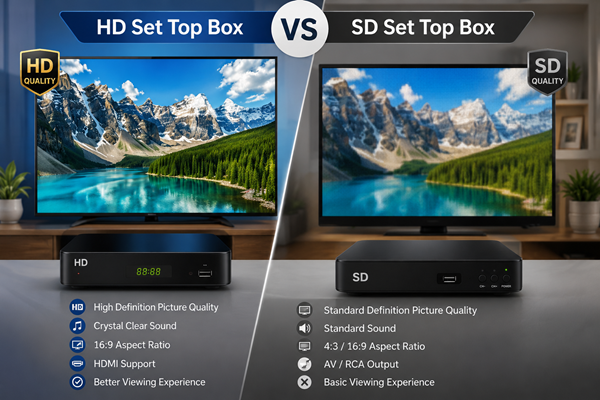
Choosing the right set-top box can make a noticeable difference to your television viewing experience. With several DTH services and television technologies available today, viewers often come across two common options: HD (High Definition) and SD (Standard Definition) set-top boxes.
Both devices help receive television signals and display channels on your TV. However, they differ in picture quality, resolution, viewing experience, and compatibility with modern televisions. If you are planning to purchase a new set top box or upgrade your existing DTH connection, understanding these differences can help you make an informed decision.
In this article, we will explore the difference between HD and SD set-top boxes, their features, benefits, and factors to consider before choosing one.
What is an SD Set Top Box?
An SD (Standard Definition) set-top box is a device that receives television signals from a DTH service provider and converts them into a format that can be displayed on your television.
SD set-top boxes generally support a resolution of up to 576i (in the PAL television standard commonly used in India). They are designed for standard-definition channels and provide basic television viewing functionality.
These devices are suitable for viewers who primarily watch regular TV channels and do not require high-resolution picture quality.
Key Features of an SD Set Top Box:
- Supports standard-definition television channels.
- Provides basic TV viewing functionality.
- Compatible with many older television models.
- Generally offers a lower-cost option than HD devices.
- Suitable for viewers with basic entertainment requirements.
What is an HD Set Top Box?
An HD (High Definition) set-top box is designed to deliver television content in higher resolution than a standard-definition device. It supports HD channels and provides sharper images, better picture clarity, and more detailed visuals.
Depending on the device and broadcast format, an HD set-top box can support resolutions such as 720p or 1080i. This makes it a suitable choice for viewers who want to enjoy movies, sports, entertainment shows, and other content with improved visual quality.
HD set top boxes work particularly well with HD-ready and Full HD televisions.
Key Features of an HD Set Top Box:
- Supports HD television channels.
- Delivers sharper images and better picture clarity.
- Provides improved viewing quality on compatible televisions.
- Offers a better experience for watching sports, movies, and entertainment content.
- Supports modern television viewing requirements.
HD Set Top Box vs SD Set Top Box: Key Differences
Although both devices perform the same basic function, their technical capabilities and viewing experiences differ.
| Comparison Factor | SD Set Top Box | HD Set Top Box |
|---|---|---|
| Full Form | Standard Definition | High Definition |
| Picture Quality | Standard picture quality | Sharper and clearer picture quality |
| Resolution | Generally up to 576i | Typically 720p or 1080i |
| Channel Support | SD channels | HD and SD channels, depending on service |
| Viewing Experience | Basic television viewing | Enhanced viewing experience |
| TV Compatibility | Suitable for older and compatible TVs | Suitable for HD-ready and Full HD TVs |
| Picture Details | Less detailed visuals | More detailed visuals |
| Best For | Basic TV viewing | Movies, sports and entertainment |
| Cost | Generally more affordable | Generally costs more |
5 Major Differences Between HD and SD Set Top Boxes
1. Picture Quality and Resolution
The most noticeable difference between HD and SD set-top boxes is picture quality.
An SD set-top box delivers content in standard resolution, which may appear less detailed, particularly on larger television screens. On the other hand, an HD set-top box supports higher resolutions, allowing viewers to experience sharper images and clearer visuals.
For example, when watching a cricket match, an HD channel can display finer details, such as player movements and the ball, more clearly than an SD channel, provided the broadcast is available in HD.
2. Channel Availability
SD set-top boxes are primarily designed for standard-definition channels. Viewers using these devices can access the SD versions of channels available in their subscribed DTH package.
HD set-top boxes support HD channels as well as SD channels, depending on the service provider and subscription plan. This gives viewers access to more high-definition entertainment options when available.
However, the actual number of channels depends on the DTH provider, selected package, and regional availability.
3. Television Compatibility
Both HD and SD set-top boxes can work with compatible television models, but the viewing experience may vary.
An SD set-top box can be used with many older televisions that support standard-definition input. An HD set-top box is better suited to HD-ready and Full HD televisions because these screens can display higher-resolution content.
Before purchasing a set-top box, check the available ports and supported resolutions on your television.
4. Entertainment Experience
The type of content you watch can influence which set-top box is more suitable.
If you mostly watch news, regular television shows, and regional channels, an SD set-top box may meet your basic viewing requirements.
However, if you enjoy watching movies, live sports, documentaries, and entertainment programmes, an HD set-top box can provide a more immersive viewing experience through improved picture clarity.
5. Price and Subscription Plans
SD set-top boxes are generally available at a lower price compared to HD models. This makes them an option for viewers who want a basic television setup.
HD set-top boxes may involve a higher device cost or different subscription requirements. Additionally, accessing HD channels may require a compatible DTH package.
It is advisable to compare installation charges, device prices, channel packages, and recurring recharge costs before making a decision.
Benefits of Choosing an HD Set Top Box
An HD set-top box offers several advantages for viewers who prefer better picture quality and an enhanced entertainment experience.
Some important benefits include:
- Better Picture Clarity: Enjoy sharper visuals and more detailed images on compatible televisions.
- Improved Sports Viewing: Watch cricket, football, and other sports with clearer visuals.
- Enhanced Movie Experience: Enjoy movies and entertainment programmes with improved picture quality.
- Access to HD Channels: Watch available HD channels through a compatible DTH subscription.
- Suitable for Modern TVs: Make better use of the display capabilities of HD-ready and Full HD televisions.
Which Is Better: HD or SD Set Top Box?
The choice between an HD and SD set-top box depends on your television, viewing preferences, and budget.
An SD set-top box can be a practical option if you have an older television and primarily watch regular channels. It can fulfil basic entertainment requirements without requiring an upgrade to an HD device.
However, an HD set-top box is generally a better choice if you own an HD-ready or Full HD television and want to enjoy clearer visuals. It is particularly useful for people who regularly watch movies, sports, and other entertainment content.
If you are purchasing a new DTH connection, consider choosing an HD set-top box to make the most of a compatible television.
Things to Consider Before Buying a Set Top Box
Before selecting an HD or SD set-top box, consider the following factors:
- Television Resolution: Check whether your television supports HD or Full HD resolution.
- Channel Requirements: Identify whether you need access to HD channels or are comfortable with SD channels.
- Budget: Compare the device price, installation charges, and monthly recharge requirements.
- DTH Service Provider: Check channel availability, subscription plans, customer support, and additional services.
- Connectivity: Check whether the set-top box supports HDMI, AV, and other connectivity options required by your television.
Conclusion
Both HD and SD set-top boxes serve the same basic purpose of delivering television channels to your screen, but they offer different viewing experiences. While an SD set-top box is suitable for basic television requirements, an HD set-top box provides sharper visuals, better picture clarity, and access to available HD channels.
If you have a compatible modern television and enjoy watching movies, sports, and entertainment programmes, an HD set-top box is generally the more suitable option. Before making a purchase, compare the available DTH plans, device features, and installation requirements to find the right option for your home.