
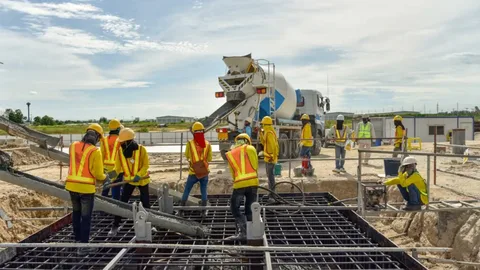
Concrete placement is a time-sensitive construction activity that requires preparation, coordination, and attention to detail. Once the material arrives on site, the team must place and finish it within a suitable working period. Delays or poor preparation can affect the finished surface, which makes planning essential.
Understanding how Concrete pouring services fit into a construction project helps property owners ask better questions, evaluate proposals, and prepare for the work.
Preparing the Site Before Delivery
Preparation begins well before concrete reaches the property. The dimensions and elevations must be established, the ground prepared, and forms positioned to define the intended shape.
The base should be suitable for the planned use. Depending on the project, preparation may involve excavation, compaction, grading, and the placement of specified base materials.
Reinforcement, if required, must be installed according to the design. Forms should be checked for alignment and stability so they can maintain the intended dimensions during placement.
Access is another practical consideration. The team needs a workable route for delivery equipment and a clear plan for moving the material to the required location.
Coordinating Delivery and Placement
Concrete begins changing from a workable material as soon as it is mixed. The installation team must therefore coordinate delivery with the site’s readiness and the available labor.
Before the delivery arrives, tools, forms, finishing equipment, and necessary personnel should be prepared. The placement sequence should also be established, particularly when the project involves a large surface or restricted access.
A delay may create difficulties if the material becomes harder to place and finish. Proper coordination helps reduce interruptions and supports a consistent result.
Property owners should discuss how the team intends to handle access restrictions, delivery timing, and any potential obstacles.
Managing Concrete Consistency
The mixture must meet the project’s specifications. Consistency affects how easily the material can be placed, consolidated, and finished.
Adding water without authorization can change the mixture’s properties and may reduce its intended performance. Any adjustments should follow the applicable specifications and be handled by qualified personnel.
Consolidation is also important where the design and mixture require it. Appropriate methods help reduce trapped air and ensure the material fills the forms around reinforcement and other details.
The correct approach depends on the mixture, formwork, dimensions, and placement method. It should be established before the work begins rather than improvised during installation.
Finishing the Surface Correctly
After placement, the team shapes and levels the surface to achieve the specified profile. Finishing methods depend on the intended use and desired appearance.
A walkway may need a textured finish for traction, while another application may require a different surface treatment. The chosen finish should account for weather exposure, expected use, and maintenance requirements.
Timing matters because finishing too early or too late can affect the result. Adding water to the surface to make finishing easier may also cause problems if it is not permitted by the specified method.
For Concrete driveway installation, the team must also pay attention to edges, drainage slopes, transitions, and joint placement. These details influence how the surface functions after it is put into service.
Curing and Protection
Finishing is only one part of the process. Concrete needs suitable conditions to develop strength, and curing procedures help support the hydration process.
The appropriate method depends on the mixture, weather, project specifications, and exposure conditions. Measures may include maintaining moisture or using an approved curing compound.
Hot weather can accelerate moisture loss, while cold conditions may slow strength development or create freezing risks. The work plan should account for these factors.
The area should remain protected for the period recommended by the responsible professional. Early traffic or excessive loading may damage a surface that has not yet developed sufficient strength.
Common Placement Problems
Several issues can affect the finished result when preparation or coordination is inadequate.
- Uneven surfaces: These may result from poor leveling, unstable forms, or inconsistent finishing.
- Surface defects: Incorrect finishing practices or unsuitable weather conditions can affect appearance and durability.
- Uncontrolled cracking: Inadequate joint planning, shrinkage, settlement, or other factors may contribute to cracking.
- Drainage problems: Incorrect elevations can allow water to collect in unwanted areas.
- Delays: Poor coordination between site preparation, delivery, and available labor can interrupt placement.
The causes are not always obvious from the finished surface. If a concern develops, it should be assessed in context rather than assuming that one visible defect explains the entire problem.
How to Prepare as a Property Owner
Before the scheduled date, confirm the work area is accessible and any required site arrangements have been made. Discuss parking restrictions, delivery access, nearby landscaping, and any household activities that could interfere with the work.
Confirm the agreed scope, material specifications, finish, and cleanup arrangements. Ask how weather-related changes will be communicated and when the finished area can be used.
If the project involves regulated construction work, verify applicable permit and inspection requirements. Retain the written agreement and any relevant specifications for future reference.
FAQs
1. Why must the site be ready before concrete delivery?
Concrete has a limited working period. Prepared forms, a suitable base, and available equipment help the team place and finish the material without unnecessary delays.
2. Can water be added to concrete on site?
Only when permitted by the applicable specifications and handled appropriately. Uncontrolled water additions can change the mixture’s properties.
3. Why is curing necessary?
Curing supports hydration, which allows concrete to develop strength. Suitable protection helps the material perform as intended.
4. How soon can a new concrete surface be used?
The timing depends on the mixture, environmental conditions, and intended load. Follow the project-specific instructions rather than relying on a universal timeframe.
Conclusion
Successful concrete placement relies on preparation, delivery coordination, proper finishing, and suitable curing. Each stage contributes to the performance of the finished surface, and mistakes made early can be difficult to correct later. Property owners should review the installation plan, understand the specifications, and confirm how the work will be protected after placement. For projects that require coordinated planning and execution, Residential concrete contractor expertise can help ensure that the placement process is organized around the property’s needs and the project’s requirements.