
Somebody sits down, tells me they’ve done three rounds of whitening and one tooth is still gray. They’re annoyed, and I don’t blame them. Here’s what a teeth bleaching dentist should tell you early on: color problems come from different places, and where the stain comes from decides whether gel can touch it. Some stains melt away. Others barely move. Knowing which kind you’ve got saves you money, time, and a lot of irritated gums from products that were never going to work.
Surface Stains Versus Stains From the Inside
Dentists sort discoloration into two buckets. Extrinsic stains sit on or just under the enamel surface. Coffee, tea, red wine, smoking. Intrinsic stains are inside the tooth, in the dentin layer, and they come from things like medication, a hard knock, or how the tooth formed when you were a kid. Bleaching is good at the first bucket. The second bucket is hit and miss. Two teeth can look equally yellow and have completely different causes, which is why guessing doesn’t work.
What Bleaching Handles Nicely
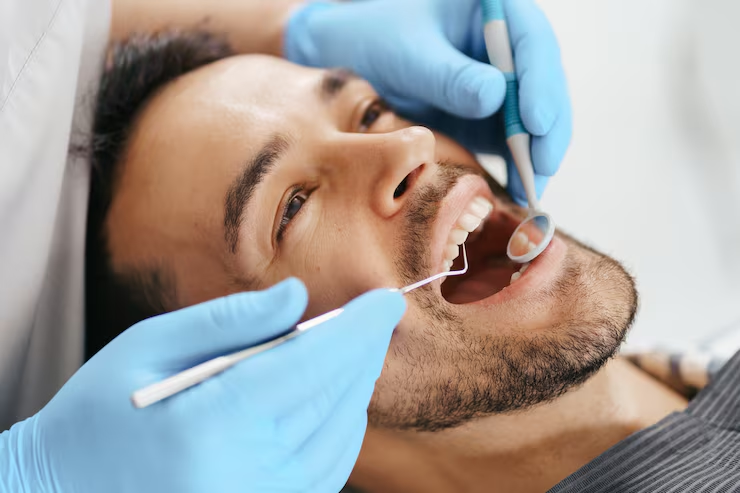
Daily-habit stains usually lift well. So does the slow yellowing that comes with age, when enamel thins and the darker layer underneath shows through. Honestly, a lot of what people call stains is just plaque and tartar, and a good cleaning at a dental clinic fixes part of it before any gel goes on. If your teeth are healthy and the color is fairly even, you’ll probably be happy with the results. That’s most people, to be fair.
Stains That Push Back
Some discoloration is stubborn. Tetracycline staining, from certain antibiotics taken while teeth were still forming, tends to show as gray or brown bands and may take many rounds, if it lifts at all. Fluorosis, from too much fluoride in childhood, leaves white or brownish patches. Teeth that developed unevenly can look streaky no matter what you do. Bleaching can soften these a little, rarely erase them. And cranking up the strength to chase perfect white just irritates your teeth and gums.
When One Tooth Is Darker Than the Rest
One gray or dark tooth among healthy ones is a warning sign. Often the nerve inside has died, usually after an injury or deep decay, and it might not even hurt. Bleaching the outside won’t fix that, and the tooth could be infected. It needs an exam and an x-ray first. Treatment may be a root canal, then bleaching from the inside of the tooth, or a crown or veneer if that isn’t enough. Don’t just keep whitening and hope.
Old Dental Work Won’t Change Color
This one catches people out all the time. Crowns, veneers, bonding and tooth-colored fillings don’t respond to whitening gel. So your natural teeth get brighter and the old crown stays yellow, or a front filling suddenly looks dark next to its neighbors. Fixing that usually means replacing the old work to match the new shade. Better to hear that before you start. A dentist can tell you what will change and what won’t, and sometimes the smart move is whitening first, matching the rest after.
Options When Bleaching Isn’t Enough
There are good alternatives. Bonding covers a stained tooth with tooth-colored resin, which is quick and affordable, though it can stain over the years. Porcelain veneers are thin shells over the front of the tooth, they hide deep discoloration and can last a decade or more. Crowns cover a tooth that’s badly damaged. Microabrasion gently removes some surface mottling. Which one fits depends on how deep the stain goes, how many teeth are involved, and what you want to spend.

Why a Local Dentist in Burbank Can Help
If you’re choosing a dentist in Burbank for this, look for one who examines first and sells second. Ask them to explain why your teeth are discolored, not just which treatment they offer. A dentist who’s followed your mouth over time knows if a tooth changed color recently, what old work you’ve got, and whether that dark spot is new. Kids with stained teeth are worth checking early too, since the cause might be fluoride, enamel trouble or an old injury. Good dental care starts with a diagnosis.
Find the Cause, Then Pick the Fix
So why do some discolorations need more than bleaching? Because color has lots of causes and gel only works on some of them. Surface stains lift, deep ones resist, a single dark tooth needs real investigation, and old dental work never changes. Stop buying stronger kits and hoping. Book an exam at a trusted dental clinic, get a straight diagnosis, and ask what’s realistic for your teeth. A plan matched to the cause beats guessing every time, and you’ll get to a smile you like faster.