
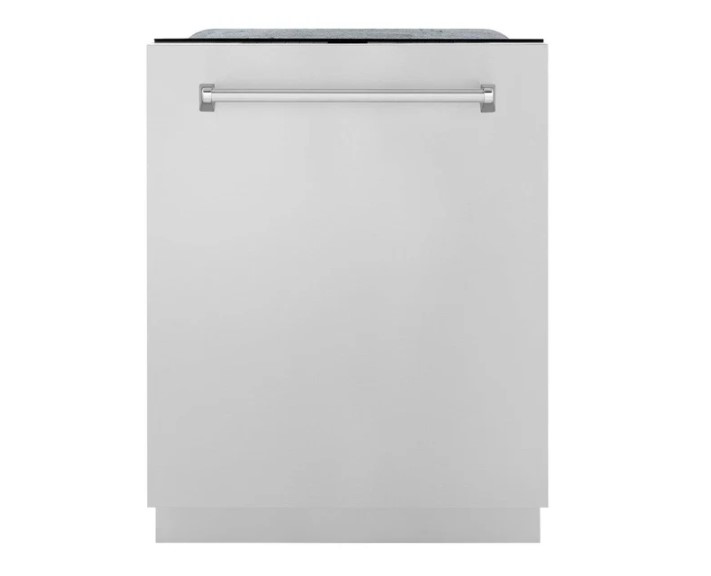
A dishwasher has become an important part of many modern kitchens, but choosing one involves more than comparing appearance and price. Cleaning performance, drying ability, noise, capacity, rack design, energy consumption, and available cycles can all influence how well an appliance fits a household’s needs. Higher-end models may also include additional convenience features, but those features are most useful when they address specific everyday requirements.
For homeowners considering premium dishwashers, understanding the technology and specifications behind different models can make the buying process more straightforward. A well-chosen dishwasher should fit the available space, accommodate the household’s typical loads, operate at a comfortable noise level, and provide reliable cleaning and drying performance.
Start With Size and Capacity
The first consideration is whether a premium dishwashers physically fits the kitchen. Consumer Reports notes that most standard dishwashers are approximately 24 inches wide and 24 inches deep, while compact models are generally narrower. Measuring the opening carefully is important, including space needed for leveling and installation.
Capacity should be considered alongside exterior dimensions. A dishwasher’s internal rack arrangement determines how efficiently plates, bowls, cookware, glasses, and utensils can be accommodated.
Evaluate Cleaning Performance
Cleaning performance should remain one of the main priorities when comparing premium dishwashers. Advanced features are useful only if the appliance consistently removes food residue from dishes.
Modern dishwashers may use soil sensors to determine how dirty the wash water is and adjust the cycle accordingly. ENERGY STAR explains that automatic-sensing cycles can help save water by detecting soil levels during operation.
The filter system is another important component. Filters capture food particles that are removed during washing, preventing debris from circulating back onto dishes. Models with manual-clean filters require periodic maintenance, while some systems use self-cleaning mechanisms.
Consider Drying Technology
Washing is only half of the job. Effective drying can make unloading easier and reduce the need to hand-dry dishes after every cycle.
Drying performance can vary significantly between models and between different types of dishes. Consumer Reports notes that plastic items are particularly difficult for many dishwashers to dry completely. Some machines use heated drying, while others use condensation-based methods or automatically open the door at the end of the cycle to release steam.
A stainless-steel interior tub can also be useful. Consumer Reports reports that stainless steel is more durable and stain-resistant than plastic and can contribute to improved drying performance.
Look at Noise Levels
Noise can be particularly important in open-plan kitchens, smaller homes, or households where the dishwasher operates during meals or overnight.
Dishwasher noise comes from several sources, including water circulation, draining, pumps, and other mechanical components. Consumer Reports evaluates noise throughout complete cycles rather than relying exclusively on average measurements because occasional loud sounds can affect the overall experience.
When comparing luxury dishwashers, buyers should therefore consider the manufacturer’s published noise specification while also looking for independent performance testing where available. A quieter appliance can be particularly valuable when the kitchen is connected directly to a living or dining area.
Compare Energy and Water Efficiency
Efficiency can influence both operating costs and environmental impact. ENERGY STAR dishwasher criteria evaluate energy and water consumption, with current standards setting maximum annual energy and per-cycle water-use levels for qualifying standard and compact models.
The yellow EnergyGuide label is another useful comparison tool. ENERGY STAR recommends using it to examine estimated energy consumption and annual operating costs when comparing similar appliances.
Features such as soil-sensing cycles can also contribute to efficient operation by adjusting the wash process according to how dirty the dishes are.
Decide Which Features Actually Matter
High-end dishwashers can offer numerous additional features, including third racks, adjustable racks, interior lighting, hidden controls, delay-start functions, specialized wash zones, and Wi-Fi connectivity.
However, more features do not automatically mean better performance. Consumer Reports recommends thinking about which functions will actually be useful before paying more for them.
For example, a third rack can be useful for utensils and smaller items, while an adjustable upper rack can make room for tall glasses or cookware. Wi-Fi connectivity may appeal to households that want remote monitoring, but it may be unnecessary for someone who prefers straightforward controls.
Consider Installation and Maintenance
Before purchasing a dishwasher, buyers should confirm that the model is compatible with the kitchen’s available water, drainage, electrical, and installation arrangements. Manufacturer installation requirements should be reviewed before the appliance is ordered.
Maintenance should also be considered. Manual filters need periodic cleaning, and keeping them free from food debris can help maintain their intended function. Consumer Reports recommends cleaning manual dishwasher filters regularly, with the interval depending on how frequently the appliance is used.
Checking the manufacturer’s instructions for cleaning, detergent use, rinse aid, and filter maintenance can help preserve performance over time.
Balancing Features With Long-Term Value
A premium appliance should be evaluated based on how well its specifications match the household rather than simply how many features it offers. Cleaning and drying performance, appropriate capacity, quiet operation, efficiency, rack flexibility, and ease of maintenance are practical considerations that can affect everyday satisfaction.
When comparing a dishwasher for sale, buyers should examine these characteristics alongside the appliance’s dimensions, installation requirements, warranty information, and expected maintenance needs. This approach makes it easier to distinguish genuinely useful features from additions that may not provide much value for a particular kitchen.
Conclusion
Choosing a dishwasher for a modern kitchen requires consideration of both everyday performance and long-term practicality. Capacity, cleaning ability, drying technology, noise, water and energy consumption, rack flexibility, and maintenance requirements all contribute to the overall ownership experience.
For shoppers comparing Smart Home Luxury options, focusing on these specifications can help narrow the selection based on actual household needs rather than appearance alone. The most suitable appliance is not necessarily the one with the greatest number of features; it is the one that provides the right combination of performance, convenience, efficiency, and capacity for the way the kitchen is used.