
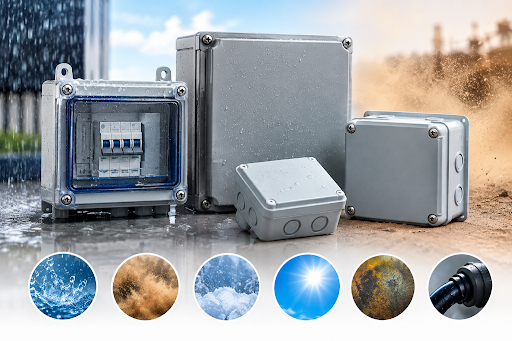
Electrical equipment is installed in places that range from clean control rooms to wet washdown areas and dusty plants. The enclosure around that equipment protects it from its surroundings, and a poor choice can lead to failures, downtime, and safety risks. In North America, NEMA ratings are the standard way to describe what an enclosure can withstand. This blog explains what the system covers, how common types differ, how it compares with IP codes, and how to select the right type for a project.
What the NEMA Standard Covers
The National Electrical Manufacturers Association publishes NEMA Standard 250, which defines enclosure types by the protection they offer. It addresses protection of people against contact with internal parts, and protection of equipment against falling dirt, dust, water, ice, oil, and corrosion. Each type is tested against set criteria, so the number on a label tells you the conditions the enclosure was designed for.
Common Indoor Types
Type 1 is general-purpose and suits clean, dry indoor spaces, guarding against incidental contact and falling dirt. Type 2 adds protection against dripping and light splashing. Type 12 is widely used in industrial settings, where it protects against dust, falling dirt, and dripping non-corrosive liquids. Type 13 adds resistance to oil and coolant seepage, which is relevant on machine shop floors. All of these are intended for indoor use only.
Outdoor and Wet-Location Types
Type 3R protects against rain, sleet, and damage from external ice formation. Type 3 adds protection against windblown dust, and Type 3S keeps external mechanisms operable when ice-covered. Type 4 is watertight, resisting splashing and hose-directed water as well as windblown dust. Types 6 and 6P cover temporary and prolonged submersion at limited depths. An X suffix, as in 3X or 4X, indicates added corrosion resistance, which matters in coastal, chemical and washdown environments.
Hazardous Location Types
Some areas contain flammable gases, vapors or combustible dust. Type 7 relates to certain gas hazards, and Type 9 relates to certain dust hazards. The correct choice depends on how the area is classified under electrical code rules, so qualified professionals should guide selection in these locations.
How NEMA Types Compare With IP Codes
IP codes come from the international standard IEC 60529 and use two digits, the first for solid objects and dust and the second for water. NEMA types also cover factors that IP codes do not, including corrosion, icing, and oil. Because of this, NEMA’s guidance notes that a NEMA type can be matched to an IP code, but an IP code cannot be reliably converted to a NEMA type. Anyone comparing NEMA ratings with IP codes should treat conversion charts as approximate.
Choosing the Right Type
Start with the environment. Note whether the unit will sit indoors or outdoors, and whether it will see rain, hose-downs, dust, oils or chemicals. Consider sunlight, temperature swings and the risk of corrosion. Sealed enclosures also trap heat, so check whether the internal components need ventilation, cooling or a larger size. When reviewing NEMA ratings for a new panel, choose a type that meets the worst realistic condition at the site rather than the average one, and confirm the rating on the product label or documentation.
Materials and Construction
The type number is not the only factor. Many of them are made from painted carbon steel, stainless steel, aluminum, fiberglass-reinforced polyester or polycarbonate. Stainless steel in grades such as 304 and 316 handles washdown and corrosive conditions well. Fiberglass and polycarbonate resist rust and many chemicals. Painted steel is common in dry indoor settings. Gaskets, hinges and latches also affect performance, since worn seals can undermine the rating.
Conclusion
Enclosure ratings give a common language for matching equipment protection to real conditions. Understanding indoor, outdoor, corrosion-resistant, and hazardous-location types, along with materials, heat, and installation details, leads to safer and longer-lasting electrical systems. Before ordering, compare NEMA enclosures against the site’s moisture, dust, temperature, and corrosion conditions, and confirm the rating in the documentation so the chosen enclosure suits the equipment inside it.