

I’ll be honest, I thought picking a fountain would take an afternoon. Look at a few pictures, click buy, done. It didn’t go like that. Outdoor fountains look simple, but there’s a lot that can go wrong if you rush it. Wrong size, wrong spot, a pump that hums like a fridge, water all over the patio.
So here’s what I learned, in ten parts. Nothing fancy. If you’re thinking about adding fountains to your garden, porch or backyard, this should save you some headaches.
1. Pick the Spot Before You Pick the Fountain
Most people fall in love with a fountain first and then hunt for a place to put it. Flip that. Walk around your yard and decide where you’d actually sit and enjoy it. Near a bench? Beside the front door? In a corner that looks kind of empty?
Once you know the spot, you know what you’re working with: how much room, how much shade, how close the nearest power outlet is. A gorgeous fountain in the wrong place just becomes a thing you walk around.
2. Size Matters More Than You’d Think
Too small and it looks lost. Too big and it swallows the whole space. A tiny tabletop piece on a huge lawn looks silly, and a giant tiered one on a small balcony feels like a mistake.
Grab a tape measure and mark the footprint on the ground with chalk or a hose. Stand back and look. It sounds like overkill, but it works. You’ll see right away if it feels right or if you need to go up or down a size.
3. Match the Style to Your Home
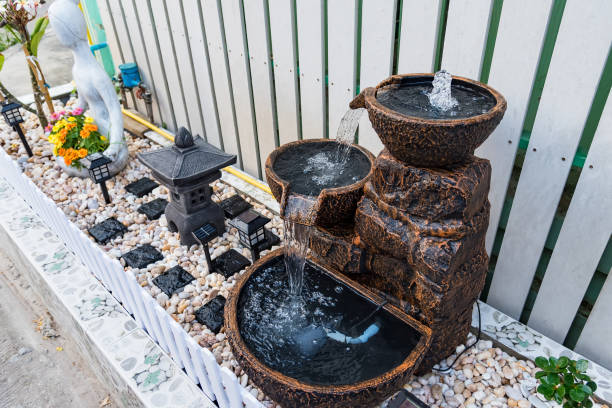
Traditional tiered fountains suit older homes and classic gardens. Sleek, modern outdoor fountains with clean lines and simple spillways look better next to newer builds. Rustic rock-style ones fit a natural, wild-ish garden.
You don’t need a perfect match, but clashing styles do stand out. If your house is all straight lines and glass, a very ornate cherub fountain will feel weird. Not wrong exactly, just weird.
4. Think About the Material
Stone is heavy and lasts forever, but you’re not moving it easily once it’s down. Concrete is similar and takes weather well. Resin and fiberglass are lighter and easier to shift around, and a lot of them look surprisingly real. Metal fountains, like copper or bronze, develop a patina over time that some people love and others don’t.
Ask yourself how long you want it to last and whether you’ll ever want to move it. Heavier usually means longer life. Lighter means flexibility. There’s no perfect answer, just what fits you.
5. Sound Is Part of the Deal
People forget this one. The whole point of a water fountain is the sound, right? But the sound changes a lot from one design to another. A gentle trickle over smooth stone is calming. A strong splash from a tall spray can be loud, almost too loud if your bedroom window is close by.
If you want peace and quiet, go for softer flows. If you want to cover up street noise, a livelier splash actually helps. Think about what you want to hear at 7 in the evening after a long day.
6. Look at the Pump and Power Setup
The pump is the heart of any fountain. A cheap or undersized one will struggle, get noisy, and die early. Check that the pump matches the fountain size and that the cord actually reaches an outlet. Extension cords running across the lawn look bad and can be risky.
Solar fountains are a decent option for small spots without power, but they depend on sun. Cloudy day, weak flow. Fine for a bird bath style setup, less great if you want steady running water.
7. Plan for Upkeep
Every fountain needs a bit of care. Water evaporates, especially in hot weather, so you’ll top it up regularly. Algae shows up sooner or later. Leaves and dust fall in. It’s not hard work, but it isn’t zero work either.
A quick rinse every few weeks and a proper clean now and then keeps things running well. If you skip it, the pump clogs and the water goes green. Been there. Not fun.
8. Don’t Ignore Winter
If you live somewhere it freezes, this is a big one. Water expands when it turns to ice and it can crack stone, concrete, and pumps. Drain the fountain before the cold hits, take the pump out, and store it somewhere dry. Cover the fountain or bring smaller ones inside.
Some outdoor fountains are made to handle cold better than others, so check before buying. Lots of people learn this lesson the expensive way, after one hard frost.
9. Watch the Sun, Wind and Trees
Full sun means faster evaporation and more algae. Heavy shade under a tree means constant leaf fall. Wind is sneaky too. A tall spray in a windy corner will soak everything nearby, your furniture and your guests included.
The best spots often get a mix: some sun, some shade, and a bit of shelter from strong wind. Not always possible, I know. But if you can pick, pick that.
10. Get Help From People Who Know Fountains
At the end of the day, it’s easier when you buy from a place that actually knows fountains and can answer weird questions. What pump goes with this? Will this survive winter? How much water does it hold? A good seller won’t just push a product, they’ll help you pick the right one.
That’s really the difference between a fountain you love for years and one you regret in a month.
Ready to Find Yours?
Choosing outdoor fountains doesn’t have to be stressful. Take your time, measure your space, and think about the sound, the upkeep, and the weather. Do that, and you’ll end up with something that makes your outdoor area feel calmer and a bit more special.
If you want to see a solid range of fountains to get ideas or just browse, head over to fountains.com. Have a look around and find the one that suits your space.

FAQs
1. How much space do I need for an outdoor fountain?
It depends on the size. Small ones fit on a table or a corner of the patio. Bigger tiered fountains need a wider, level area with room around them so they don’t feel crowded. Mark the footprint on the ground first and you’ll know quickly.
2. Do outdoor fountains use a lot of electricity?
Not really. Most home fountains use a small pump that doesn’t draw much power. Solar models use none from the grid, though they work best in strong sunlight.
3. Can I leave my fountain outside in winter?
Only if it’s built for freezing weather, and even then it’s safer to drain it and remove the pump. Frozen water can crack the basin and damage the pump.
4. How do I keep the water in my fountain clean?
Top it up regularly, remove leaves, and give it a proper scrub every few weeks. Keeping it out of harsh direct sun also helps slow down algae.