
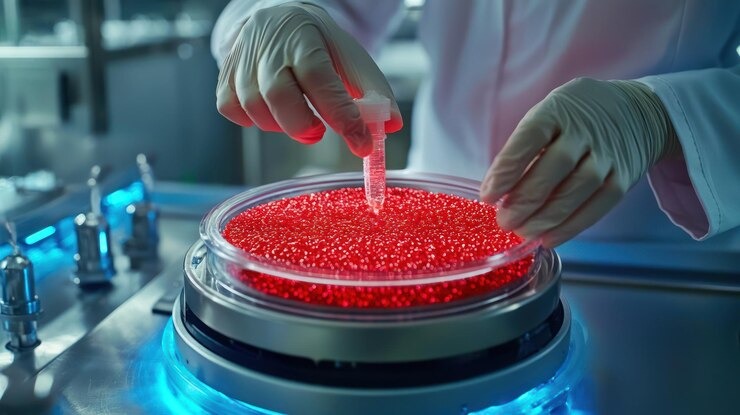
When you perform immunoprecipitation, the quality of your capture material can directly affect recovery, purity, and downstream analysis. Choosing the right beads requires more than selecting a product labeled for antibody binding. You need to consider antibody compatibility, binding capacity, sample conditions, bead handling, and the requirements of your experimental workflow. By evaluating these factors before starting, you can build a more consistent immunoprecipitation process.
Start With Antibody Compatibility
Your first consideration should be the antibody you plan to use. Protein G binds strongly to several mammalian immunoglobulin subclasses, but binding strength can vary according to antibody species and isotype. Check the antibody manufacturer’s specifications and confirm that Protein G is appropriate for your immunoprecipitation application.
If your antibody has limited affinity for Protein G, you may experience reduced capture efficiency even when the rest of your protocol is well designed. Matching the bead chemistry to your antibody can therefore help you maintain reliable immunocomplex recovery.
Consider Bead Binding Capacity
Binding capacity is another important factor when selecting high-capacity Protein G Agarose Beads for immunoprecipitation. The amount of antibody required depends on your sample volume, target abundance, and experimental objectives.
Avoid choosing beads solely because they have a high stated capacity. Instead, estimate how much antibody you need to capture your target and select a bead quantity that provides sufficient binding without creating unnecessary material costs or handling steps.
A balanced bead-to-antibody ratio can help you avoid antibody waste while maintaining effective target capture.
Evaluate Agarose Bead Characteristics
The physical characteristics of agarose beads can influence your workflow. Consider factors such as bead size, matrix stability, suspension properties, and resistance to your experimental buffers.
You should also think about how easily the beads can be mixed, washed, and separated during processing. Consistent bead behavior can make repeated immunoprecipitation experiments easier to standardize.
If your workflow involves multiple washing steps, choose a matrix that remains stable under the conditions required for your assay.
Match the Beads to Your Sample Conditions
Your sample composition matters. Cell lysates, tissue extracts, purified protein mixtures, and other biological samples can contain components that interfere with antibody-target interactions or nonspecific binding.
Before selecting your beads, review your planned lysis and washing buffers. Consider pH, salt concentration, detergents, and other additives. Your bead matrix and antibody should remain functional throughout the procedure.
You can also include appropriate controls to determine whether proteins are binding nonspecifically to the agarose matrix or antibody.
Control Nonspecific Binding
Specific target recovery is only useful when background binding is controlled. Excessive nonspecific interactions can produce additional protein bands or interfere with downstream detection.
You can reduce background by carefully designing your blocking and washing conditions. Use suitable negative controls, such as beads without the target-specific antibody, to identify proteins that associate with the matrix independently of your antibody.
When you compare control and experimental samples, you can better determine whether the proteins recovered are associated with your intended immunocomplex.
Think About Your Downstream Application
Your final application should influence your bead selection. If you plan to analyze immunoprecipitated proteins by Western blotting, mass spectrometry, enzyme assays, or another method, consider how the bead and antibody system may affect sample recovery and purity.
For mass spectrometry, for example, reducing contaminating proteins and antibody-derived material may be particularly important. For Western blot analysis, consistent target recovery and manageable background may be the primary considerations.
Planning backward from your final analysis can help you select a bead system that fits the entire workflow rather than only the capture step.
Compare Product Quality and Consistency
When you compare Protein G Agarose Beads for antibody immunoprecipitation workflows, look beyond basic product descriptions. Review available technical information covering binding performance, recommended applications, storage requirements, and handling procedures.
Consistency between batches can also matter when you perform experiments over an extended period. A reliable reagent supplier should provide clear specifications so you can establish repeatable protocols.
Lytic Solutions, LLC provides molecular biology tools and affinity reagents designed for research applications where dependable capture and purification performance are important.
Build a Repeatable Selection Process
You can simplify future purchasing decisions by creating a short selection checklist:
- Identify your antibody species and isotype.
- Confirm Protein G compatibility.
- Estimate the antibody quantity required.
- Compare bead binding capacity.
- Review bead and matrix characteristics.
- Check compatibility with your buffers.
- Consider nonspecific binding controls.
- Match the system to your downstream assay.
- Review storage and handling requirements.
- Compare technical specifications between suppliers.
This approach helps you select beads based on experimental requirements rather than price or a single specification.
Conclusion
Choosing the right Protein G agarose matrix is an important part of designing a reliable immunoprecipitation experiment. When you evaluate antibody compatibility, binding capacity, matrix properties, sample conditions, nonspecific binding, and downstream requirements together, you can create a more controlled workflow.
If you need product information or guidance regarding Protein G Agarose Beads for selective antibody-based protein capture, Contact us today to discuss your research requirements.
FAQ
What are Protein G Agarose Beads used for?
Protein G Agarose Beads are commonly used to capture antibodies and antibody-bound protein complexes during immunoprecipitation and related affinity-based workflows.
How do Protein G Agarose Beads work?
Protein G immobilized on an agarose matrix binds compatible antibodies. The antibody can then capture its target, allowing the resulting complex to be separated from other sample components.
How do you choose Protein G Agarose Beads?
Consider antibody species and isotype, binding capacity, matrix properties, sample buffer conditions, nonspecific binding, and the requirements of your downstream analysis.
Are Protein G Agarose Beads suitable for immunoprecipitation?
Yes. They are widely used for antibody-based immunoprecipitation because Protein G can bind compatible immunoglobulins and support capture of antibody-target complexes.
Why does antibody compatibility matter?
Different antibodies can show different binding strengths toward Protein G. Confirming compatibility helps you select a bead system that supports efficient antibody immobilization and target recovery.
What affects Protein G bead binding capacity?
Binding capacity can depend on the Protein G matrix, antibody characteristics, bead quantity, and experimental conditions. Always consider the supplier’s technical specifications.
How can you reduce nonspecific binding?
You can evaluate blocking conditions, washing stringency, buffer composition, and appropriate negative controls to distinguish specific target recovery from nonspecific interactions.
Can Protein G Agarose Beads be used with cell lysates?
Yes, they can be incorporated into cell-lysate immunoprecipitation workflows when the antibody, bead matrix, and buffer conditions are compatible with the sample.
What should you consider for downstream Western blotting?
Focus on consistent target recovery, low nonspecific background, appropriate washing conditions, and compatibility between the immunoprecipitation workflow and your detection method.
Why use Protein G Agarose Beads for antibody-based capture?
They provide a convenient agarose-based platform for immobilizing compatible antibodies and capturing specific protein complexes from biological samples.