
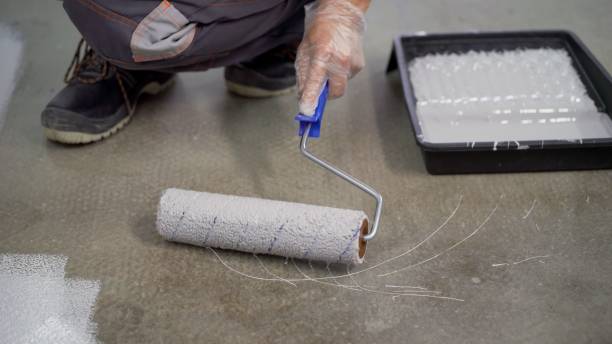
Getting epoxy onto a floor sounds easy until you actually do it. The coating looks thick, it moves differently than ordinary paint, and every little mistake has a habit of staying there after it cures. That is why finding the best roller for epoxy floor matters. The roller affects how much coating goes down, how smoothly it spreads, and how much air gets worked into it. Use the wrong one and you may end up staring at bubbles, lines and ugly overlaps the next morning. Not exactly the finish you had in mind.
Epoxy Is Not Just Thick Paint
One mistake people make is treating epoxy like regular paint. It isn’t. Once the resin and hardener are mixed, things start changing. The material gets heavier as it begins to react, and you have a limited amount of time to get it onto the floor. A normal paint roller can struggle with that. It may drag across the concrete, leave an uneven layer or start shedding bits into the coating. None of those problems are fun to discover when the floor is already curing. An epoxy-rated roller is made to deal with a much more demanding coating, which is the whole point.
Why Some Rollers Leave Those Annoying Lines
You’ve probably seen the result. Long lines running across an otherwise decent-looking floor. Sometimes they’re obvious. Sometimes you only notice them when sunlight hits the surface from the side. Roller marks can happen when too much pressure is used, when the roller isn’t loaded evenly, or when you keep going back over an area that has started to tack up. The roller itself can also be part of it. A poor-quality cover won’t release epoxy evenly. You end up with heavy spots beside thin ones. And once the coating starts setting, there isn’t much you can do about it.
Bubbles Usually Start Before You Notice Them
Those little bubbles in an epoxy floor aren’t always caused by the roller, but the roller can certainly make things worse. Rolling too aggressively can pull air into the coating. Fast, hard passes aren’t going to make the job better. They just stir things up. Concrete can also have air trapped in its pores, and that air may come out as the epoxy is applied. Temperature changes can add to the problem too. So don’t look at bubbles and immediately blame the roller. Surface condition, moisture, temperature and application technique all have a say here.
A Short Nap Is Often the Better Starting Point
For smooth epoxy floors, a short-nap cover is generally a sensible place to start. It gives you control without carrying a ridiculous amount of material. A very thick nap can hold more coating than you actually need and may leave an unwanted texture. Go too short, though, and the roller can struggle to move a heavier epoxy across the slab. There’s a balance. The coating manufacturer’s instructions should have the final say because epoxy products aren’t all the same. Solvent-based, water-based, high-solids and specialty floor coatings can behave quite differently.
Microfiber Has Its Place
Microfiber rollers are worth considering when the goal is a clean, relatively smooth finish. The fine fibers can pick up and release coating in a controlled way, which helps when you’re trying to avoid heavy roller texture. That’s useful on decorative floors where the finished appearance really matters. But don’t just grab the first microfiber sleeve you see. The material still needs to be compatible with the epoxy you’re using. Some rollers are designed for ordinary paints and aren’t meant to deal with strong solvents or aggressive coatings. Read the label. Five minutes of checking is better than scraping a failed coating off later.
Don’t Roll Like You’re Painting a Bedroom Wall
This is where application technique gets overlooked. People get comfortable with the roller and start pushing it around like they’re painting drywall. Epoxy doesn’t really want that. Keep the pressure controlled. Don’t mash the roller into the slab. Spread the coating without trying to squeeze every last drop out of the cover. If you keep working the same spot again and again, especially once the epoxy has started getting sticky, you’re asking for roller marks. Work in sections and keep an eye on the wet edge. Once the material starts changing, leave it alone.
Where 6 Inch Rollers Come In Handy
A large roller is useful when you’re covering a big, open slab, but it isn’t always the easiest thing to handle. Around doorways, edges, narrow sections and tight areas, a smaller cover can save some frustration. That’s where 6 inch paint rollers can be useful. They’re easier to control and don’t force you to carry a wide roller into a space where it doesn’t fit properly. They can also work well for smaller floors and touch-up areas, provided the roller cover is rated for the coating. Size isn’t the only thing that matters. The cover material still needs to handle epoxy.
Backrolling Can Help, But Don’t Overdo It
Backrolling is useful when you need to even out the coating after the initial application. The trick is not turning it into a wrestling match. A light, controlled pass can help distribute the epoxy and reduce obvious roller lines. Keep your passes smooth. Don’t stop in the middle of the floor and start again randomly. And don’t keep chasing tiny imperfections as the coating begins to set. That’s a common way to turn a small issue into a much bigger one. If the roller starts dragging, that’s usually your cue to stop working that section.
The Floor Beneath the Epoxy Still Matters
There’s no roller on earth that’s going to fix a floor that wasn’t prepared properly. Oil, dust, loose concrete, old coatings and moisture can all cause problems before the roller even touches the surface. Concrete preparation needs to match the epoxy system being used. Temperature and humidity matter too. If the conditions aren’t right, the coating may not flow or cure the way it should. People sometimes spend ages comparing roller covers while ignoring the slab itself. That’s backwards. Get the floor ready first, then worry about the roller.
A Good Roller Is Part of the Finish
There isn’t a magic roller that guarantees a perfect epoxy floor every time. That’s not how this works. But the right cover removes one very common source of trouble. A roller designed for epoxy gives you better control over the coating and reduces the chances of shedding, dragging and uneven application. Pair that with proper preparation, sensible rolling pressure and decent timing, and the finished floor has a much better chance of coming out smooth. Sometimes the simplest approach works best. Use the right tool, don’t rush the epoxy, and stop messing with it once it starts to set.