
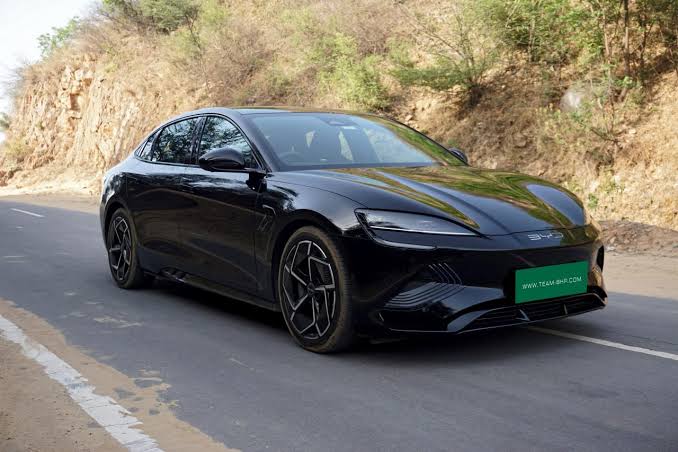
The BYD Seal combines a low-slung electric-sedan shape with competitive battery range and strong acceleration. It offers a different ownership experience from the taller electric SUVs common in India. Buyers must decide whether its performance, cabin and charging capability outweigh lower ground clearance and a still-developing service footprint.
Seal variants and their different roles
The BYD Seal is offered with battery and drivetrain combinations aimed at distinct users. The smaller-battery rear-wheel-drive version lowers entry cost, the long-range version prioritises distance, and the dual-motor all-wheel-drive model focuses on performance. Certified range reaches up to about 650 km for the relevant configuration. Buyers should not compare trims only by output; tyre size, equipment and expected highway use also influence value.
| Parameter | Details |
| Battery options | 61.44 kWh and 82.56 kWh |
| Certified range | Up to 650 km, variant dependent |
| Drive choices | Rear-wheel drive and all-wheel drive |
| Body style | Electric sports sedan |
| Key consideration | Clearance and service reach |
What real-world range may look like
Certification gives a standard reference, while normal use introduces temperature, traffic, gradients and air-conditioning. The Seal’s aerodynamic sedan body supports efficiency at speed, but sustained fast driving still raises consumption. The larger battery offers a comfortable touring reserve when chargers are spaced far apart. For daily urban travel, the smaller pack may already cover several days between charges, reducing the need to carry unused battery capacity.
Performance without losing everyday control
Instant electric torque gives the Seal quick response, particularly in the all-wheel-drive version. That performance should be judged alongside pedal modulation, regenerative braking and ride comfort. A car that is easy to place smoothly in traffic can be more satisfying than one that only produces an impressive acceleration time. Tyre replacement cost and wear should also be considered because high output and a heavy battery can shorten tyre life when driven aggressively.
- Measure home ramp clearance during the test drive.
- Check the nearest authorised high-voltage workshop.
- Select all-wheel drive only when its performance is useful.
Sedan packaging and Indian road conditions
The low roof and seating position create a sporty feel, but they require a careful test by elderly passengers and tall rear occupants. Ground clearance deserves attention on tall speed breakers and steep ramps. Drivers should use a slow, angled approach where appropriate and avoid carrying excessive speed over broken surfaces. The boot is useful, yet the opening and rear-seat folding arrangement may not match the flexibility of an SUV.
Charging and service questions before booking
Home charging remains the easiest routine. Confirm charger specification, installation cost and local electrical capacity. For travel, map high-power stations and check whether their connectors and reliability suit the route. BYD’s network is expanding, but buyers outside major cities should identify the nearest authorised workshop and understand towing support. Parts availability, software updates and warranty conditions matter as much as the battery headline.
Is the Seal the right premium EV
The byd cars Seal can be excellent value for a buyer who wants a fast, efficient electric sedan with a long certified range. It is less suitable for someone who regularly crosses severe rural roads, needs an SUV-like seating position or lives far from service support. Choosing among the variants should reflect distance and traction needs. The long-range rear-wheel-drive version can be the balanced option, while the all-wheel-drive model makes sense only when its performance will be valued.
A final Seal suitability check
The Seal deserves a test on rough roads, a steep parking ramp and a busy urban route. This reveals clearance, visibility and low-speed ride quality. The buyer should also price insurance and tyres for the chosen wheel size. If these practical factors remain acceptable, the car’s range and performance become meaningful strengths rather than specifications that are difficult to use in daily life.
A real-life suitability test for the BYD Seal
A Seal buyer living with steep basement ramps should test the exact access before paying a booking amount. The low sedan shape supports aerodynamic efficiency, but ground clearance and approach angle require attention. On open roads, the long-range rear-wheel-drive version can offer an effective balance of distance and complexity. A driver who values maximum acceleration may accept higher tyre wear from the all-wheel-drive model, while a relaxed tourer may not need that output. Service distance also belongs in the decision because authorised support can be less convenient outside large cities. The car is worth buying when its sedan dynamics, range and charging fit these practical conditions. A route-based test and written ownership budget are more useful than comparing performance numbers in isolation.
A balanced BYD Seal buying decision
The Seal offers an unusual combination of electric range, sedan dynamics and strong performance. Its suitability depends on whether the buyer accepts a lower seating position, tests home ramps and has reasonable access to authorised service. The rear-wheel-drive versions can provide ample performance without the cost and tyre demand of the fastest AWD model. Long-range claims should be converted into a conservative route plan with a reserve. When these practical checks are satisfied, the Seal can be a compelling premium EV. When poor roads or distant service dominate ownership, a taller and more widely supported alternative may be easier.