
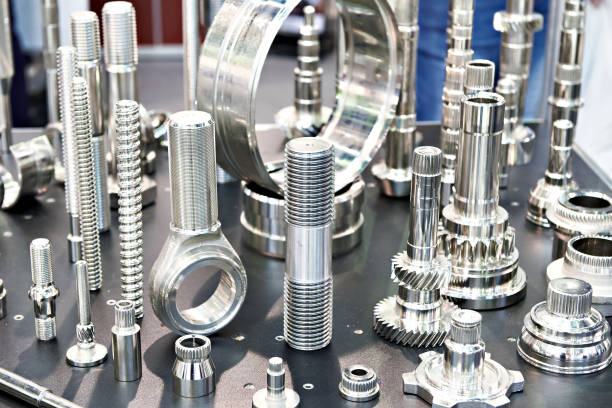
A fastener can look like a pretty simple part. A screw, bolt, pin, stud, or specialty connector. But once that part goes into an aircraft, medical device, industrial machine, or heavy-duty assembly, things get a lot more serious. This is where a custom fastener manufacturer earns its keep. Instead of forcing an application to work around a standard catalog part, custom manufacturing starts with what the application actually needs. Load, material, dimensions, environment, installation method, and tolerance all matter. Let’s be real, a fastener that is “close enough” can create expensive problems later. The right approach is to build the fastening solution around the job from the start.
Understanding What the Application Really Needs
The first step is not turning on a machine. It’s understanding the application. A good manufacturer will look at the assembly and ask some basic but important questions. What kind of load will the fastener handle? Is there vibration? Will it face moisture, chemicals, heat, pressure, or repeated movement? How often will it be installed and removed? These details change the design. For example, a fastener used inside a controlled indoor machine does not necessarily need the same material or protective finish as one exposed to saltwater or extreme temperatures. Thread style can matter too. So can head geometry, shank length, drive type, and overall profile. Application-specific manufacturing is really about connecting these requirements to the finished part. Sometimes the answer is a fairly small change to a standard design. Other times, it means creating something entirely different.
Custom Design Starts With Geometry and Tolerance
Once requirements are clear, geometry becomes the next big consideration. This is where engineering experience makes a difference. A custom fastener may need an unusual diameter, a non-standard thread, a special head shape, or a very specific overall length. None of that is especially useful if the dimensions aren’t controlled properly. Tolerances are another piece people sometimes overlook. A part can technically match a drawing and still cause trouble if the fit is wrong. Tight tolerance applications need consistent machining and inspection throughout production, not just a quick check at the end. The manufacturer may review CAD files, drawings, prototypes, and assembly requirements before production starts. That upfront work can seem slow, but it usually saves time later. Nobody enjoys discovering a fit problem after thousands of parts have already been made.
Choosing Materials for Real-World Conditions
Material selection is not just about picking whatever happens to be available. Steel, stainless steel, aluminum, brass, titanium, and specialty alloys all behave differently. Strength, corrosion resistance, weight, temperature performance, machinability, and cost can push the decision in different directions. A custom fastener supplier should understand those trade-offs. If the part is exposed to corrosive conditions, corrosion resistance may be the priority. If weight is a major concern, a lighter material could make more sense. In a high-load application, strength and fatigue performance may take priority instead. Truth is, the cheapest raw material isn’t always the cheapest option once failures, replacements, and downtime enter the picture. Material selection needs to fit the application, not just the purchasing budget.
Manufacturing Methods Shape the Final Result
How a fastener is made also affects what it can achieve. Depending on the design, manufacturers may use cold heading, CNC machining, turning, grinding, threading, forming, or a combination of processes. The right process depends heavily on volume, geometry, material, tolerance, and surface requirements. This is also where related machining capabilities can become useful. For assemblies that require more than a simple fastener, working with a precision turned parts manufacturer can help keep related components consistent with the fastening system. That matters when several small parts have to fit together without excessive play or interference. Precision manufacturing isn’t about making everything complicated. It is about using the process that gives the application the result it actually needs, without adding unnecessary cost.
Prototypes Help Find Problems Before Production
Nobody wants to spend money on a full production run only to discover that the fastener doesn’t install correctly. Prototyping helps avoid that headache. A manufacturer can produce sample parts for dimensional checks, assembly trials, torque testing, load testing, or environmental evaluation. This stage can uncover things that aren’t obvious on a drawing. Maybe the head sits too high. Maybe the drive doesn’t provide enough engagement. Perhaps the thread length needs a small adjustment, or the material behaves differently during installation. These are useful discoveries when you’re holding ten prototype parts. They become expensive discoveries when you’re holding ten thousand. A practical manufacturer will use prototype feedback to refine the design before production is locked down.
Finishes and Secondary Processes Matter Too
The fastener isn’t always finished when machining or forming is complete. Depending on the application, it may need plating, coating, passivation, heat treatment, polishing, deburring, or another secondary process. These treatments can improve corrosion resistance, hardness, wear performance, appearance, or installation characteristics. But again, it needs to make sense for the application. A coating that works well in one environment may not be suitable in another. Heat treatment can improve strength, but it also needs to be controlled carefully because excessive hardness or poor processing can create its own problems. A capable custom fastener producer looks at the complete part, not just the basic shape. That broader view is important when the component has to survive a demanding service environment.
Quality Control Has to Follow the Part
Custom parts need consistent inspection because there isn’t always a common off-the-shelf benchmark to fall back on. Manufacturers may use calipers, micrometers, gauges, optical systems, thread gauges, coordinate measuring equipment, and other inspection methods depending on the component. Documentation can matter just as much, particularly for regulated or safety-sensitive industries. Material certifications, dimensional reports, lot traceability, and process records may all be required. The exact requirements vary, but the idea is pretty simple: the manufacturer needs to prove that the parts being shipped are the parts that were specified. Quality should not be treated as a final-stage activity. It needs to be built into the manufacturing process from the beginning.
Conclusion: Build the Fastener Around the Job
The short answer is that a custom fastener manufacturer delivers application-specific solutions by looking beyond the fastener itself. They study the application, select suitable materials, develop the right geometry, control tolerances, choose practical manufacturing methods, test prototypes, manage finishing processes, and inspect the final parts. A precision turned parts manufacturer can play an important role in producing these components with the accuracy and consistency demanding applications require. That’s a lot more involved than grabbing something from a catalog. And that is exactly the point. Custom fastening makes sense when standard parts don’t quite fit the real-world requirements. Sometimes the customization is dramatic. Sometimes it is just one dimension, one material change, or one small design adjustment. Either way, those details can have a big impact on reliability. When the fastener is designed around the application instead of the other way around, the entire assembly has a better chance of doing its job properly. No gimmicks. Just a better fit for the work.