
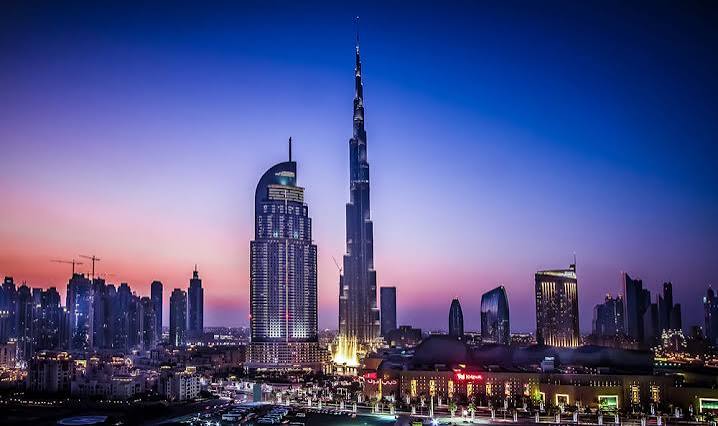
Dubai’s reputation precedes it: tallest building, biggest mall, most extravagant hotels. But behind the record-breaking headlines is a city with a much stranger, more interesting story than the glossy skyline suggests. Here are the facts that tend to surprise even people who’ve been there.
It Was a Fishing and Pearling Village Not Long Ago
It’s easy to forget that Dubai Facts transformation into a global metropolis happened within living memory. Before oil and skyscrapers, the city was a modest fishing settlement that grew a reputation for pearling in the late 1500s. Archaeological finds even show the surrounding land was once green pasture rather than desert. The entire shift — from pearl divers to penthouse suites — took place mostly over the last fifty years, which is part of why the city can feel like it was built overnight.
The Burj Khalifa’s Shape Comes From a Flower
Everyone knows the Burj Khalifa is the world’s tallest building, standing at 828 meters. Fewer people know the design was inspired by a local desert bloom, the Hymenocallis or spider lily, whose petal structure shaped the tower’s three-legged base. It’s a nice reminder that even the most futuristic structure in the city has roots — literally — in the desert around it.
The City Didn’t Have Formal Addresses Until Recently
For a place so associated with precision engineering, Dubai’s street navigation used to run almost entirely on landmarks. Until relatively recently, the city had no consistent postal addresses, zip codes, or area codes. Locals gave directions the old-fashioned way: turn right at the gas station, pass ten towers, and you’ll find it. A citywide addressing system has since caught up with the city’s ambitions, but the habit of navigating by landmark still lingers in how people describe locations.
You Can Buy Gold From a Vending Machine
Dubai’s love of gold goes well beyond the souks. Scattered around the city are “Gold to Go” ATMs that dispense 24-karat gold bars on demand, in denominations from a single gram up to a full ounce. It’s a small but telling detail about a city where luxury has been engineered into everyday convenience, right alongside the cash and snack machines.
Exotic Pets Were Once a Status Symbol
For a period, owning an exotic animal — a lion cub, a cheetah, even a tiger — was a recognizable flex among Dubai’s wealthiest residents, and photos of these pets riding in luxury cars or walking city sidewalks circulated widely online. The practice became controversial enough that the UAE passed a law in 2016 banning the private trade and ownership of exotic and dangerous animals, requiring owners to surrender them to zoos or licensed sanctuaries or face steep fines. Wild animals in private hands are far rarer today, though the stories from that era still shape a lot of outsiders’ assumptions about the city.
The Burj Al Arab Is Less Building Than It Looks
Often mistaken for a fully occupied seven-star hotel, the Burj Al Arab is famous for its sail-like silhouette — but a striking portion of its interior volume, often cited at around 39%, is essentially open atrium space rather than usable rooms. It’s a deliberate design choice: the building was engineered to look monumental from the outside, with the dramatic empty core contributing to that effect as much as anything you can actually book a room in.
Must visit here for more information: https://friendsguidetravels.com/
Supercars Are Just… Regular Traffic
Sheikh Zayed Road, Dubai’s main artery, is a fairly ordinary 14-lane highway by big-city standards — except for what’s driving on it. Lamborghinis, Bentleys, and Bugatti Veyrons are common enough sights that most residents barely glance twice. It’s less a curated luxury display than a genuine reflection of how normalized high-end car culture has become in daily life there.
Why It Matters for Travelers
None of this changes what’s on the postcards, but it does change how you read them. Dubai isn’t just a city that appeared out of nowhere with unlimited money — it’s a place with a real, comparatively recent history, and most of its most famous landmarks carry a story that goes deeper than “biggest” or “tallest.” Knowing a few of these details before you go tends to make the skyline feel less like spectacle and more like a city that’s still, in some ways, telling its own origin story.