
Tiny homes don’t forgive heating mistakes. A well-sealed, 200-square-foot space keeps warmth in, but it traps fumes and exhaust just as effectively. Carbon monoxide builds up in small, airtight spaces faster than most people realize, and combustion-based heaters, the gas and propane kind, are the primary cause. Electric room heaters exist in a fundamentally different category: they don’t burn anything, which means no exhaust, no fumes, and no CO entering the space. For tiny homes where ventilation is already limited by design, that matters a lot. A convection heater running on electricity warms the room through natural airflow, with no fuel, no combustion, and no byproducts of any kind.
Why Electric Room Heaters Are CO-Safe by Design
Carbon monoxide is a byproduct of combustion. Every gas heater, propane unit, and kerosene burner produces it as a side effect of burning fuel. In a well-ventilated house, CO can disperse safely. In a tiny home with tight insulation and minimal cubic footage, it has nowhere to go. The air volume is too small, the sealing too good. People often dismiss early symptoms like headaches, fatigue, and mild nausea as tiredness or something they ate, until the situation turns serious.
Electric heating technology produces zero CO because no burning takes place at any point. The heater draws electricity, converts it directly to heat, and releases that warmth into the room. Nothing combusts, nothing vents, nothing accumulates. A convection heater like Envi goes further by relying on pure convection: warm air rises naturally through the panel without a fan, distributing heat through the room without pulling in outside air.
What a Convection Heater Handles Beyond CO
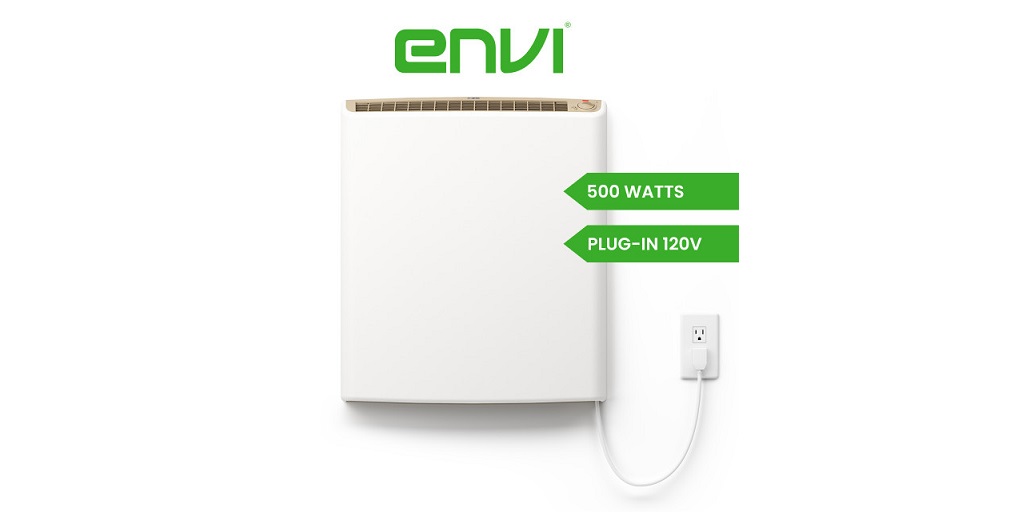
Most heater safety tips center on floor-standing units: clearance from furniture, tip-over protection, keeping distance from curtains and bedding. Envi sits on the wall, which changes that equation entirely. The panel runs cool to the touch on its exterior, so children and pets can move freely around it without any risk of contact burns. Wall-SensTM technology cuts power automatically if the unit is ever removed from the wall, and a thermal cutoff shuts it down if the air vents become blocked.
Wall-mounted electric room heaters don’t carry the floor-space hazards that make traditional space heaters a concern in small, busy rooms. Energy-efficient room heaters like Envi also work on zone heating principles: heat only the room in use, not the whole structure. At as little as 4 cents per hour to run, it costs a fraction of what central heat burns through warming rooms that are sitting empty.
How Electric Room Heaters Fit What Tiny Homes Need
Tiny home living puts specific demands on heating. Floor space is already at a premium, which makes a wall-mounted panel a better fit than bulkier fan heaters or radiant heaters that need clearance to operate safely. Fanless convection means no noise, no air movement pushing dust and allergens around, and no drying out of the air in a space that’s already sealed tight. People with allergies or respiratory sensitivities notice the difference. Zone heating solutions work especially well in tiny homes with distinct sleeping and living areas, letting each zone stay comfortable without overworking a single unit.
For tiny home owners who want a convection heater built around clean, combustion-free warmth, Eheat’s wall-mounted Envi line covers the range from standard to smart Wi-Fi-enabled models, all made in the USA and backed by a three-year warranty.
For more information about Plug In Heater and 220 Electric Heater Please visit: Eheat, Inc.