
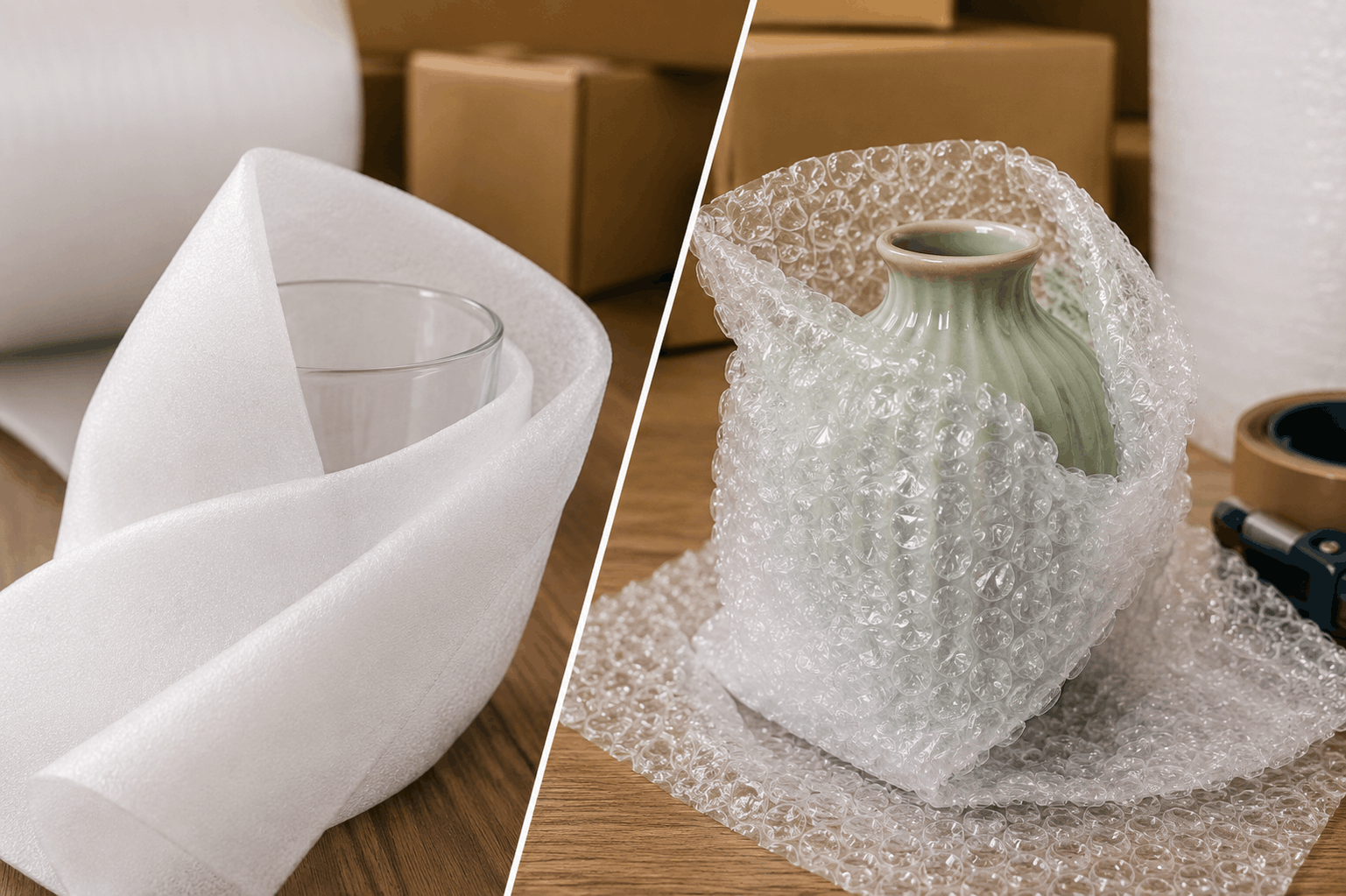
Okay, real talk — have you ever stood in the packing aisle staring at rolls of foam and bubble wrap like they’re the same thing? Because they’re not. And honestly, most people don’t realise this until something arrives cracked, scratched, or both.
Here’s the deal: these two do very different jobs, even though they end up in the same box half the time. Let’s sort out which one you actually need, because guessing is how things get broken.
What Makes Foam Wrap and Bubble Wrap Different?
So, here’s the simplest way to think about it — one stops things from scratching; the other stops things from smashing — same goal (keep your stuff safe), totally different approach.
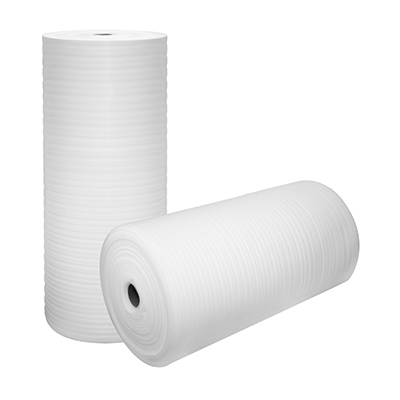
How Foam Wrap Works?
- It’s soft, flexible sheeting, kind of like a spongy blanket
- Hugs the item tightly without leaving marks or that weird sticky residue
- Perfect for anything that scratches easily — glass, polished wood, glossy finishes, you name it
- Comes in different thicknesses depending on how much cushioning the job needs
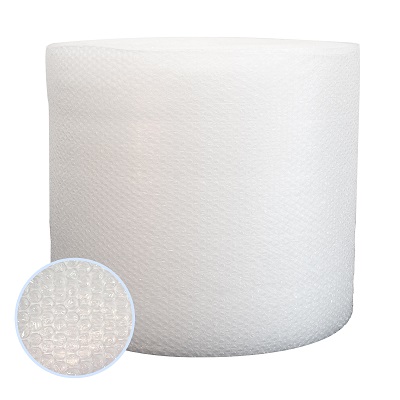
How Bubble Wrap Works?
- You know this one — air pockets trapped between plastic layers
- Absorbs drops, knocks, and general rough handling
- Bubble size actually matters (small bubbles for delicate stuff, bigger ones for heavier items)
- The classic go-to for shipping, storage, moving house, basically everything
Which One Offers Better Protection for Fragile Items?
This bit really comes down to what you’re actually scared of happening. A scratch and a full-on shatter are not the same emergency.
Impact Resistance and Cushioning
Bubble wrap, hands down. Those little air pockets are basically tiny airbags for your stuff. If you’re shipping glassware or ceramics, this is your best friend. A jewellery business sending out delicate pieces isn’t worried about scuffs — they’re worried about things arriving in bits, so bubble wrap does the heavy lifting.
Scratch and Surface Protection
Foam wrap takes this round easily. It clings to the surface and stops items rubbing against each other or bashing the inside of the box. Ask anyone who’s done a house move — a polished table doesn’t need shock absorption for a two-hour drive; it needs something soft wrapped around it so it doesn’t end up covered in scratches.
Foam Wrap vs Bubble Wrap: A Side-by-Side Comparison
| Feature | Foam Wrap | Bubble Wrap |
| Best for | Scratches, surface damage | Impact, drops, knocks |
| Feel | Soft, dense, snug | Bouncy, cushioned |
| Common use | Furniture, glass, electronics | E-commerce, glassware, storage |
| Weight | A touch heavier | Super lightweight |
| Eco options | Recyclable versions exist | Biodegradable versions exist too |
When Should You Use Foam Wrap Instead of Bubble Wrap?
Best For Delicate or High-Value Items
- Polished or painted furniture
- Mirrors and framed artwork
- Electronics with glass screens
- Basically, anything where a scratch ruins it, even if it technically survives the trip
Common Industry Uses
Removal companies practically live on foam wrap rolls — wrapping table legs, cabinet doors, mirrors, all of it. Electronics sellers love it too, because nobody wants a screen that survived the fall but looks like it went through a sandstorm.
When Is Bubble Wrap the Better Choice?
Best For Everyday Shipping and Void Fill
- Glass jars, bottles, ceramics
- Small, oddly shaped items that need cushioning from every angle
- Filling empty gaps in boxes so nothing shifts around mid-transit
- Lightweight parcels where you don’t want to add bulk
Common Industry Uses
E-commerce sellers rely on small bubble wrap to individually wrap delicate products before they go into the outer box. Movers use it just as much, layering it around kitchen glassware and fragile bits and bobs. And if you’re trying to be a bit kinder to the planet, chucking in some biodegradable loose fill alongside it gives you cushioning without dumping more plastic into the mix.
Which One Should You Choose for Your Business?
Truth is, a lot of businesses use both — because why choose when you can layer? Wrap the item in foam first to prevent scratching, then wrap it in bubble wrap for drop protection. If you’re regularly stocking up on packaging materials, it makes sense to keep both around rather than betting everything on one.
Quick gut-check questions:
- Am I more worried about scratches or full-on breakage?
- How far is this thing travelling, and how many hands is it passing through?
- Do I want to lean into more eco-friendly packaging?
- Am I wrapping one delicate item or filling a whole box with several?
Conclusion
Look, there’s no single winner here — it genuinely depends on what you’re protecting and from what—scared of scratches? Foam wrap’s got you and worried about drops and rough handling? Bubble wrap’s your answer. Most businesses that ship often end up using both, plus a bit of biodegradable loose fill thrown in for good measure. Once you actually understand the difference, choosing the right protective packaging stops being a guessing game and becomes pretty straightforward.
FAQs
- Can I use foam wrap and bubble wrap together?
Definitely, and loads of businesses do just that — foam wrap right against the item to stop scratches, then bubble wrap on top for the shock absorption.
- Is bubble wrap better for fragile items than foam wrap?
Depends what “fragile” means to you. Bubble wrap’s better at protecting against drops and knocks; foam wrap’s better at protecting against scratches and surface marks.
- Does bubble wrap come in eco-friendly options?
Yep, biodegradable and recycled versions are pretty easy to find now, so you’re not stuck choosing between good protection and being kind to the planet.
- What size bubble wrap should I use for small items?
Smaller bubbles generally suit lighter, delicate stuff best, while bigger bubbles are better for heavier or bulkier items that need more cushioning.
- Is foam wrap reusable?
It can be if it’s still in decent shape, but most businesses treat it as one-and-done, mainly for hygiene and consistency reasons when shipping commercially.