
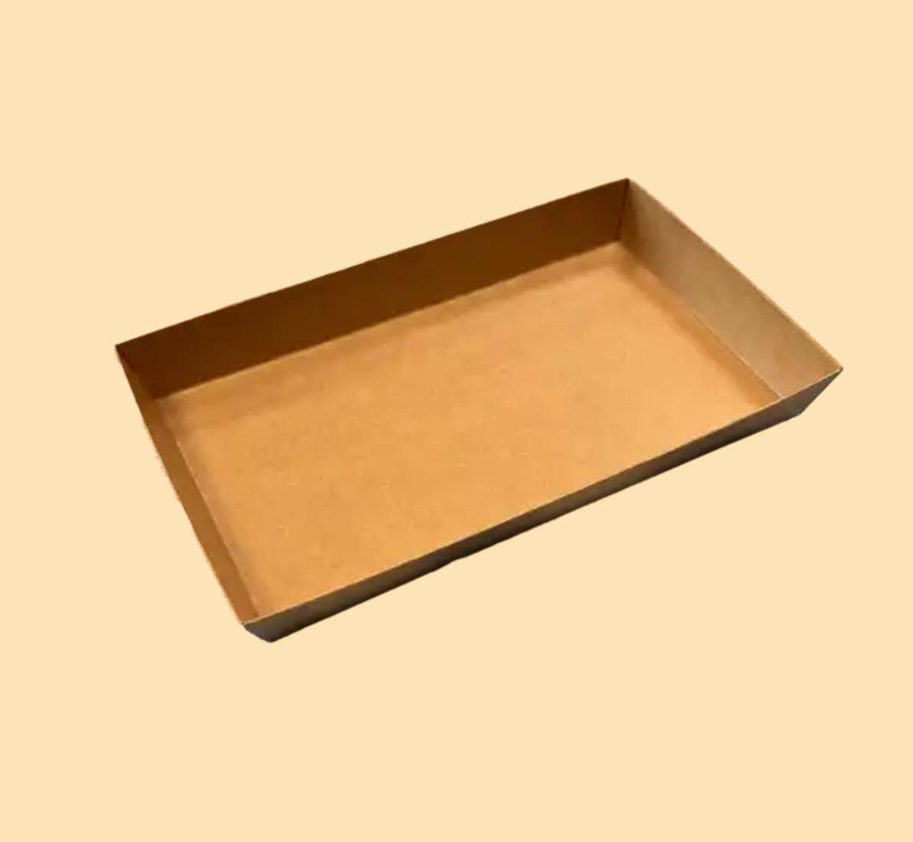
Cardboard trays are widely used for packaging, displaying, serving, and transporting different products. They are lightweight, easy to handle, and suitable for many business sectors.
Food brands, retail stores, bakeries, restaurants, supermarkets, and manufacturers often use cardboard trays because they provide a simple way to hold products securely. They can also be printed, shaped, and sized according to specific packaging requirements.
Cardboard trays are available in different materials, structures, and styles. Some are designed for food presentation, while others are made for product displays, shipping, storage, or retail packaging.
What Are Cardboard Trays?
Cardboard trays are open or partially enclosed packaging structures made from paper-based board materials. They usually have a flat base with raised sides that help keep products in place.
These trays can be made from paperboard, corrugated board, kraft board, or other cardboard stocks. The selected material depends on the weight, size, and type of product that needs to be packed.
Some trays are simple and unprinted. Others include custom printing, coatings, inserts, handles, compartments, or protective layers.
Common Uses of Cardboard Trays
Cardboard trays can be used in many industries. Their simple structure makes them suitable for both lightweight and moderately heavy products.
Food businesses commonly use them for baked goods, snacks, meals, produce, and takeaway products. Retail businesses may use them to organize small products on shelves or counters.
Manufacturers can also use custom cardboard trays as inner packaging to hold multiple products inside larger cartons.
Food Packaging
Cardboard trays are commonly used for food packaging because they help organize and present products neatly.
They can hold bakery items, sandwiches, fries, snacks, chocolates, fruits, vegetables, and prepared meals. Depending on the application, the tray may include a food-safe coating or barrier.
A tray with raised edges can reduce movement during handling. This can help maintain product presentation during storage and transportation.
Retail Display Packaging
Retailers often use cardboard trays as display packaging. These trays can hold multiple units of the same product and keep them arranged on shelves.
Display trays are often printed with branding, product information, colors, or promotional graphics.
Because the products remain visible, customers can quickly identify and access the items.
Industrial and Product Packaging
Cardboard trays can also support non-food products.
They may be used for cosmetics, small tools, accessories, electronics, hardware, medical supplies, and household products.
When used inside outer packaging, a tray can help separate products and reduce unnecessary movement.
Types of Cardboard Trays
There are several cardboard tray styles available. The best option depends on the intended use, product weight, and presentation requirements.
Flat Cardboard Trays
Flat trays have a simple base and low raised sides. They are suitable for light products and short-term presentation.
These trays are commonly used for bakery products, confectionery items, and retail displays.
Their simple construction also makes them easy to stack before use.
Corrugated Cardboard Trays
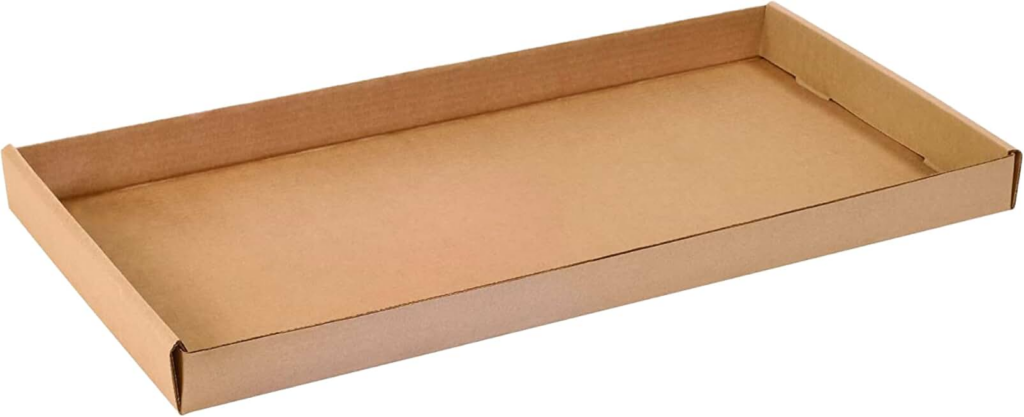
Corrugated cardboard trays are made with fluted board. This structure provides more strength than standard paperboard.
They are often used for heavier products, produce, bottles, jars, or multiple packaged items.
Corrugated trays can also be used for shipping and warehouse handling.
Die-Cut Trays
Die-cut cardboard trays are manufactured using cutting dies that create specific shapes, folds, slots, and locking points.
This allows packaging companies to create trays that fit a particular product.
Die-cut trays may include handles, windows, locking tabs, or compartments.
Display Trays
Display trays are designed to present products directly to customers.
They may have a low front panel and taller side or back panels. This makes it easier to view the products while still providing support.
Display trays are frequently used on retail counters and shelves.
Food Serving Trays
Food serving trays are used by restaurants, food trucks, cafes, cinemas, bakeries, and event businesses.
They may hold fries, burgers, hot dogs, pastries, snacks, or other prepared foods.
The board should be selected according to the type of food and its moisture or grease level.
Materials Used for Cardboard Trays
Material selection is important because it affects the tray’s strength, appearance, printing quality, and performance.
Paperboard
Paperboard is suitable for lightweight trays and premium product presentation.
It has a smooth surface that supports detailed printing and clean graphics.
Paperboard trays are often used for bakery products, confectionery, cosmetics, and small retail goods.
Corrugated Board
Corrugated board contains a fluted inner layer between flat liner sheets.
This structure provides additional strength and cushioning.
It is often used for larger or heavier products that require more support.
Kraft Board
Kraft board has a natural brown appearance. It is commonly used for packaging with a simple or natural visual style.
It can also be printed with logos, product details, and basic graphics.
Kraft trays are often used for food, bakery, takeaway, and retail applications.
Benefits of Using Cardboard Trays
Cardboard trays offer several practical advantages for businesses.
Lightweight Construction
Cardboard is relatively lightweight compared with many other packaging materials.
This makes trays easier to carry, store, pack, and transport.
Lower packaging weight can also help businesses manage handling and shipping more efficiently.
Custom Sizing
Cardboard trays can be produced in many dimensions.
A properly sized tray can hold the product more securely and reduce unnecessary empty space.
Custom dimensions are especially useful for unusual product shapes or multi-product packaging.
Printable Surface
Cardboard offers a useful surface for printing.
Businesses can add logos, colors, product information, instructions, patterns, and marketing graphics.
Printed trays can improve product recognition and create a more organized presentation.
Easy Assembly
Many cardboard tray styles are designed for simple folding and assembly.
Some use locking tabs and slots, while others may require adhesive.
Efficient assembly can be helpful for businesses handling large numbers of trays.
Storage Efficiency
Flat-packed cardboard trays can take up less warehouse space before assembly.
Businesses can store large quantities and assemble them when needed.
This can improve packaging inventory management.
Custom Cardboard Trays
Custom cardboard trays allow businesses to select the structure, size, material, printing, and finishing options according to their requirements.
A custom tray can be designed around the exact dimensions of a product. This can improve fit and presentation.
Custom trays may also include special features such as handles, partitions, cutouts, windows, inserts, or reinforced walls.
Printing Options
Several printing methods may be used depending on the order quantity, board type, and required design.
Common options include digital printing, offset printing, and flexographic printing.
Simple one-color printing may work well for basic kraft trays, while detailed full-color designs may suit branded retail packaging.
Finishing Options
Finishing can change the appearance and surface feel of a cardboard tray.
Gloss finishes can create a smoother and more reflective surface. Matte finishes provide a softer visual appearance.
Some printed trays may also use spot coatings or other decorative treatments to highlight selected design elements.
Cardboard Trays for Food Businesses
Food businesses often need packaging that supports both presentation and handling.
Cardboard trays can be designed for takeaway meals, desserts, baked goods, snacks, fast food, produce, and other products.
The tray material should match the food type. Greasy or moist foods may require a suitable barrier or lining.
Businesses should also consider tray depth, wall height, serving size, and stacking requirements.
Cardboard Trays for Bakeries
Bakeries can use cardboard trays for cakes, pastries, cupcakes, cookies, brownies, and other baked products.
A tray can provide a stable base that helps reduce product movement.
Printed bakery trays can also support branding when used in storefront displays or takeaway packaging.
Different tray sizes can be produced for single items, assortments, or larger bakery orders.
Cardboard Trays for Retail Products
Retail trays can help organize products and improve shelf presentation.
Small items can be placed in rows or compartments so customers can see them more clearly.
Branded tray panels can also display logos, product information, and graphics.
This type of packaging is often useful for small packaged goods that would otherwise be difficult to arrange individually.
Choosing the Right Cardboard Tray
Businesses should consider several factors before selecting a tray.
First, product dimensions should be measured accurately. The tray should hold the product without excessive empty space.
Second, the weight of the product should be considered. Heavier items may require thicker paperboard or corrugated material.
Third, the tray should match the intended use. A serving tray has different requirements from a warehouse or retail display tray.
Printing, coatings, moisture resistance, stacking strength, and assembly methods should also be reviewed.
Cardboard Tray Features
Common cardboard tray features include:
- Raised side walls
- Die-cut handles
- Locking tabs
- Product compartments
- Custom inserts
- Printed logos
- Full-color graphics
- Food-safe coatings
- Reinforced corners
- Window cutouts
These features can be selected according to the product and business requirements.
Custom Sizes and Shapes
Not every product fits a standard tray.
Custom tray dimensions allow businesses to match packaging closely to the item being packed.
Trays can be rectangular, square, long, shallow, deep, compartmented, or shaped around specific products.
Custom sizing can also help improve the overall presentation inside larger boxes or retail displays.
Cardboard Trays for Shipping
Corrugated trays may be used for shipping when products need additional support.
They can hold bottles, cans, jars, packaged foods, or retail products together.
Some shipping trays are combined with shrink film, outer cartons, or protective covers.
The board grade should be selected according to product weight and distribution conditions.
Printed Cardboard Trays
Printing turns a basic tray into branded packaging.
A company can add its business name, logo, product design, handling instructions, or promotional message.
Consistent packaging graphics can help create a recognizable look across different products.
For food and retail applications, printed trays can also make displays appear more professional and organized.
Cardboard Trays and Product Protection
Although cardboard trays are simple, they can provide useful support during handling.
Raised edges help stop products from sliding off the base.
Internal partitions can separate products and reduce contact between items.
Corrugated board can add extra strength and cushioning for heavier goods.
However, tray performance depends on correct material selection, board thickness, and structural design.
Wholesale Cardboard Trays
Businesses that use packaging regularly may purchase cardboard trays in bulk.
Wholesale ordering can be suitable for restaurants, manufacturers, bakeries, retailers, distributors, and food businesses.
Bulk orders may include standard or custom tray sizes.
Before placing a large order, businesses should confirm dimensions, material, printing specifications, coatings, assembly style, and quantity.
Storage and Handling
Unassembled cardboard trays should be stored in a clean and dry environment.
Excess moisture can weaken paper-based materials and affect their shape.
Trays should also be protected from crushing during warehouse storage.
Proper storage helps maintain consistent packaging quality before use.
Cardboard Trays for Branding
Packaging can contribute to how customers recognize a product.
Custom printed cardboard trays provide additional space for visual branding.
Colors, logos, patterns, and product messages can be printed directly onto the board.
When trays are used in retail displays, branding remains visible while products are being sold.
Why Businesses Use Cardboard Trays?
Cardboard trays combine a straightforward structure with many customization possibilities.
They can support products, organize displays, simplify handling, and provide additional branding space.
Because they are available in different board materials and structural designs, they can be adapted for many industries.
A small food business may need simple serving trays, while a larger manufacturer may require reinforced corrugated trays for distribution.
Final Thoughts
Cardboard trays are a practical packaging choice for food, retail, manufacturing, display, and shipping applications.
Their lightweight construction, printable surface, custom sizing options, and wide range of styles make them suitable for many business needs.
The right tray should be selected according to product size, weight, handling requirements, presentation goals, and storage conditions.
Businesses can choose from paperboard, kraft, or corrugated cardboard and add features such as printing, coatings, inserts, handles, and partitions.
With proper material and structural selection, cardboard trays can provide organized packaging, reliable product support, and a clean presentation across many different applications.