
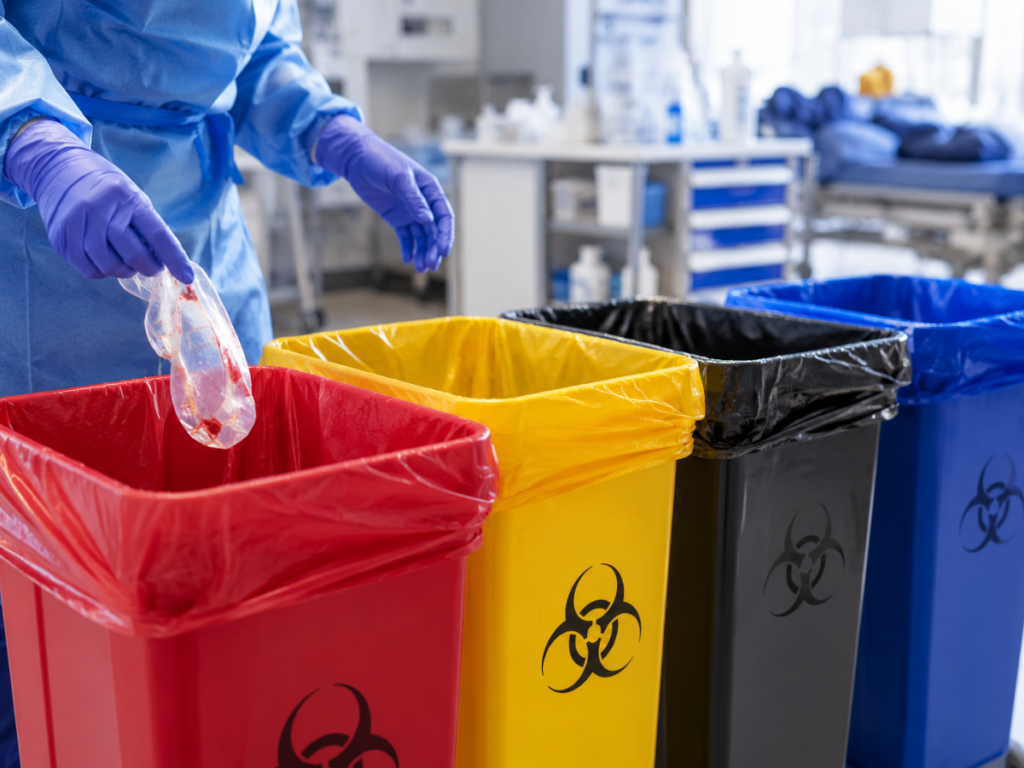
Healthcare facilities generate different types of waste every day, including infectious materials, sharps, pharmaceutical products, and chemical byproducts. Managing these materials requires structured processes, specialized equipment, and strict compliance practices to protect healthcare workers, patients, the public, and the environment.
Medical waste management involves the systematic handling, collection, transportation, treatment, and disposal of waste produced by hospitals, clinics, laboratories, dental practices, pharmacies, and other healthcare facilities. Proper management ensures that potentially harmful materials are controlled throughout their entire lifecycle.
Unlike general waste, healthcare waste requires careful classification because different waste streams require different handling methods. A well-designed waste management system helps facilities maintain safety standards while reducing risks associated with improper disposal.
Understanding Different Categories of Medical Waste
Medical waste is not a single category. Healthcare facilities generate multiple waste types, each requiring specific handling procedures.
Common categories include:
- Regulated medical waste
- Sharps waste
- Biohazardous waste
- Pharmaceutical waste
- Chemical waste
- Pathological waste
Each category presents different risks and requires appropriate containment, labeling, transportation, and treatment methods.
A successful medical waste management program begins with accurate waste identification and segregation at the point where waste is generated.
The Importance of Waste Segregation in Healthcare Facilities
Waste segregation is one of the most important steps in healthcare waste handling.
Separating waste correctly helps:
- Prevent contamination
- Reduce safety risks
- Improve disposal efficiency
- Support regulatory compliance
- Protect healthcare workers
For example, sharps such as needles and scalpels require puncture-resistant containers, while infectious materials require biohazard-specific packaging.
Improper mixing of waste streams can increase risks and create additional disposal challenges. Healthcare facilities must establish clear procedures so employees understand how different materials should be separated and stored.
Collection and Storage Procedures
After waste is properly segregated, it must be collected and stored according to safety requirements.
Important storage considerations include:
- Using approved containers
- Maintaining clear labeling
- Preventing leaks or spills
- Restricting unauthorized access
- Following scheduled collection procedures
Medical waste containers are designed to provide secure containment during storage and transportation.
Facilities must also maintain documentation that tracks waste movement from the point of generation through final treatment.
Transportation of Medical Waste
Transportation is a critical stage of the waste management process because improperly handled materials can create risks during movement.
Professional waste management providers use:
- Properly equipped vehicles
- Trained transportation personnel
- Documentation systems
- Secure containment methods
Tracking waste throughout transportation helps maintain accountability and ensures that materials reach approved treatment facilities.
A reliable transportation process is essential for maintaining the safety chain between healthcare facilities and disposal locations.
Treatment Methods Used for Medical Waste
Different waste types require different treatment approaches.
Common treatment methods include:
Autoclave Treatment
Autoclaving uses high-temperature steam to sterilize infectious materials.
This process helps neutralize microorganisms and makes certain waste streams safer for disposal.
Incineration
Incineration involves controlled high-temperature treatment designed for specific waste categories, including some pathological and pharmaceutical materials.
Chemical Treatment
Certain hazardous materials may require chemical processing to reduce risks before disposal.
The treatment method depends on the classification, composition, and regulatory requirements associated with the waste.
Managing Hazardous Waste in Healthcare Environments
Healthcare facilities may generate materials that require specialized handling because of their chemical, biological, or environmental risks.
Hazardous waste disposal involves managing materials such as:
- Chemical solvents
- Laboratory reagents
- Certain pharmaceutical waste
- Heavy metal-containing materials
- Contaminated chemical products
These materials require proper classification, packaging, labeling, and transportation procedures to minimize risks.
Professional waste providers develop customized solutions based on facility type, waste volume, and regulatory requirements.
Pharmaceutical Waste Management Considerations
Pharmaceutical waste requires careful handling because expired, unused, or contaminated medications may create environmental and safety concerns.
Examples include:
- Expired medications
- Unused pharmaceutical products
- Controlled substances
- Chemotherapy-related waste
Healthcare facilities must separate pharmaceutical waste from other waste streams and follow appropriate disposal procedures.
Proper pharmaceutical waste handling helps prevent accidental exposure and reduces the possibility of environmental contamination.
Sharps Waste Safety Practices
Sharps waste is one of the most common concerns in healthcare environments.
Examples include:
- Needles
- Syringes
- Scalpels
- Broken medical glass
Sharps must be collected in durable, puncture-resistant containers to reduce the risk of injuries.
Proper sharps management protects healthcare employees, cleaning personnel, transportation workers, and the wider community.
Compliance and Documentation Requirements
Healthcare waste management requires detailed documentation and adherence to applicable regulations.
Important compliance practices include:
- Proper waste classification
- Employee training
- Container labeling
- Transportation records
- Disposal documentation
Regulatory compliance helps healthcare facilities reduce liability risks and maintain safe operating environments.
A professional waste management provider supports facilities by helping create structured procedures that align with industry requirements.
Challenges Healthcare Facilities Face With Waste Management
Managing medical waste can become challenging due to:
- Increasing waste volumes
- Changing regulations
- Employee training requirements
- Storage limitations
- Different waste classifications
Healthcare facilities must continuously evaluate their waste handling procedures to ensure they remain effective and compliant.
Partnering with experienced waste professionals can simplify these responsibilities and provide more consistent waste handling processes.
Choosing a Medical Waste Management Provider
Selecting the right provider requires evaluating several factors.
Important considerations include:
- Experience with healthcare waste
- Range of disposal services
- Compliance practices
- Collection flexibility
- Documentation processes
A reliable provider should understand the unique requirements of hospitals, laboratories, clinics, and other healthcare organizations.
Secure Waste provides regulated waste solutions for healthcare facilities, including medical waste, biohazard waste, sharps management, pharmaceutical waste, and hazardous waste services.
Conclusion
Effective waste handling requires careful planning, proper segregation, secure transportation, and appropriate treatment methods. Healthcare facilities depend on structured systems to manage potentially harmful materials safely and responsibly. Professional hazardous waste disposal solutions support compliance and safety, while comprehensive medical waste management helps healthcare organizations maintain cleaner, safer environments for employees, patients, and communities.