
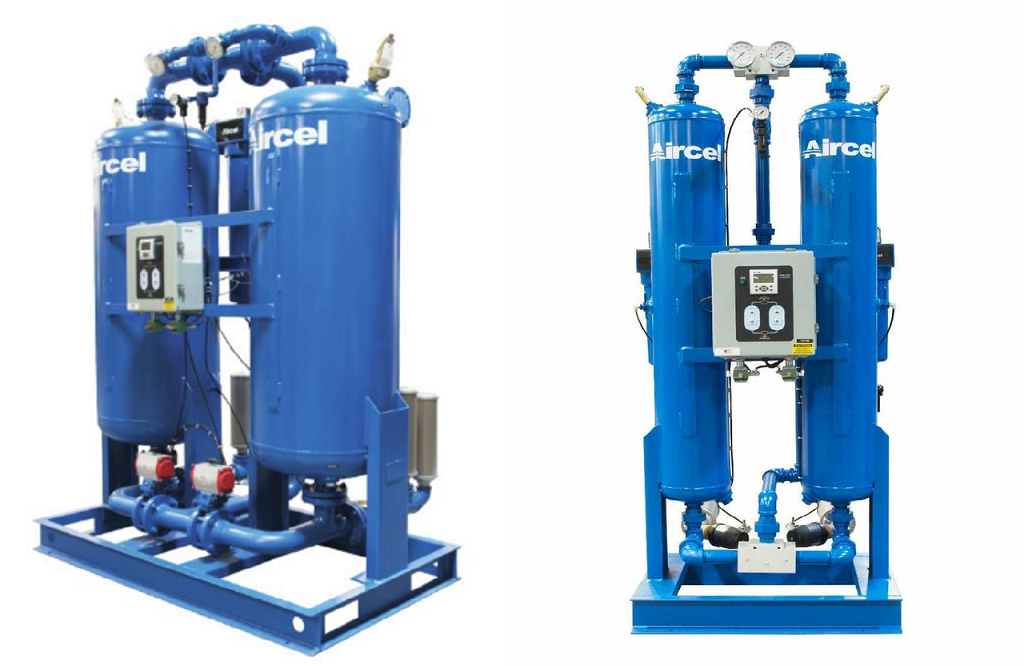
A laboratory air dryer controls the moisture traveling through compressed air lines, and that moisture directly impacts analytical performance. When water vapor enters the system, it interferes with readings, affects sample integrity, and forces repeat work. Laboratories often pair moisture control with specialized air treatment solutions, including CO₂-free dry air units such as MCA and VCM models and CO-free dry air units like the VCM series for applications requiring higher air purity standards.
Analytical environments demand stability. Air purity and dew point control sit at the center of that stability.
How a Laboratory Air Dryer Controls Moisture Before It Reaches Critical Systems
Compressed air is used in almost every lab process. It powers actuators, supports gas delivery, and feeds preparation equipment. Without a laboratory air dryer, moisture enters those systems and spreads across the entire workflow.
That moisture affects consistency fast. Instruments rely on steady airflow conditions, and even small variations can change detector response or baseline stability. Labs that follow strict compressed air quality standards maintain tighter control over these variables.
Midway through troubleshooting, teams often evaluate their laboratory air dryer performance and find gaps in capacity or drying efficiency. A system that fails to meet the required dew-point laboratory conditions creates instability across multiple instruments.
Moisture also accelerates corrosion inside air lines. Over time, that corrosion releases particles into the air stream. These particles travel into sensitive systems and compromise results.
Facilities that invest in proper lab compressed-air dryer setups reduce these risks early on. They create consistent air conditions that support reliable data.
Choosing the Right Laboratory Air Dryer for Precision Work
Every lab operates under different demands. Some require ultra-dry air for analytical instruments. Others support general pneumatic functions. The right laboratory air dryer depends on how air interacts with your equipment.
High-precision environments often rely on a desiccant air dryer for lab applications. These systems pull moisture down to very low dew points, creating stable airflow conditions for sensitive instruments. They support consistent readings in environments where even minor variation affects outcomes.
You’ll often see this type of analytical instrument dryer used in pharmaceutical research, chemical analysis, and environmental testing labs. It maintains air purity where precision matters most.
Midway through the system selection process, teams compare this with a refrigerated air dryer lab option. Refrigerated systems remove moisture through cooling and condensation. They perform well for general lab use but operate at higher dew points than desiccant systems.
That difference becomes important when instruments require tighter control.
A centralized laboratory air dryer setup works well for facilities running multiple air-dependent processes. It maintains consistent airflow conditions throughout the system.
Some labs add another layer of control through a medical air dryer or localized solution near critical equipment. This setup strengthens protection at key points and supports a more stable environment.
When a Laboratory Air Dryer Falls Short and Data Starts Drifting
Problems don’t appear instantly, they build gradually.
Results begin to vary. Instruments require more attention. Maintenance increases without a clear cause. A struggling laboratory air dryer often sits behind these patterns.
Moisture affects flow behavior and disrupts pneumatic systems. It introduces instability that shows up in readings before teams check the air supply. Labs that rely on consistent performance treat laboratory setups for air purification systems as essential infrastructure.
Corrosion compounds the issue. Internal surfaces break down and release debris into the air stream. Filters capture some of it, but not all. That contamination reaches instruments and shortens their lifespan.
A properly sized laboratory air dryer prevents these conditions. It maintains controlled air quality and supports consistent operation across your lab.
Maintaining Performance with a Laboratory Air Dryer That Delivers Every Day
Consistency comes from discipline. You monitor the system. You maintain it. You keep conditions within target ranges.
A well-maintained laboratory air dryer maintains stable dew-point control and protects analytical processes from variation. Labs that prioritize performance track system behavior and address issues early.
Maintenance keeps systems reliable. Desiccant materials require replacement over time. Refrigerated systems need regular servicing. Ignoring these steps leads to a gradual decline in performance.
Facilities that stay ahead of maintenance keep their air systems aligned with operational demands. They support stable conditions that protect both instruments and results.
Because accuracy depends on controlled environments. Controlled environments depend on air quality. And that reliability holds when your system runs on a properly selected and maintained laboratory air dryer.
For More Information About Regenerative Desiccant Air Dryer and Air Compressor Desiccant Dryer Please Visit: Air & Vacuum Process Inc.