
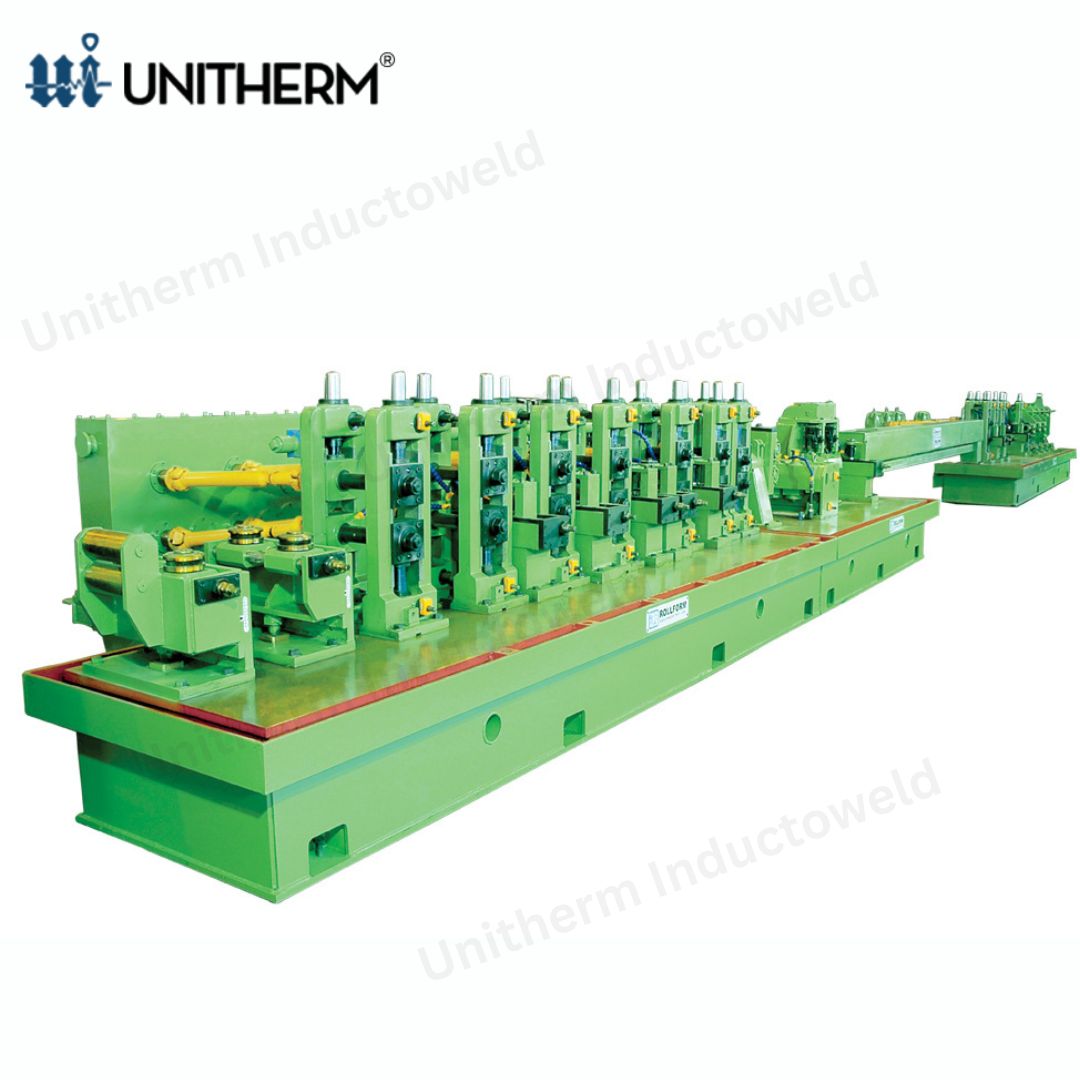
The manufacture of oil and gas pipelines requires equipment that will withstand extreme pressures, temperatures, and a harsh environment. The basis of all this is provided by advanced technologies for manufacturing, which include a steel pipe welder for tube mill.
They provide high-quality pipe production, making the pipeline resistant to all kinds of influences, thus meeting industry requirements and allowing for mass production of pipelines in energy facilities around the world.
The Backbone of Pipeline Manufacturing
The manufacture of pipelines is much more complicated than connecting metal pieces. Pipelines must be manufactured taking into account all kinds of stresses they are subjected to during operation.
It becomes clear that the process of welding the seams of these pipes should also be taken seriously. Only special welding equipment is able to create quality connections in the most difficult conditions.
How Tube Mill Welding Works
The latest technology of the modern tube mill allows producing steel pipes from steel coils in one technological line. At first, the strip of the steel sheet is rolled up to obtain the cylindrical shape of the strip. Then, the strip is aligned and pressed while the edges become hot under the effect of high-frequency current to form a seam weld.
The welding technique based on the application of high-frequency electric resistance (HF-ERW) is popular in the oil and gas industry pipeline manufacturing due to its effectiveness.
The function of the welder tube mill is to guarantee the stability, precision, and efficiency of the entire process within several cycles of production.
Importance of Consistency in Steel Pipe Welds
International requirements for pipelines in the oil and gas industry are very high. They should be able to withstand different conditions and pressures for many years.
A modern steel pipe welder has special designs providing high quality and depth of welding. It guarantees strong and reliable welds equal to the metal base and capable of performing well in difficult conditions, e.g., transporting crude oil and natural gas.
Supporting High-Speed Production
Productivity is an important criterion of successful pipeline manufacture. The continuous production process in tube mills typically involves high-speed operations in order to fulfil the needs of large-scale projects.
Modern technology of high-frequency welding makes it possible to weld steel sheets quickly without sacrificing the quality of the product due to fast heating and joining of their edges.
In turn, the advanced welder for tube mill guarantees a steady power supply, constant temperature control, and smooth integration into automated pipelines. Consequently, manufacturers have an opportunity to increase productivity without deteriorating quality.
Precision and Consistency in Every Weld
Consistency is a key element of any pipeline production process. All produced pipes should correspond to specific requirements regarding their parameters. Thus, the welder for tube mill must ensure a high degree of consistency.
In addition to increasing productivity, consistent welders reduce the risk of defects and produce consistent quality welds on all manufactured miles of pipelines. Real-time monitoring of the weld integrity in tube mill welding machines provides an advantage in terms of detecting any deviations immediately and reducing the rate of scrap to achieve high-quality pipes that comply with all the oil and gas industry specifications.
Integration with Advanced Production Lines
The manufacture of oil and gas pipelines in modern times is characterised by extensive use of automation. Automated tube mill processes can inspect, cool, and size pipes following their welding operations.
The steel pipe welder easily fits in this line-up of automated production machinery, complementing the forming, cooling, and inspection process. The integration facilitates efficiency in monitoring, increased precision, and decreased risks of human errors.
Adaptability for Various Pipe Specifications
Different oil and gas pipelines are designed using different sizes, thicknesses, and grades of materials. In order to meet the needs of diverse customers, flexible tube mill welders must be considered.
In situations where there are small-diameter pipelines for short distances and large-diameter pipelines for long distances, the use of a single welder for all types of tube mill operations becomes necessary.
Driving Cost Efficiency and Sustainability
Apart from the above considerations, tube mill welders also play an essential role in cost savings and sustainability. Welding through high frequency involves low energy usage because of its concentrated use of heat. Moreover, there is no requirement for any additional filler material in many cases.
The cost-saving techniques employed can also facilitate environmental sustainability, given that there is increasing emphasis on environmental considerations within the energy industry.
Conclusion
To conclude, a welder for tube mill serves an important function in producing strong pipeline systems used in the oil and gas industries. Some of the variables that are affected by the welder include the strength of the welds and high levels of productivity, among others. An excellent illustration of technological advancements within the field of welding is the solution offered by Unitherm Inductoweld.