
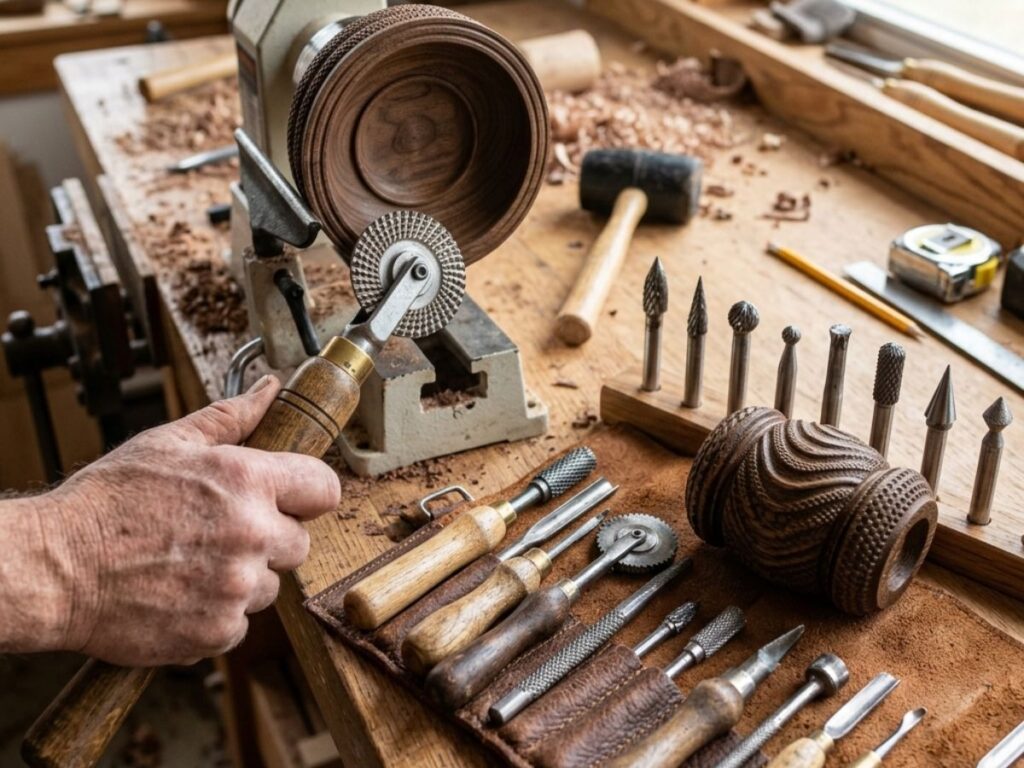
Surface texture is what separates ordinary turned pieces from truly memorable woodwork. Whether you are crafting bowls, vases, pens, or decorative spindles, the finish and texture of the surface tell the story of the maker’s skill and intention. Woodturning texture tools have become essential additions to the modern turner’s workshop, enabling a level of surface detail and artistic expression that traditional gouges and scrapers alone cannot achieve. From repeating geometric patterns to organic flowing textures, these specialized tools open up an entirely new dimension of creative possibility for both hobbyist turners and professional woodworkers seeking to distinguish their work.
The Role of Texture in Woodturning
Texture does far more than add visual interest to a turned piece. It changes how light interacts with the surface, creates tactile depth that draws the hand as much as the eye, and adds perceived value to functional and decorative items alike. A smooth bowl is beautiful, but one with deliberate, well-executed surface texture becomes a conversation piece. Achieving this level of surface quality requires more than a steady hand and a sharp gouge. It demands purpose-built tools designed to apply consistent patterns at lathe speed without tearing the grain or losing control.
Types of Woodturning Texture Tools and Their Applications
The texturing tool category encompasses several distinct designs, each suited to different effects and project types. Knurling tools create repeating diamond or linear patterns by pressing a hardened roller against the spinning workpiece, producing crisp, uniform texture across curved surfaces. Fluting tools cut parallel grooves along spindles and vessel walls with precision, adding elegant structure to otherwise plain forms. Texturing wheels with interchangeable heads gives turners the ability to switch between patterns quickly, making them highly versatile on production runs or experimental projects. The right set of woodturning texture tools allows a craftsperson to move fluidly between styles, adapting to the demands of each individual piece without compromising execution quality.
Matching Tools to Wood Species and Project Scale
Not every wood responds to texturing the same way, and choosing the right tool for the material is just as important as the technique itself. Dense hardwoods like maple, walnut, and cherry hold crisp textures exceptionally well, producing clean, defined patterns that retain their sharpness after finishing. Softer woods such as pine or basswood require lighter tool pressure and sharper edges to avoid compressing or tearing the grain. For smaller projects like pens and bottle stoppers, fine-tooth texturing wheels produce delicate detail without overwhelming the piece. Larger bowls and hollow forms benefit from bolder patterns applied with wider-profile tools. Selecting woodturning texture tools matched to both wood density and project scale is what separates a clean, professional result from a frustrating one.
Technique, Speed, and Tool Control
Effective texturing on the lathe is as much about technique as it is about tool selection. Lathe speed plays a critical role in how a texturing tool engages with the wood surface. Too fast, and the tool can chatter or skip across the grain; too slow, and the pattern loses definition. Most texturing work is done at moderate speeds with consistent, controlled pressure applied perpendicular to the surface. Practicing on scrap pieces before committing to a finished workpiece allows turners to dial in their approach and understand how woodturning texture tools respond to specific grain orientations and surface geometries.
Conclusion
Texture transforms turned wood from a functional object into a work of craft that reflects genuine skill and artistic intention. The right tools, matched to the right materials and techniques, make this transformation accessible to turners at every level. As your tool collection grows and your techniques develop, wood carving tools rotary options can further expand your creative range, complementing lathe-based texturing with freehand detail work that adds another layer of individuality and character to every finished piece.