
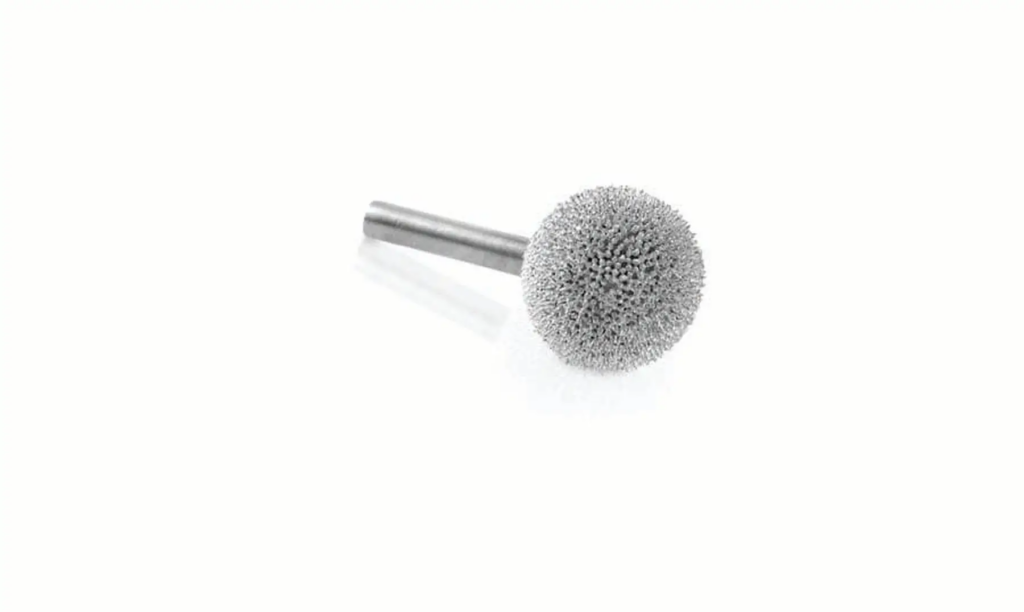
In modern repair and manufacturing environments, precision surface preparation plays a critical role in ensuring durability, safety, and performance of components. One such important category of tools includes shaft-mounted accessories used in tire and rubber repair systems. Among these, the nail hole reamer is a specialized tool designed for preparing punctured areas before patching or sealing operations. In industrial rubber repair workflows, tools like the nail hole reamer are used to refine and clean puncture channels in tires, ensuring that repair materials bond effectively with the internal structure. This process is essential in preventing air leakage, contamination, and premature failure of tire repairs. These tools are typically mounted on high-speed rotary equipment and are engineered for precision removal of damaged rubber material. The concept is similar to machining processes where a reamer is used to refine a pre-formed hole rather than create it from scratch. In machining theory, a reamer improves surface finish and dimensional accuracy by removing small amounts of material from an existing hole for better fit and function.
Role of Nail Hole Reamer in Tire Repair Systems
The nail hole reamer is used in tire repair workshops to prepare puncture holes caused by nails, screws, or other sharp objects. Instead of directly plugging the damage, technicians use it to clean and slightly enlarge the injury path, removing debris, oxidized rubber, and irregular fragments. This creates a smooth channel for better patch or plug adhesion. Shaft-mounted versions offer better control, consistent rotation, and suitability for both light and heavy-duty tire repair work.
Relationship Between Reaming and Rubber Repair Technology
The working principle behind a nail hole reamer is closely related to metalworking reaming processes. In engineering, a reamer is used to enlarge and finish pre-drilled holes with high accuracy and smoothness. It removes minimal material while ensuring a clean and precise surface finish. Similarly, in tire repair, the goal is not aggressive cutting but controlled material removal. The tool helps standardize the shape of the puncture so that repair materials such as plugs or patches can be inserted without stress or misalignment. This controlled approach ensures consistency in repair quality, which is especially important in commercial vehicle maintenance where safety standards are strict.
Importance of Proper Surface Preparation Tools
Industrial repair systems often use multiple accessories for different stages of tire restoration. Along with the nail hole reamer, tools like tire skiving wheels and tire buffing wheels are commonly used in preparation and finishing stages. Skiving wheels help remove damaged or uneven rubber layers from the tire surface, creating a clean working area. Buffing wheels, on the other hand, smooth the inner liner or surface texture to improve adhesion of repair compounds. When used in sequence, these tools ensure that every layer of damage is properly addressed before final patching is applied.
Application in Industrial Maintenance Workflows
In heavy-duty maintenance environments, consistency and precision are essential. The nail hole reamer is widely used in workshops handling trucks, buses, agricultural vehicles, and industrial fleets. Its design allows technicians to quickly process punctures without compromising tire integrity. The tool is typically part of a shaft tool system that includes multiple interchangeable heads. This modular approach increases efficiency and reduces downtime during repair operations. Because tire safety is directly linked to proper repair techniques, using appropriate preparation tools ensures that repaired tires perform reliably under load, pressure, and long-distance usage conditions.
Conclusion
Precision tools like the nail hole reamer play a crucial role in modern tire repair systems by ensuring that punctures are properly prepared before sealing. When combined with supporting equipment such as tire skiving wheels, tire buffing wheels, and other shaft-mounted accessories, they contribute to a structured and reliable repair process. From an engineering perspective, the concept aligns with traditional reaming principles used in machining, where accuracy and surface refinement are essential for long-term performance. The same logic applies in rubber repair systems, where controlled material removal leads to stronger bonding and safer outcomes. Understanding how these tools function helps technicians maintain higher repair standards and improve overall operational efficiency in industrial maintenance environments.