
Tool change accuracy in CNC machining centers depends on mechanical alignment, spindle condition, and controller logic. Compressed air rarely gets the same attention, even though automatic tool changers depend on it at every cycle. When air delivery is inconsistent, tool change performance is usually the first place problems appear.
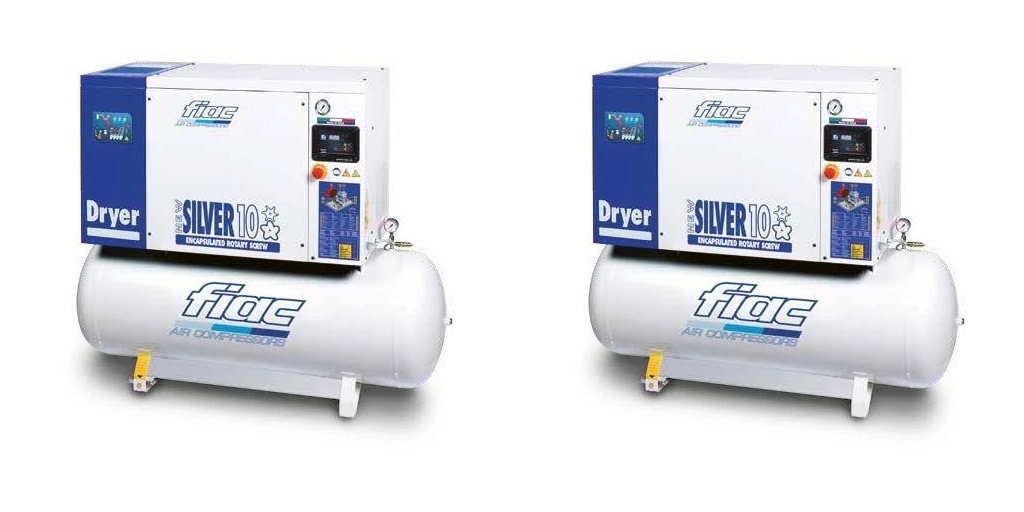
This is where a 10 HP air compressor plays a critical role. In many small to mid-sized shops, it serves as the primary air source supporting one or more CNC machines. Its job is not just to supply enough air, but to deliver it consistently, cleanly, and at the right pressure every time a tool change sequence is triggered.
Why do tool changers rely so heavily on compressed air?
Automatic tool changers use compressed air to actuate cylinders, release retention mechanisms, position tool arms, and confirm sensor states. These actions happen quickly and in a precise order. Any delay or pressure fluctuation can interrupt that sequence.
Tool changes demand instant, repeatable air pressure with minimal variation. Pressure drops or moisture can cause exchange problems like incomplete engagement, sluggishness, or misalignment.
Over time, these small inconsistencies can lead to dropped tools, damaged holders, or unexplained cycle faults.
The role of a 10 HP air compressor in CNC accuracy
When you’re running CNC machines, a 10 HP air compressor is really the sweet spot. It ensures you have the reliable pressure and airflow needed for quick, smooth tool changes.
Problems arise when the compressor is undersized, poorly maintained, or tasked with more machines than it was intended to support. Pressure dips during tool changes may not register as alarms, but they affect how reliably the changer performs.
Instead of a guessing game, a finely tuned 10 HP system keeps the air flowing perfectly. The moving parts (the actuators) always go all the way, and the sensors confirm they’ve landed instantly. That means tool changes happen without a hitch.
Repeatability depends on air quality as much as pressure
Pressure stability is only part of the equation. Tool changers are sensitive to air quality as well.
Moisture, oil carryover, and particulates can cause valves to stick or respond slowly. Even minor contamination can build up over time, especially in shops that run long hours or multiple shifts. When this happens, alignment issues often appear before air system problems are diagnosed.
A 10 HP air compressor paired with proper filtration and drying helps prevent these gradual failures. Clean air supports consistent actuator movement, which directly affects tool positioning and repeatability.
Cycle reliability and unplanned downtime
Tool change errors are disruptive because they stop production without warning. They are also difficult to troubleshoot, since the mechanical components often appear intact.
Shops experiencing intermittent tool-change faults frequently trace the issue to air delivery. In these cases, the compressor was technically “working,” but not meeting the machining center’s actual demands.
Consistent air delivery minimizes interruptions. A 10 HP air compressor, operating within range, ensures predictable tool changes over thousands of cycles.
Seeing compressed air as part of machining precision
Machining accuracy does not stop at the spindle. It extends into every supporting system that enables consistent operation, including compressed air.
Shops evaluating air systems for CNC applications increasingly look beyond horsepower alone. They assess pressure stability, air quality, and compressor behavior during short, high-demand events like tool changes.
Air Vacuum & Process, Inc. is a fantastic source for all your air compressor needs. A 10 HP air compressor, especially, is absolutely crucial for keeping a machining center running smoothly. Even though it’s not the part that actually cuts the metal, it’s essential for ensuring tool changes are accurate.
For more information about Compressed Air Dryer System and Compressed Air And Gas Filters Please visit: Air & Vacuum Process Inc.