
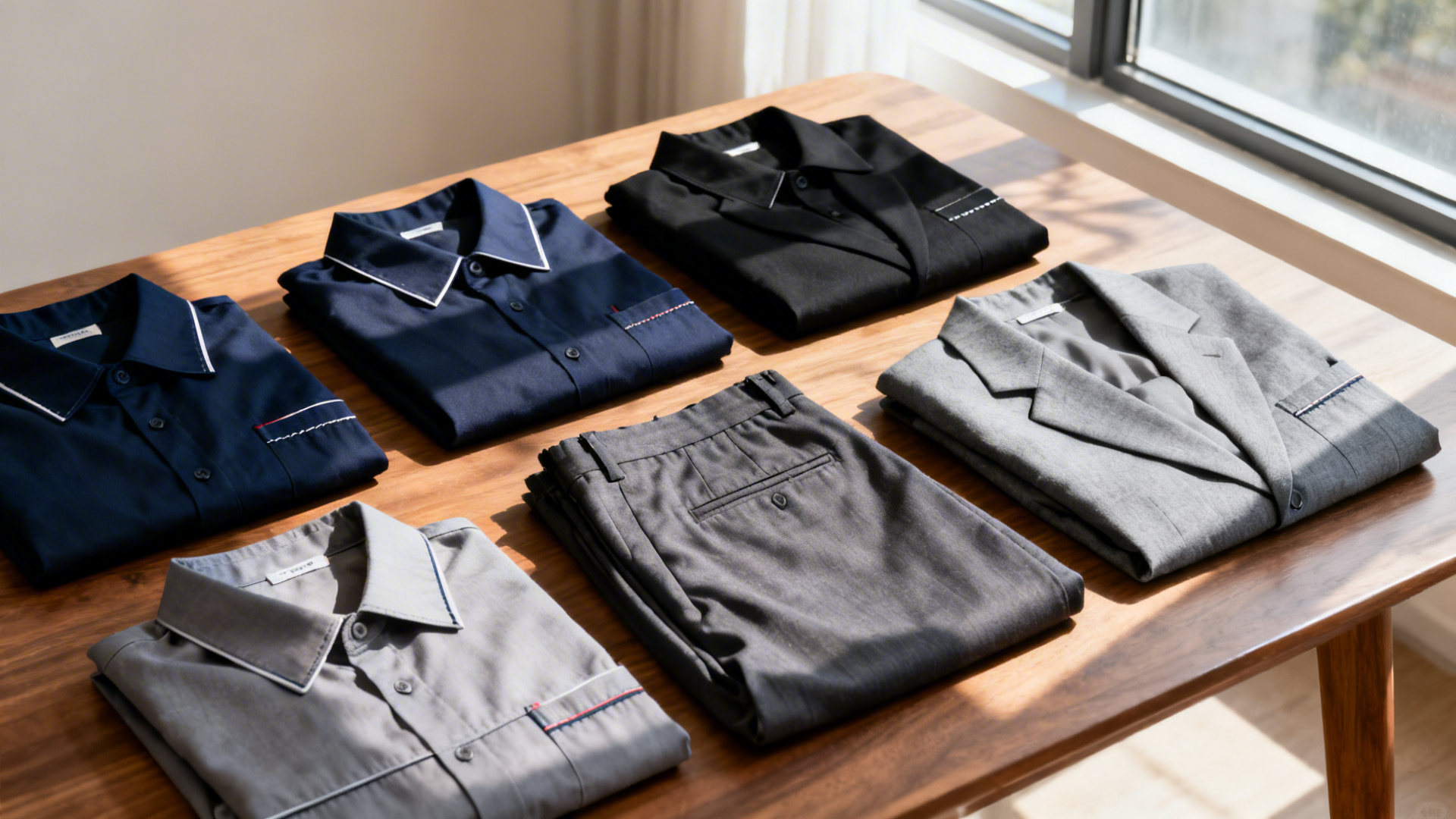
Introduction to Uniform Planning for a 6-Day Work Week
Work uniforms play a crucial role in maintaining professionalism, hygiene, and brand identity in many industries. Businesses in Singapore often operate with a six-day work schedule, especially in sectors such as food and beverage, hospitality, retail, and customer service. In these industries, employees interact with customers daily, which makes appearance and cleanliness extremely important.
A well-planned uniform system ensures that staff members always look presentable and comfortable during their shifts. Employers must determine the right number of uniform sets so employees can maintain hygiene standards while reducing unnecessary costs. Proper planning also improves staff satisfaction because employees can work comfortably without worrying about laundry limitations or worn-out clothing.
Understanding how many uniform sets employees need for a six-day work week helps businesses maintain consistency and professionalism. Companies that invest in proper uniform planning create a better working environment and reinforce their brand image.
Importance of Workplace Uniforms in Service Industries
Uniforms represent more than just clothing. They reflect the identity and values of a business. When employees wear consistent uniforms, customers easily recognize staff members and associate them with the brand. This visual consistency helps businesses build trust and professionalism in customer interactions.
Service industries rely heavily on uniforms because employees remain visible to customers throughout the day. Restaurants, cafes, hotels, and retail stores require employees to maintain a clean and polished appearance during every shift. A well-maintained uniform demonstrates discipline and attention to detail, which customers often associate with quality service.
Uniforms also promote equality among staff members. When everyone wears the same attire, the workplace focuses more on teamwork and professionalism rather than personal clothing choices. This approach creates a cohesive work environment that supports efficient service delivery.
Understanding the Demands of a 6-Day Work Schedule
A six-day work schedule places greater demands on employee clothing compared to a standard five-day work week. Employees who work six days in a row need uniforms that remain comfortable, durable, and hygienic throughout the week.
In industries such as hospitality and food service, employees often perform physically active tasks. Staff members walk long distances, serve customers, prepare food, and handle equipment during their shifts. These activities naturally cause uniforms to accumulate sweat, stains, and wear.
Because of these conditions, employees cannot rely on a single uniform set for multiple days. Frequent washing becomes necessary to maintain hygiene and professionalism. Employers must therefore calculate the appropriate number of uniform sets that allow employees to rotate outfits comfortably during the week.
Proper planning ensures employees always have clean uniforms available while allowing enough time for washing and drying between shifts.
Minimum Number of Uniform Sets Employees Need
Most businesses recommend providing at least three to four uniform sets for employees working a six-day schedule. This number allows employees to rotate their uniforms throughout the week without wearing the same outfit repeatedly without washing.
For example, an employee can wear one uniform on the first day, another on the second day, and a third on the third day. During this rotation, the first uniform can be washed and prepared for reuse. This cycle ensures that employees always have clean clothing ready for work.
Providing multiple uniform sets also prevents excessive wear on a single outfit. When employees rotate uniforms regularly, each piece of clothing experiences less stress from washing and daily use. This approach increases the lifespan of uniforms and reduces replacement costs for businesses.
Employers who provide too few uniform sets often face problems with employee hygiene, damaged clothing, and inconsistent workplace appearance.
Hygiene and Professional Standards in Food Service
Hygiene remains one of the most important factors when deciding how many uniform sets employees need. Food service businesses must follow strict hygiene standards to ensure customer safety and maintain regulatory compliance.
Employees working in kitchens, cafes, and restaurants frequently encounter food spills, grease stains, and heat exposure. These conditions require uniforms to remain clean and fresh during every shift. Staff members must change uniforms regularly to avoid contamination and maintain proper food safety standards.
In Singapore’s warm and humid climate, uniforms can also absorb sweat during long shifts. Clean uniforms help employees feel comfortable and maintain confidence while serving customers. Businesses that prioritize hygiene through proper uniform rotation create a positive impression on customers and health inspectors alike.
Why F&B Businesses Need Extra Uniform Sets
Food and beverage companies often require more uniform sets compared to other industries. Employees in this sector interact directly with food preparation areas and customers, which increases the importance of cleanliness and consistent presentation.
When businesses invest in F&B Uniform Singapore solutions, they usually plan uniform quantities carefully to meet operational demands. Many restaurants provide four to five uniform sets per employee to ensure staff always have clean clothing available.
A well-organized F&B uniform system in Singapore allows employees to rotate uniforms frequently without worrying about laundry schedules. Staff members can easily change into a fresh uniform when spills or stains occur during busy service hours.
Restaurants that rely on high-quality F&B Uniform Singapore clothing also benefit from durable fabrics designed for frequent washing. These uniforms resist stains and maintain their shape even after repeated use.
Businesses that manage F&B Uniform Singapore supplies efficiently often experience improved staff confidence and better overall presentation during customer interactions.
Benefits of Providing More Than the Minimum Uniform Sets
Some businesses choose to provide additional uniform sets beyond the minimum requirement. This strategy offers several advantages for both employers and employees.
First, extra uniforms provide flexibility during busy work weeks. Employees can change clothing more frequently if necessary, especially in physically demanding roles. This flexibility helps staff maintain comfort and hygiene throughout long shifts.
Second, additional uniforms extend the lifespan of each garment. When employees rotate among several uniform sets, each piece experiences less frequent washing and wear. Businesses therefore spend less money replacing damaged uniforms.
Third, extra uniforms support emergency situations. If a uniform becomes damaged, stained, or lost, employees can immediately switch to another set without disrupting their shift.
Many businesses that invest in F&B Uniform Singapore programs prefer providing extra sets to maintain consistent brand presentation and operational efficiency.
Factors That Influence Uniform Quantity Decisions
Several factors determine how many uniform sets employees require. Business owners must evaluate these elements carefully before deciding on the right uniform allocation.
The nature of the job plays a major role in uniform planning. Employees working in kitchens or service floors may require more uniform changes compared to office staff. Jobs involving physical labor or exposure to spills naturally require more clothing rotation.
Shift length also influences uniform needs. Employees working long hours or double shifts may require additional clothing changes during the same day. Businesses that operate extended service hours often supply more uniforms to support these working conditions.
Laundry access represents another important factor. If employees handle laundry at home, businesses may need to provide more uniform sets to accommodate washing schedules. Some companies offer professional laundry services, which reduces the number of uniforms required for each employee.
Companies that invest in quality F&B Uniform Singapore programs often consider all these factors to ensure their uniform supply meets operational needs.
Choosing the Right Fabric and Uniform Design
Uniform quantity matters, but quality also plays an important role. Businesses must select fabrics and designs that withstand daily wear while maintaining comfort for employees.
Breathable fabrics help employees stay cool during long shifts, especially in Singapore’s warm climate. Materials that resist wrinkles and stains also reduce maintenance time and keep employees looking professional.
Durable stitching and reinforced seams extend the lifespan of uniforms even when employees wash them frequently. Businesses that choose high-quality materials experience fewer replacements and lower long-term costs.
Professional uniform suppliers that specialize in F&B Uniform Singapore products often design clothing specifically for demanding work environments. These uniforms combine durability, comfort, and professional appearance to support staff performance.
Cost Efficiency and Long-Term Uniform Planning
Providing multiple uniform sets requires an initial investment, but it often saves money over time. Businesses that distribute enough uniforms reduce the risk of frequent replacements caused by overuse or poor hygiene conditions.
Well-maintained uniforms last longer and maintain their professional appearance for extended periods. This durability helps companies control operational costs while maintaining high standards for staff presentation.
Businesses that implement organized F&B Uniform Singapore programs also benefit from better brand consistency. Employees represent the company visually, and well-designed uniforms strengthen brand recognition among customers.
Companies that view uniforms as a long-term investment often achieve better results in staff performance, customer perception, and cost management.
Conclusion: Finding the Right Uniform Balance
Determining how many uniform sets employees need for a six-day work week requires careful planning. Most businesses find that providing three to five uniform sets per employee creates a practical balance between hygiene, comfort, and cost efficiency.
Service industries such as food and beverage require special attention because employees interact directly with customers and food preparation areas. Clean, well-maintained uniforms support health standards while reinforcing brand professionalism.
Businesses that invest in reliable F&B Uniform Singapore solutions often achieve better staff performance and stronger brand presentation. By providing enough uniform sets and choosing durable materials, companies create a professional workplace that benefits employees and customers alike.