
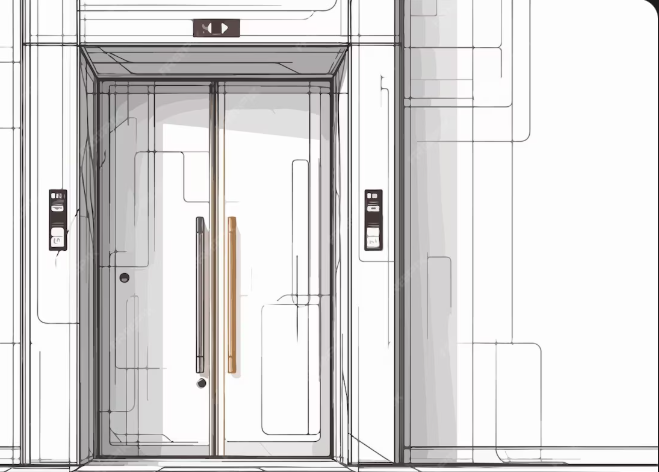
Planning elevator shaft dimensions is one of the most technically important responsibilities for builders and contractors in modern construction. An elevator shaft, often referred to as the hoistway, is not simply a vertical hollow space inside a building. It is a carefully engineered structural component that must accommodate the elevator car, guide rails, counterweights, safety systems, and mechanical equipment. If shaft dimensions are not calculated accurately from the beginning, the result can be costly structural changes, delayed installations, and compliance issues during inspection.
Understanding elevator shaft dimensions begins with recognizing that the shaft must always be larger than the elevator cabin itself. While cabin dimensions determine passenger space, the shaft provides room for the mechanical and structural systems that make vertical transportation safe and reliable.
Understanding Elevator Shaft Dimensions
Elevator shaft dimensions refer to the internal width, depth, pit depth, and overhead clearance required for safe and efficient elevator operation. These measurements are determined by manufacturer specifications, engineering requirements, and building code regulations. Builders must consider not only the visible cabin size but also the hidden mechanical systems that operate within the shaft.
Precision is critical. Even minor measurement errors can affect installation alignment and long-term system performance.
Residential Elevator Shaft Dimensions
Residential construction typically involves more compact elevator systems, but proper planning remains essential. Home elevators are designed to serve limited passenger loads while fitting within existing structural layoutsShaft Width and Depth in Homes
A residential elevator cabin may measure around 36 inches in width and 48 inches in depth. However, the shaft must provide additional clearance for guide rails and structural spacing. Internal shaft dimensions are therefore larger than the cabin footprint. Contractors must always verify exact requirements from the manufacturer’s technical documentation.
Residential Pit and Overhead Requirements
The pit, located below the lowest landing, allows room for safety buffers and structural components. In residential systems, pit depth is generally shallower than in commercial elevators. Overhead clearance above the top floor is equally important, as it houses essential mechanical parts and braking systems. Insufficient overhead space can prevent proper installation.
Commercial Elevator Shaft Dimensions
Commercial projects demand greater capacity and durability, which directly impacts elevator shaft dimensions. Office buildings, retail centers, and healthcare facilities often require larger shafts to accommodate heavier systems and increased passenger volume.
Shaft Size for Office Buildings
Commercial elevator cabins are wider and deeper than residential units. As a result, the shaft must also expand proportionally. Contractors must ensure that internal clearance allows smooth travel, proper counterweight placement, and safe guide rail alignment.
Pit Depth and Overhead in Commercial Systems
Commercial elevators generally require deeper pits and more substantial overhead clearance due to higher travel speeds and heavier loads. Travel height also influences these requirements. Taller buildings demand reinforced structural components and greater vertical space allocation.
Structural Integration and Engineering Coordination
Elevator shafts often function as structural elements within a building. Reinforced concrete walls are commonly used to provide strength and fire resistance. Builders must account for wall thickness when calculating overall space allocation, as internal shaft dimensions do not include structural framing.
Close coordination with structural engineers is essential. Foundation capacity, slab penetration, load distribution, and seismic considerations must all align with elevator specifications. Early collaboration prevents costly redesigns and ensures structural integrity.
Building Code and Compliance Requirements
Elevator shaft dimensions must comply with local and national building regulations. Safety standards dictate minimum clearances, fire separation ratings, and accessibility compliance. Contractors should review all applicable codes before construction begins.
Failure to meet regulatory requirements can result in inspection delays and additional construction expenses. Accessibility standards may also influence shaft sizing, particularly in public and commercial buildings where inclusive design is mandatory.
Planning Elevator Shafts in New Construction
The most efficient way to manage elevator shaft dimensions is to finalize them during the architectural planning phase. When shaft space is reserved early, contractors can coordinate structural framing, concrete work, and slab openings accurately.
Working directly with elevator manufacturers ensures that pit depth, overhead clearance, and internal width meet precise specifications. Early planning protects both budget and project timeline.
Retrofitting Elevator Shafts in Existing Buildings
Retrofitting elevators into existing structures presents additional complexity. Space limitations may restrict shaft size, requiring careful evaluation and potential structural reinforcement. Contractors must assess floor load capacity, ceiling height, and foundation strength before installation.
Even in retrofit situations, maintaining correct elevator shaft dimensions is critical. Safety clearances cannot be compromised, regardless of spatial limitations.
Long-Term Performance and Maintenance Considerations
Accurate shaft sizing contributes to long-term operational efficiency. Proper clearance allows technicians to perform maintenance safely and effectively. Restricted access can increase service time and maintenance costs over the building’s lifespan.
Standardized elevator shaft dimensions simplify inspections, repairs, and future upgrades. Builders who prioritize precise measurement during construction reduce operational challenges for property owners later.
Budget Control and Project Efficiency
Elevator shaft construction requires significant material and labor investment. Oversized shafts increase concrete and reinforcement costs, while undersized shafts may require structural corrections. Accurate measurements protect both financial planning and project scheduling.
Contractors who verify dimensions carefully before pouring concrete or framing walls avoid unnecessary delays. Thorough documentation and consistent measurement checks are best practices in professional construction management.
Coastline Lift is a trusted elevator company in Florida, specializing in custom home lift solutions. With over 15 years of experience, we offer high-quality elevator installations to enhance accessibility and add value to your home. As a certified residential contractor (CRC#1333752), we are experts in installing pneumatic vacuum elevators (PVE) and panoramic glass elevators, designed for coastal and elevated homes. Our personalized, fast installation process ensures minimal disruption while providing maximum satisfaction. Serving the Florida Panhandle, we are known for our local expertise, craftsmanship, and reliable service. Ready to elevate your home? Contact Coastline Lift today for a consultation and expert installation.
Conclusion
Elevator shaft dimensions are a critical aspect of successful building design and construction. For builders and contractors, precision in planning ensures structural stability, regulatory compliance, and smooth installation. From residential homes to commercial office towers, every project depends on accurate shaft calculations.
By coordinating with engineers, reviewing manufacturer specifications, and adhering to safety regulations, contractors can deliver elevator shafts that support reliable performance for years to come. Careful planning, technical accuracy, and professional execution transform elevator shaft construction from a potential challenge into a seamless part of modern building development.