
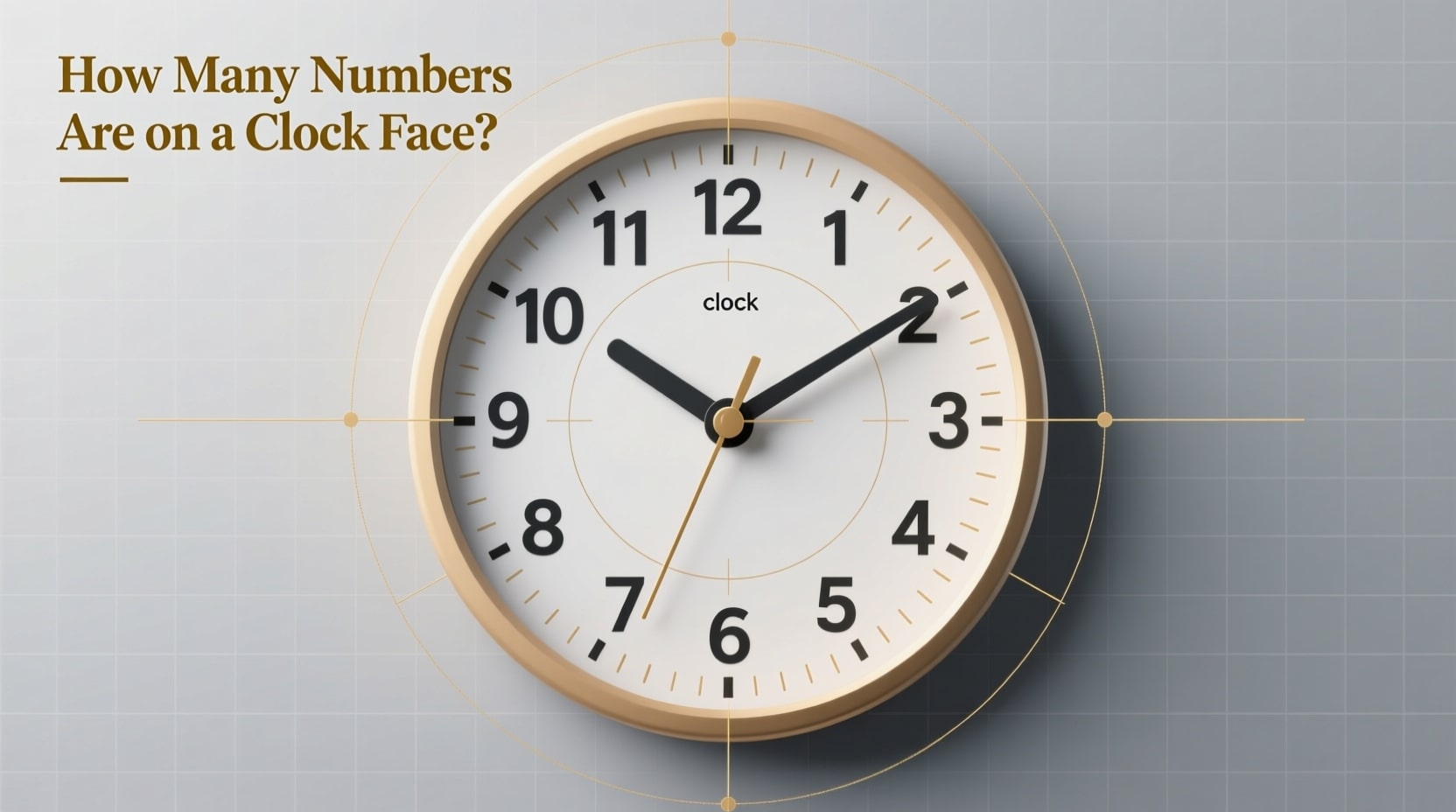
Understanding clock face design is essential for anyone interested in interior decorating, watchmaking, or simply curious about timekeeping aesthetics. When exploring how many numbers are on a clock, you’ll discover that traditional analog clocks feature twelve numbers representing the hours of the day. However, modern design has transformed this simple concept into an art form with countless creative variations that challenge conventional expectations.
The Traditional Twelve-Number Clock Face
The standard clock face has remained relatively unchanged for centuries. Twelve numbers arranged in a circular pattern create the foundation for reading time accurately. These numbers correspond to the twelve hours that complete one full rotation of the hour hand. Roman numerals or Arabic numerals typically display these hours, with each number positioned precisely thirty degrees apart from its neighbors.
Traditional clock designs place the number twelve at the top, with six at the bottom. This orientation creates a natural reading pattern that most people recognize instantly. The minute hand completes sixty subdivisions between each hour marker, though these smaller increments rarely receive numerical labels on standard clock faces.
How Many Numbers Are on a Clock Varies by Design Style
Contemporary designers have reimagined the classic clock face in remarkable ways. Minimalist designs might feature only four numbers—typically twelve, three, six, and nine—creating a clean aesthetic while maintaining readability. Some ultra-modern clocks display just a single number or eliminate numerals entirely, relying on simple tick marks or geometric shapes instead.
Artistic interpretations push boundaries even further. Salvador Dalí’s melting clocks inspired designs where numbers appear distorted or scattered randomly. Industrial-style clocks might feature oversized, bold numerals that command attention as statement pieces. Children’s clocks often include all twelve numbers alongside colorful illustrations to help young learners understand time concepts.
Roman Numerals Versus Arabic Numbers
Clock designers must choose between two primary numeral systems. Roman numerals evoke elegance and timeless sophistication, making them popular choices for formal settings and luxury timepieces. Arabic numerals offer superior readability and modern appeal, working well in contemporary spaces and educational environments.
Interestingly, clock makers historically used IIII instead of IV for the four o’clock position. This tradition continues today, creating visual balance opposite the VIII on the other side. Some historians suggest this practice originated to avoid confusion with VI when viewed upside down, while others attribute it to aesthetic preferences of early clockmakers.
Design Considerations for Clock Face Creation
Creating an effective clock face requires careful attention to proportionality and spacing. Each number must maintain a consistent distance from the center while remaining easily readable from various angles and distances. Font selection plays a crucial role in establishing the clock’s overall character and ensuring functionality.
Color contrast between numbers and background significantly impacts visibility. Dark numerals against light backgrounds remain the most readable combination, though creative designers often experiment with unexpected color pairings. Metallic finishes, gradient effects, and textured surfaces add dimension to flat numerical displays.
The size relationship between numbers and clock hands deserves careful consideration. Numbers positioned too close to the center interfere with hand visibility, while those placed near the edge may appear disconnected from the clock’s core function. Finding the perfect balance ensures both aesthetic appeal and practical usability.
Popular Clock Face Styles and Their Characteristics
Various design movements have influenced clock face aesthetics throughout history. Art Deco clocks feature geometric numerals with distinctive angular styling. Mid-century modern designs embrace clean lines and functional simplicity. Vintage-inspired faces recreate nostalgic charm with weathered appearances and ornate details.
Scandinavian design principles produce clocks with exceptional clarity and understated elegance. These pieces typically feature sans-serif numerals in neutral colors against wooden or white backgrounds. Japanese-influenced designs might incorporate asymmetrical number arrangements or calligraphic characters representing hours.
Digital Versus Analog Number Displays
While analog clocks present numbers in circular arrangements, digital displays show time through linear numerical sequences. This fundamental difference affects how designers approach each format. Digital clocks require consideration of segment visibility, display size, and viewing angle optimization.
Hybrid designs bridge both worlds, combining analog hand movements with digital numerical readouts. These innovative creations appeal to users who appreciate traditional aesthetics while desiring the precision of digital timekeeping. Smart clocks expand possibilities further, allowing customizable number displays that change based on user preferences.
Choosing the Right Clock Face for Your Space
Selecting an appropriate clock face design depends on room function, existing décor, and personal taste. Kitchens benefit from easily readable faces with clear numbers, as quick time checks happen frequently during cooking. Living rooms accommodate more decorative options where the clock serves as a focal point rather than a purely functional item.
Bedroom clocks should feature subdued designs that won’t distract during rest hours. Office environments typically require professional appearances with excellent readability. Children’s rooms offer opportunities for playful number presentations that combine entertainment with educational value.
Conclusion
The journey through clock face design reveals fascinating diversity in something many people take for granted. Understanding how many numbers are on a clock opens doors to appreciating the thoughtful decisions behind every timepiece. Whether you prefer traditional twelve-number arrangements, minimalist four-number displays, or completely numberless artistic interpretations, clock faces continue evolving as functional art pieces that enhance our daily environments while serving their essential timekeeping purpose. The next time you glance at a clock, take a moment to appreciate the design choices that make reading time both effortless and aesthetically pleasing.