
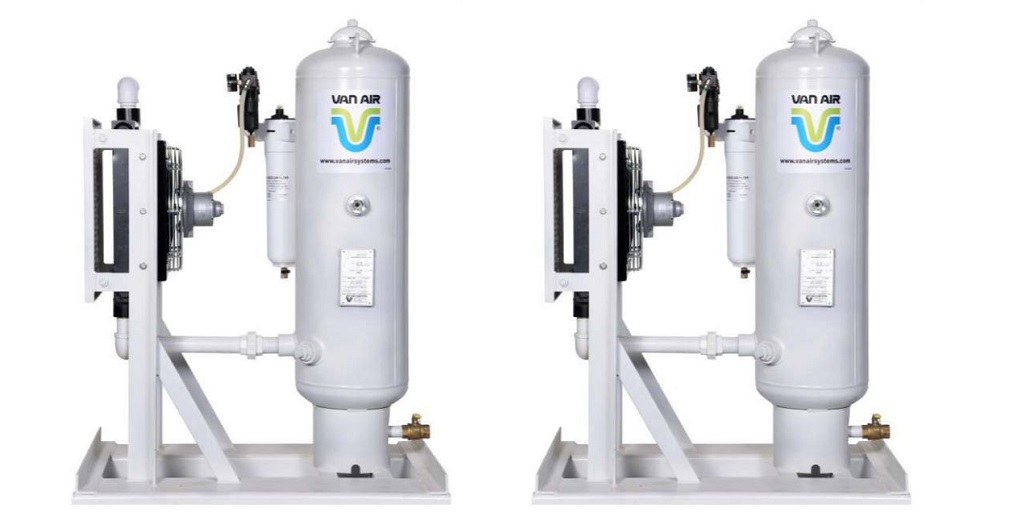
Portable compressed air dryers become indispensable when excess moisture transitions from a minor inconvenience to a direct threat to equipment performance, surface preparation, and project timelines. Commonly deployed alongside rental compressors on industrial and construction sites, these units address real operational risks, not abstract concerns, but issues that can delay projects and significantly increase costs.
Most teams only recognize their importance when moisture-related problems emerge: pressure loss, frozen valves, compromised coatings, or inconsistent equipment performance. In those moments, the dryer quickly becomes central to maintaining productivity and meeting project requirements.
The Essential Role of Portable Compressed Air Dryers
Fundamentally, a portable compressed air dryer is designed to remove water from hot, moisture-laden compressed air to ensure that it does not condense within downstream piping or equipment. While straightforward in principle, achieving consistent drying performance in harsh or variable environments—whether a winter pipeline job or a humid shipyard—requires robust engineering.
Refrigerated dryers lower the air temperature to remove condensed moisture and are suitable for general-purpose plant air. For applications requiring much lower pressure dew points, desiccant dryers with activated alumina or silica gel media are used. These systems can achieve dew points as low as –40°C or below, automatically cycling and regenerating desiccant beds to keep air dryness within the required range.
Where Portable Dryers Deliver Critical Value
Pipeline Construction and Commissioning
Pipeline operations frequently rely on high-capacity desiccant dryers to ensure dry air before pigging or commissioning activities. Moisture inside a pipeline can cause corrosion, promote hydrate formation, and undermine the reliability of inspection results. As a result, the air dryer becomes an integral part of the commissioning process. Crews continuously monitor dew point and system performance to verify compliance with project specifications.
Abrasive Blasting and Protective Coatings
In surface preparation and coating applications, even minimal moisture in the air supply can lead to flash rusting, inadequate surface profile, or coating adhesion failures, problems that often require costly rework. Many contractors deploy portable desiccant or deliquescent dryers, especially in field environments without ready access to power. The investment in a small air-drying unit is negligible compared to the cost of repairing coating failures on large structures or vessels.
Portable Solutions for Laboratory and Precision Equipment
Laboratories apply the same air-drying principles on a smaller scale. Instead of industrial drying skids, compact point-of-use dryers are installed near sensitive instruments such as gas chromatographs, thermal analyzers, and pneumatic valve manifolds. These devices cannot tolerate liquid water, oil mist, or particulate contamination.
Membrane dryers and small desiccant towers provide low flow rates but high purity levels, compensating for any degradation in air quality that occurs as compressed air moves through long piping networks. While the central air system supplies general utility air, point-of-use dryers deliver the ISO-rated dryness necessary for reliable data, stable sensor performance, and reduced maintenance.
Selecting the Right Technology and Managing Costs
Each drying technology serves a distinct purpose. Refrigerated dryers are efficient and cost-effective for environments with moderate humidity and temperatures. Desiccant dryers require a higher upfront and operational investment—due to heating requirements or purge air consumption—but they offer the reliability needed when product quality, test accuracy, or regulatory compliance is at risk.
Maintenance practices significantly influence both performance and operating costs. Neglected pre-filters can allow oil to contaminate the desiccant, while neglected after-filters can release desiccant dust into downstream equipment. These issues increase energy consumption, reduce dryer effectiveness, and accelerate equipment wear. Consistent filter replacement and monitoring are essential for sustaining performance and controlling operating expenses.
Organizations can avoid unnecessary rentals or incorrect equipment selection by consulting specialists such as Air & Vacuum Process, Inc. Expert guidance ensures that the chosen dryer aligns with required dew points, site conditions, operational demands, and budget constraints.
For more information about Silent Air Compressors and Natural Gas Dehydration Unit Please visit: Air & Vacuum Process Inc.