
Introduction to One of Africa’s Most Remarkable Wildlife Events
The Serengeti ecosystem hosts one of the most fascinating wildlife spectacles in the world. Each year, massive herds of wildebeest migrate across the plains in search of fresh grazing and water. During a specific period of this journey, thousands of newborn animals arrive within a short time. This event creates an extraordinary wildlife experience that attracts nature lovers, photographers, and safari travelers.
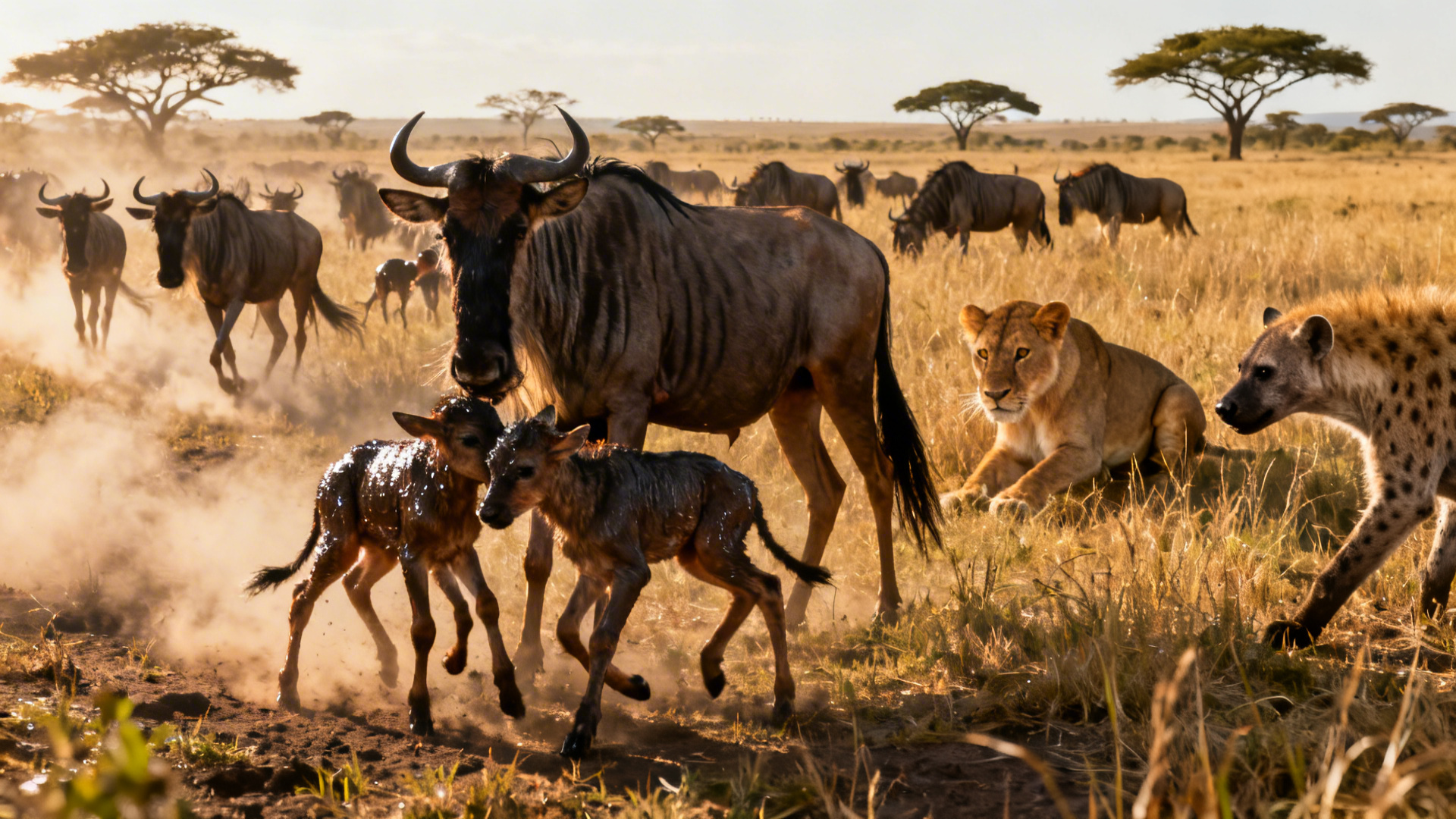
The open grasslands transform into a nursery filled with life and movement. Young animals take their first steps only minutes after birth while mothers guide them through the vast landscape. Predators remain nearby, waiting for opportunities, which creates dramatic scenes that highlight the balance of nature.
Travelers who visit the Serengeti during this period witness not only the beauty of new life but also the reality of survival in the wild. The experience offers insight into how animals adapt to environmental challenges and maintain the delicate ecosystem of the African savannah.
Understanding the Great Migration Cycle
The Great Migration follows a continuous circular movement through the Serengeti ecosystem and neighboring regions. More than a million wildebeest, along with zebras and gazelles, travel across the plains as they follow seasonal rainfall patterns. These animals depend on fresh grass for survival, so they move constantly in search of better grazing.
The journey begins in the southern Serengeti plains where fertile grasslands provide ideal conditions for grazing and reproduction. As rainfall patterns change, the herds gradually move northward through the Serengeti and into the Maasai Mara before eventually returning south again.
This constant movement supports the entire ecosystem. Predators follow the herds for food, while scavengers benefit from leftover prey. The migration also helps maintain healthy grasslands by preventing overgrazing in one location.
When the Calving Period Happens in the Serengeti
The calving period usually takes place between January and March in the southern Serengeti plains. During this time, the landscape provides nutrient-rich grasses that support pregnant wildebeest and newborn calves. The flat terrain also helps mothers spot predators from a distance.
Within a few weeks, hundreds of thousands of calves enter the world. Many newborns stand and walk within minutes of birth. This rapid development allows them to keep up with the moving herds and avoid danger.
Weather conditions play a major role in the timing of births. Rainfall encourages grass growth, which provides essential nutrition for nursing mothers and their calves. When conditions remain favorable, the plains become a safe and productive environment for new life.
The Incredible Birth Phenomenon of the Migration
The birth period during the Serengeti calving season creates one of the most extraordinary natural events on Earth. Around half a million wildebeest calves are born within just a few weeks. This synchronized birthing strategy helps increase the survival rate of the young animals.
Predators cannot hunt all newborn calves at once, so many young animals survive simply because of the overwhelming number of births. Nature uses this strategy to maintain the population of migrating herds despite constant predation.
Visitors who witness this stage of the migration often feel amazed by the speed and resilience of newborn calves. A calf can stand within minutes and run within hours. These abilities help them keep pace with the herd and avoid predators that patrol the plains.
Predators and the Reality of Survival
Predators play a crucial role in shaping the wildlife drama of the migration. Lions, cheetahs, hyenas, and leopards patrol the grasslands during this time because newborn calves offer easier hunting opportunities. These predators rely on the migration to sustain their populations.
The serengeti calving season creates intense predator activity across the plains. Lions often hunt in coordinated groups while cheetahs rely on speed and agility to capture prey. Hyenas patrol the landscape constantly and take advantage of any opportunity.
Although these scenes may appear harsh, they represent the natural balance of the ecosystem. Predators remove weak or vulnerable animals, which helps maintain the health of the migrating herds. This cycle of life and survival continues year after year across the Serengeti.
Wildlife Viewing Opportunities During the Calving Period
The serengeti calving season offers exceptional wildlife viewing opportunities for safari travelers. The open plains allow visitors to see large herds stretching across the horizon while newborn calves move beside their mothers.
Predator sightings increase during this time because carnivores remain active around the birthing areas. Travelers often witness lions resting after a hunt, cheetahs scanning the plains, or hyenas moving through the grasslands.
Birdlife also thrives in the region during this period. Vultures and other scavenger species gather near hunting areas, adding another dimension to the ecosystem. The combination of newborn animals, predators, and diverse wildlife makes this time one of the most exciting safari experiences in Africa.
Why Photographers Love the Calving Season
Wildlife photographers consider the serengeti calving season one of the best times to capture dramatic nature scenes. The southern Serengeti plains provide wide open landscapes with excellent visibility, which allows photographers to capture large herds and unique animal interactions.
Newborn calves create heartwarming moments as they learn to walk, run, and interact with their mothers. At the same time, predator encounters produce powerful images that tell stories of survival in the wild.
The lighting conditions in the Serengeti also enhance photography opportunities. Early morning and late afternoon sunlight creates warm tones across the plains, which highlight the beauty of the landscape and its wildlife.
Planning a Safari to Witness the Calving Season
Travelers who want to experience the serengeti calving season should plan their safari carefully. The southern Serengeti plains, including areas around Ndutu and the Ngorongoro Conservation Area, provide the best locations for viewing the birthing herds.
Safari operators often design special itineraries during this period to maximize wildlife sightings. Experienced guides track the movement of herds and position safari vehicles in areas where visitors can observe animals without disturbing them.
Comfortable safari lodges and mobile camps allow travelers to stay close to wildlife activity. Many accommodations offer guided game drives, photography opportunities, and educational experiences that help visitors understand the migration cycle.
The Ecological Importance of the Calving Period
The serengeti calving season supports the entire Serengeti ecosystem. The massive number of births helps maintain the population of migrating herbivores despite predation and environmental challenges.
Newborn animals also influence predator behavior and migration patterns. Lions, hyenas, and other carnivores depend on the calving season to raise their own young and sustain their populations.
In addition, the grazing behavior of wildebeest helps maintain the grassland ecosystem. As the herds move across the plains, they fertilize the soil and encourage new grass growth. This process benefits many other herbivore species that share the landscape.
A Unique Wildlife Experience for Safari Travelers
Many travelers consider the serengeti calving season one of the most rewarding safari experiences in Africa. The combination of new life, dramatic predator encounters, and vast migrating herds creates unforgettable moments in the wild.
Visitors gain a deeper understanding of nature as they observe the delicate balance between birth, survival, and predation. The Serengeti landscape becomes a living classroom where travelers witness the raw beauty of the natural world.
Safari journeys during this period offer more than wildlife viewing. They provide an opportunity to appreciate the complexity of ecosystems and the importance of protecting natural habitats. For many travelers, witnessing the birth of thousands of animals across the Serengeti plains becomes a once-in-a-lifetime adventure that remains unforgettable.