
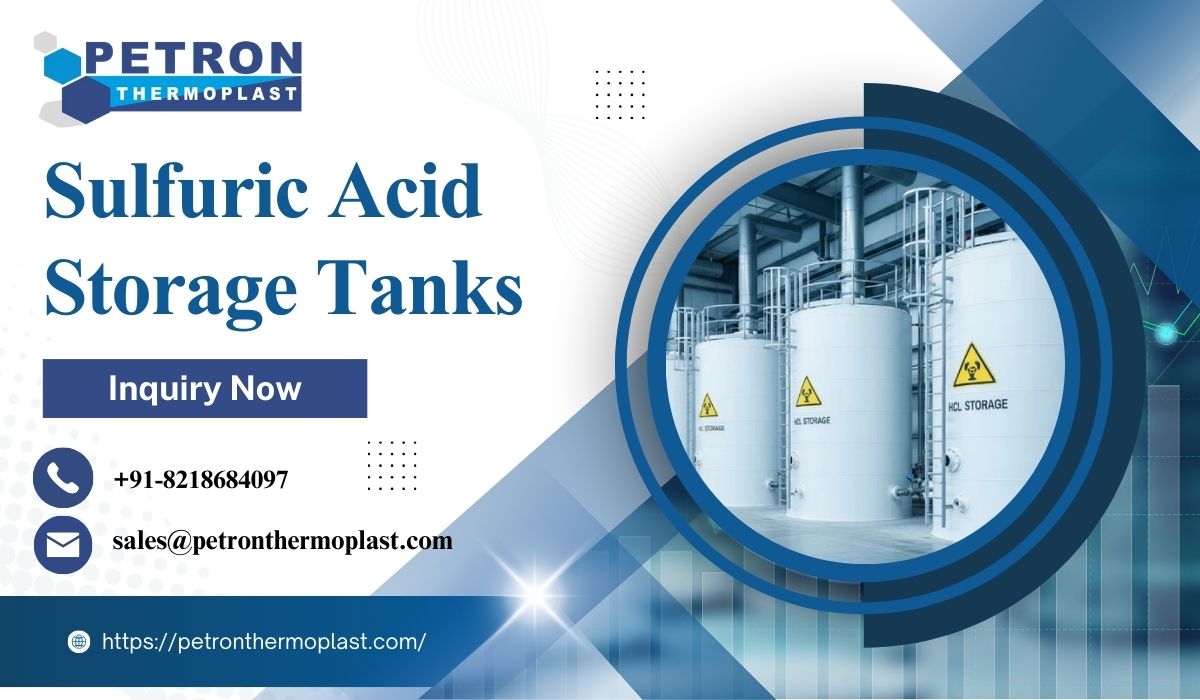
Sulfuric acid is one of the most widely used industrial chemicals in the world. From fertilizer production and chemical processing to water treatment and metal refining, this highly corrosive substance plays a major role in daily industrial operations. But with its extremely reactive nature, storing sulfuric acid safely is a challenge that industries cannot ignore.
This is where reliable sulfuric acid storage tanks come into play. Purpose-built to handle corrosive and aggressive chemicals, these tanks are engineered with advanced materials, robust design, and strict safety standards to ensure leak-proof, long-lasting, and secure chemical storage.
In this blog, we will explore the importance of using specialized sulfuric acid storage tanks, the best materials for storage, design considerations, industrial applications, and why choosing the right manufacturer is crucial for long-term operational safety.
Why Sulfuric Acid Requires Specialized Storage Tanks?
Sulfuric acid is one of the most reactive industrial chemicals, especially in high concentrations (98% and above). It reacts aggressively with metals, concrete, and certain plastics. If stored improperly, it can cause:
- Severe corrosion
- Contamination of the acid
- Tank failure or leakage
- Risk of fire or explosion
- Environmental hazards
Best Materials for Sulfuric Acid Storage Tanks
Selecting the right material is the most important step in designing a reliable storage solution. Here are the top materials commonly used:
- FRP (Fiber Reinforced Plastic) Tanks
FRP is widely preferred for sulfuric acid due to its excellent corrosion resistance. These tanks are engineered using resin systems compatible with high-concentration acids.
Benefits of FRP Tanks:
- Exceptional corrosion resistance
- High tensile strength
- Customizable shapes and sizes
- Long service life
- Lightweight and easy to install
- HDPE (High-Density Polyethylene) Tanks
HDPE is one of the most cost-effective materials for sulfuric acid storage.
Benefits of HDPE Tanks:
- Superior chemical resistance
- Seamless construction
- Impact resistant
- Affordable and low-maintenance
- PP (Polypropylene) Tanks
Polypropylene provides strong resistance to acids and alkalis.
Benefits:
- Lightweight
- Chemical-resistant
- Suitable for moderate temperatures
- Long-life performance
- PVDF (Polyvinylidene Fluoride) Lined Tanks
For extremely high concentrations and higher temperatures, PVDF-lined tanks ensure maximum corrosion resistance.
Benefits:
- Withstands aggressive acids
- Very low permeability
- High temperature resistance
- Rubber-Lined Steel Tanks
Used in applications requiring structural strength and chemical protection.
Benefits:
- High mechanical strength
- Long service life
- Suitable for large-capacity storage
Design Considerations for Sulfuric Acid Storage Tanks
A reliable sulfuric acid tank isn’t just about choosing the right material. Proper design plays an equally crucial role. Important factors include:
- Tank Shape and Geometry
- Vertical cylindrical tanks are preferred for reduced environmental exposure.
- Cone bottoms are used for easy drainage and cleaning.
- Venting Systems
Sulfuric acid releases vapors, especially at high temperatures. Tanks must include:
- Proper vent pipes
- Fume scrubbers
- Pressure relief valves
These components prevent pressure build-up and ensure safe operation.
- Secondary Containment
A leak containment basin is mandatory in industrial plants to capture accidental spills. Materials include:
- FRP containment
- HDPE liners
- Concrete bunds with chemical-resistant coating
- Temperature Control
Sulfuric acid reacts differently at changing temperatures. Tanks may require:
- Cooling systems
- Insulation
- UV protection
- Fittings and Accessories
Sulfuric acid tanks often include:
- Level indicators
- Sampling nozzles
- Manways
- Chemical-resistant valves and fittings
Industrial Applications of Sulfuric Acid Storage Tanks
Sulfuric acid is used across a wide range of industries, and each requires reliable storage:
- Chemical Manufacturing
Used in producing detergents, dyes, paints, and other chemicals.
- Fertilizer Production
Key ingredient in manufacturing phosphoric acid and fertilizers.
- Water Treatment Plants
Used for pH control and coagulation processes.
- Petroleum Refining
Important for alkylation and hydrocarbon processing.
- Metal Processing
Used in pickling, cleaning, and ore concentration.
- Pharmaceutical and Food Industries
Used in controlled processes under precise storage conditions.
In all these sectors, safe and high-quality storage tanks help maintain uninterrupted operations and avoid safety hazards.
Benefits of Reliable Sulfuric Acid Storage Tanks
Investing in a reliable storage tank ensures long-term operational efficiency. Key benefits include:
- Maximum Chemical Safety
Prevents leaks, spills, contamination, and workplace hazards.
- Long Service Life
Corrosion-resistant tanks minimize wear and tear over time.
- Low Maintenance Requirements
High-quality tanks are easier to clean and maintain.
- Cost Savings
Reduces downtime, accidents, and replacement costs.
- Compliance with International Safety Standards
Helps industries meet OSHA, EPA, and local regulations.
- Efficient Storage and Distribution
Supports large-capacity storage while ensuring smooth supply chain flow.
Why Choosing the Right Manufacturer Matters?
Working with an experienced manufacturer ensures:
- Expert design guidance
- Material selection based on acid concentration
- Custom tank fabrication
- Quality testing (hydro test, leak test, UV test)
- On-site installation support
- After-sales service and maintenance
Why Petron Thermoplast Is a Trusted Supplier of Sulfuric Acid Storage Tanks?
Petron Thermoplast specializes in supplying high-quality, corrosion-resistant sulfuric acid storage tanks designed for harsh chemical environments. With years of experience in industrial plastic fabrication, we provide:
- FRP, HDPE, PP, and PVDF-lined tanks
- Custom tank design tailored to chemical concentration
- Testing and certification
- Robust construction for long-term durability
- Global supply capabilities
From small plants to large-scale chemical industries, Petron Thermoplast delivers reliable and safe storage solutions that meet international quality standards.
Conclusion
Sulfuric acid is a highly corrosive and hazardous chemical that requires proper handling and long-term storage solutions. Reliable sulfuric acid storage tanks—built with materials like FRP, HDPE, PP, rubber linings, or PVDF—ensure complete safety, operational efficiency, and long service life for industrial plants.
By focusing on the right tank material, proper design features, and professional manufacturing support, industries can protect their operations from corrosion, leaks, and maintenance issues. For secure, durable, and customized sulfuric acid storage tank solutions, partnering with a trusted manufacturer like Petron Thermoplast ensures performance, reliability, and peace of mind.