
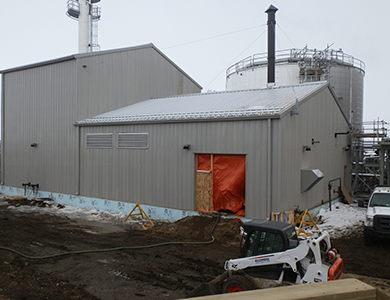
I’ve spent fifteen years staring at blue prints and dodging swinging cranes. If you want a polished sales pitch, go talk to a guy in a suit who has never seen a torque wrench. But if you want to know why metal buildings are the only sane choice for a project in Canada, listen up. I’m tired of seeing folks get fleeced by cheap kits that fold like a lawn chair the second a real storm hits.
The smell of cutting oil and the deafening rattle of an impact driver—that’s my office. When we talk about a steel building Alberta style, we aren’t talking about a hobby shed. We’re talking about structures that have to survive -40°C winters and winds that could strip the paint off a truck.
Why Steel? Because Wood Rot Sucks.
Let’s be real. Wood is for furniture. For a serious shop or warehouse, wood is a headache waiting to happen. It warps. It rots. Termites think it’s a buffet. Steel doesn’t care. A well-engineered metal building is a beast. It stands straight for decades. No sagging rooflines. No “oops, the wall is leaning” five years in.
I remember a job back in ’09. The client insisted on a pole barn to save a few bucks. Three years later, the frost heave turned his floor into a skate park and the doors wouldn’t shut. Total disaster. We tore it down and replaced it with a real rigid-frame setup. He should have listened the first time.
The Alberta Factor: Snow and Wind
In Canada, the environment is trying to kill your building. Period. You need a design that handles “heavy” snow. Not the dusting they get down south, but the three-foot-thick, wet-cement kind of snow. This is where Zentner Steel Buildings comes in. They get the local codes. They don’t guess.
Here’s a tip from the trenches: check your base. If your concrete guy cuts corners, your steel won’t line up. I’ve seen guys try to shim a two-inch gap because the bolts were off. Absolute mess. But fixable, if you catch it early. Get a laser level. Use it. Love it.
Heat is Everything
Don’t skimp on insulation. I can’t scream this loud enough. A bare metal building is a giant refrigerator in January and a pizza oven in July. You want R-value? Go thick. Spray foam is great, but high-performance fiberglass blankets with a vapor barrier are the standard for a reason. They work.
Ever been inside a shop when the “sweat” starts? Condensation dripping from the purlins like rain? That’s what happens when you ignore thermal breaks. It ruins your tools and rusts your gear. It’s disgusting. Do it right the first time so you aren’t shivering while you work on your rig.
Speed vs. Quality
People love steel because it goes up fast. And it does. It’s like giant LEGO for grown-ups. But fast shouldn’t mean sloppy. I see “crews” slapping panels together without tape sealant on the laps. Want a leak? That’s how you get a leak.
Watch your fasteners. Over-torque them and you crack the washer. Under-torque them and they leak. You need that “just right” bulge on the neoprene. It takes a feel. You don’t get that feel from a YouTube video; you get it from driving ten thousand screws until your wrist aches.
Aesthetics? Yeah, It Matters
Don’t make your building look like a prison block. Unless you want that. Modern coatings are insane now. We have finishes that look like wood or stone but last forty years. You can add lean-tos, mezzanines, or massive overhead doors for your heavy equipment.
Customization is the name of the game. I once helped a guy build a “man cave” that was basically a 5,000-square-foot hangar with a bar and a car lift. It was glorious. The point is, metal buildings give you clear-span space. No pillars in the way. Just wide-open room to breathe and work.
The Cost Trap
Stop looking at the lowest price per square foot. It’s a trap. The “cheap” guys leave out the trim, the gutters, or the proper snow load ratings. By the time you add what you actually need, you’re paying more than the quality bid.
Anyway, I always tell people to look at the long game. Insurance is cheaper on steel. Maintenance is almost zero. No painting every five years. Just a quick power wash and you’re good. That’s money back in your pocket.
My On-The-Job Observation
Last month, I was out near Red Deer. A neighbor’s wooden shed had its roof caved in from the weight of the spring melt. Right next to it? A steel building Alberta built, standing there like nothing happened. The owner was inside, drinking coffee, working on his tractor. That’s the difference.
Steel is honest. It tells you exactly what it can handle. It doesn’t hide rot behind a layer of siding. It’s the backbone of Canadian industry for a reason. If you’re building in Canada, you’re building for the next generation. Don’t leave them a pile of toothpicks.
Final Thoughts from the Dirt
Building isn’t about shiny brochures. It’s about grit. It’s about making sure that when the wind howls at midnight, you aren’t worried about the roof. Invest in a partner like Zentner Steel Buildings who knows the dirt as well as the drawings.
Get your permits in order. Hire a crew that actually wears hard hats. And for the love of all that is holy, don’t forget the floor drains. You’ll thank me later when you’re melting off a winter’s worth of slush from your truck. Metal buildings aren’t just structures; they are tools. Use the right tool for the job.
FAQ: Common Questions About Metal Buildings
How long does it take to get a steel building on site? Usually, you’re looking at 12 to 16 weeks for engineering and fabrication. If someone promises it in three weeks, they’re probably selling you a “one size fits all” kit that won’t meet your local snow load.
Can I build a metal building myself? If you’re handy and have a few buddies and a telehandler, sure. But don’t mess up the pier placement. If the foundation is off by half an inch, nothing will bolt together and you’ll be hating life.
Is condensation a major problem in metal buildings? Only if you’re lazy with insulation. Use a proper vapor barrier and ensure you have enough ventilation. If the air can’t move, moisture stays. Simple physics.
What is the “clear span” advantage? It means no interior pillars. You get 100% usable space. This is why hangars and riding arenas use steel. You can move a combine or a plane around without hitting a post.
Does a steel building Alberta project need special permits? Yes. Every municipality has different rules for snow and wind loads. Never start digging until you have that paper in your hand.