
AI Overview
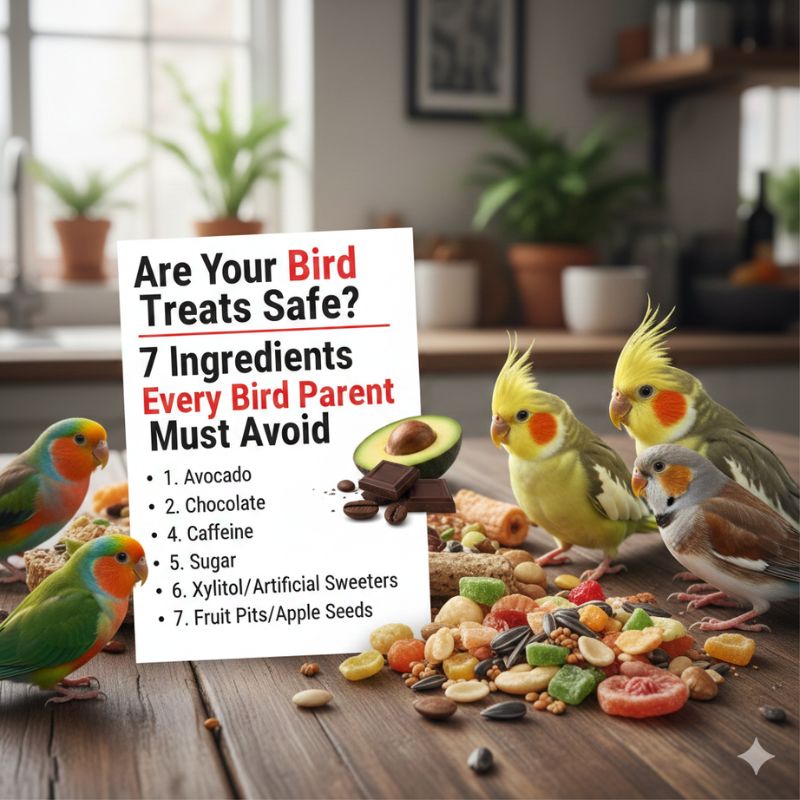
This guide explains the 7 dangerous ingredients commonly found in bird treats that every bird parent must avoid. Whether you’re buying parakeet treats, cockatiel treats, or searching for the best bird treats for overall health, understanding harmful additives is essential. Learn what to avoid, why these ingredients are dangerous, and how to choose healthier alternatives for your feathered companion.
Introduction
As bird parents, we always want to reward our feathered friends with delicious bird treats—but not all treats are created equal. Many store-bought options contain hidden ingredients that may look harmless but can harm your bird’s digestive system, liver, feathers, or even long-term health.
Whether you love buying parakeet treats, cockatiel treats, or premium snacks labelled as the best bird treats, it’s crucial to check the ingredient list before feeding anything to your pet.
Below are 7 toxic or unsafe ingredients you must keep out of your bird’s diet.
1. Artificial Colors & Synthetic Dyes
Brightly colored treats may look attractive, but those colors often come from harmful dyes like Red 40, Yellow 5, or Blue 1.
Birds are extremely sensitive to chemicals, and these dyes can cause:
- Allergic reactions
- Behavioral changes
- Digestive issues
- Feather picking
When choosing bird treats, go for naturally colored options made with fruits, herbs, or vegetables.
2. Added Sugars & Sweeteners
Sugar-coated seeds or fruity sticks may taste great but can cause:
- Obesity
- Diabetes-like symptoms
- Hyperactivity
- Bacterial or yeast infections
Some parakeet treats and cockatiel treats use honey or molasses to bind seeds together. While small amounts may be okay, excessive sugars are dangerous, especially for tiny birds with fast metabolisms.
3. Artificial Preservatives
Chemicals like BHA, BHT, and ethoxyquin are sometimes used in cheaper bird snacks to increase shelf life.
These preservatives are known to:
- Affect liver health
- Influence hormone balance
- Cause long-term organ stress
If you’re searching for the best bird treats, always choose preservative-free options or treats preserved naturally with vitamin E.
4. Salt & High-Sodium Ingredients
Birds require almost no salt in their diet. Even small quantities can be harmful, leading to:
- Dehydration
- Kidney damage
- Heart problems
Avoid treats flavored with:
- Salt
- Soy sauce
- Salted seeds
- Chips or crackers
Some budget cockatiel treats and mixed snacks contain hidden sodium—always read labels carefully.
5. Artificial Flavors
Many processed bird treats use artificial fruit or nut flavors that contain chemical compounds. These synthetic flavors may lead to:
- Appetite loss
- Respiratory irritation
- Internal inflammation
Natural flavoring should always come from real foods like apple, millet, berries, or herbs.
6. Seeds Glued with Sugary Binders
Seed sticks are popular, especially as parakeet treats, but the glue often contains:
- Corn syrup
- Honey
- Molasses
- Gelatin
These binders can cause obesity, crop infections, or digestive imbalance. Birds also tend to overeat seed-based treats, skipping healthier options.
Look for air-baked seed clusters instead of sugar-glued versions.
7. Peanuts Prone to Mold (Aflatoxins)
Peanuts, found in many so-called best bird treats, can carry aflatoxins, a toxic mold harmful to birds. These toxins can cause:
- Liver damage
- Immune suppression
- Sudden illness
If you want to include peanuts, choose only:
- Human-grade peanuts
- Mold-tested nuts
- Reputable brands with strict quality control
How to Choose Safe and Healthy Bird Treats
Keeping your bird safe doesn’t mean avoiding treats altogether—just choosing wisely.
Here’s what to look for:
✔ Natural, whole ingredients
Such as fruits, vegetables, herbs, and whole grains.
✔ Organic or preservative-free labels
Reduces exposure to chemicals.
✔ Species-specific treats
What works for parakeet treats may not be suitable for cockatiel treats.
✔ Low sugar, low fat
Supports long-term health and balanced nutrition.
✔ Reputable brands
The best bird treats usually come from trusted suppliers with strict safety standards.
Safe Treat Alternatives Your Bird Will Love
Try offering these healthy goodies instead of processed snacks:
- Fresh fruits (apple, papaya, berries)
- Vegetables (carrot, spinach, broccoli)
- Millet sprays (great for training!)
- Organic seed mixes
- Bird-safe herbs
These natural options provide flavor, enrichment, and nutrition—without harmful additives.
Final Thoughts
Treats should complement, not replace, a balanced diet. By eliminating harmful ingredients and choosing safer options, you ensure your pet bird enjoys delicious snacks that help—not harm—their health. Selecting the best bird treats means reading labels, understanding what’s safe, and putting your bird’s well-being first.