
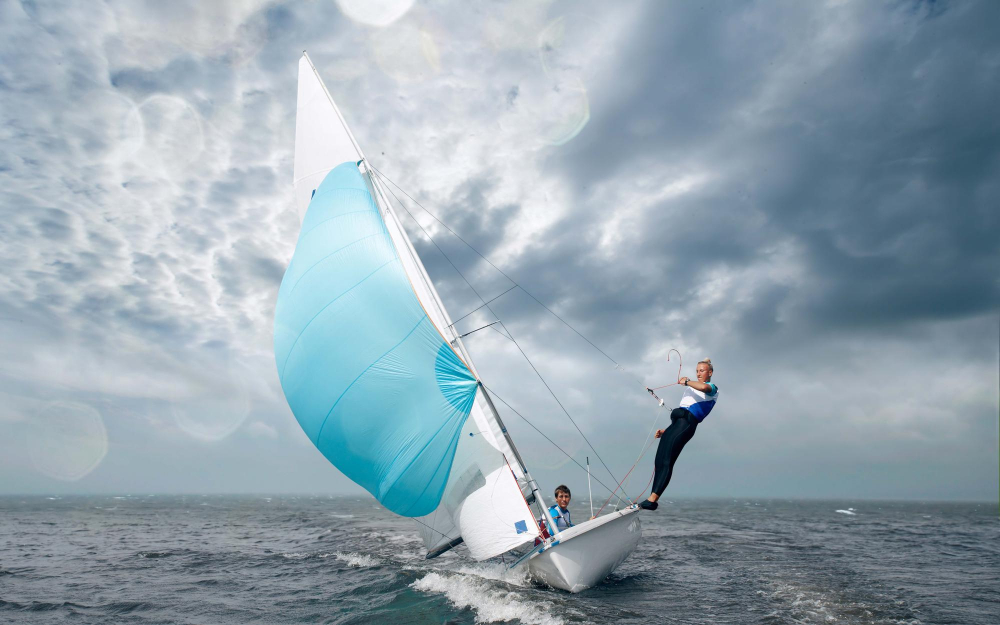
In the world of sailing, few sights rival the power and beauty of a brightly colored sail billowing gracefully above a boat cutting through open water. Among these sails, the Asymmetrical Spinnaker has transformed downwind performance, giving sailors unmatched versatility and speed. This advanced sail design, popular among cruisers and racers alike, blends the best attributes of traditional spinnakers and gennakers into a tool that makes sailing faster, smoother, and easier to control.
Understanding the Asymmetrical Spinnaker
At its core, the Asymmetrical Spinnaker is a large, lightweight sail that’s designed for sailing off the wind — that is, with the wind coming from behind or from the side. Unlike traditional symmetrical spinnakers, which require a complex network of sheets, poles, and guys, the asymmetrical version attaches directly to the boat’s bow or bowsprit. Its design creates a distinctive curved shape that catches air efficiently, propelling the vessel forward with both speed and balance.
Sailmakers craft these specialized sails using durable, lightweight fabric — often nylon or polyester — to handle various wind angles and pressures. The sail’s design typically features a longer luff (the forward edge) and a shorter leech (the trailing edge), creating an aerodynamic curve that behaves more like an airplane wing than a parachute.
Performance and Handling Advantages
One of the primary benefits of the Gennaker is ease of use. Traditional spinnakers demand constant trimming and coordination between crew members, especially when gybing or changing course. With its more forgiving design, the asymmetrical version simplifies maneuvering dramatically, making it perfect for short-handed crews or solo sailors.
Because of its shape, it performs best at apparent wind angles of 90 to 160 degrees. This makes it especially useful for reaching and broad-reaching conditions, where sailors can maintain high speeds without constantly adjusting rigging. Cruising boats fitted with this sail often experience smoother rides and less heel, while racers appreciate its consistent power delivery downwind.
Additionally, modern Gennakers are easier to launch and douse. Many sailors use snuffers, socks, or furlers to simplify deployment and retrieval, especially when wind conditions are variable. This ease of control encourages more frequent use — even on leisurely afternoon sails — instead of saving it only for competitive regattas.
Rigging and Setup Essentials
Setting up an Asymmetrical Spinnaker properly involves careful attention to rigging. The sail is typically tacked down to a bowsprit, which extends from the bow to keep the sail clear of the forestay. Some sailors use furling systems for convenient handling, while others prefer traditional tack lines and sheets.
Successful deployment requires clear deck organization. Sheets should run freely through blocks without tangles, and the halyard should raise the sail smoothly. For sailors using Lazy Jacks or specialized covers, such as Harken Canvas or Sunbrella-made mainsail covers, proper stowage ensures the sail remains protected when not in use. These covers are built with reinforced seams and triple stitching to withstand sun, salt, and friction—factors that can shorten a sail’s lifespan if left unchecked.
Materials and Design Considerations
Choosing the right Asymmetrical Spinnaker involves balancing sail area, fabric weight, and intended use. Lighter fabrics work best in calm to moderate winds, allowing the sail to fill easily, while heavier fabrics handle stronger gusts without stretching.
Color and fabric preferences also play a role. Many manufacturers offer durable Sunbrella or Outdura woven acrylic for sail covers and storage solutions. These fabrics resist UV exposure and moisture, protecting sails like the Asymmetrical Spinnaker from weather damage. For example, a bespoke mainsail cover — such as those manufactured by Harken Canvas — provides tailored protection through double-stitched seams and precise fit, ensuring the sail’s material remains intact and ready for its next outing.
Care, Maintenance, and Longevity
A well-maintained Gennaker can serve for years, provided it’s cleaned, dried, and stored properly. After use, sailors should rinse the sail with fresh water to remove salt residue and allow it to dry fully before folding. When stowed, it should never be compressed tightly, as pressure can damage the delicate fibers.
Using quality covers, such as FX Sail Covers, helps protect the spinnaker from UV rays and abrasion. These covers often feature adjustable turnbuckle fasteners and reinforced stress points to ensure a secure fit over the sail and boom. Proper coverage not only extends the sail’s life but also maintains its crisp aesthetic and aerodynamic integrity.
Safety and Seamanship Tips
Operating an Gennaker requires awareness and precision, particularly as wind angles shift. Over-trimming can force the sail to collapse or luff, while under-trimming reduces performance. The goal is to strike a balance where the sail breathes — slightly curling along the luff without flogging excessively.
Sailors should always practice dousing and gybing techniques in moderate conditions before attempting them in stronger winds. Using a snuffer or sock adds an extra layer of safety, allowing quick sail reduction in emergencies. In multi-crew setups, clear communication ensures synchronized movements when trimming or adjusting lines.
The Role in Modern Sailing
The Gennaker has redefined how sailors approach downwind performance. Whether aboard a sleek racing yacht or a casual weekend cruiser, it brings both thrill and efficiency. Its versatility bridges the gap between performance sailing and comfort, offering a sail that’s as user-friendly as it is powerful.
Modern boat designs increasingly integrate fittings for asymmetrical sails right from the factory. This highlights a growing recognition of the sail’s value not just for speed, but for the sheer joy of sailing with graceful control. When paired with high-quality accessories such as mainsail covers and Lazy Jack systems, sailors achieve a streamlined, low-maintenance experience that enhances both performance and longevity.
Final Thoughts
For sailors seeking a dynamic addition to their sail inventory, the Asymmetrical Spinnaker stands as a modern marvel of design and practicality. It offers the ideal balance between high-performance structure and user-friendly handling, encouraging sailors of all skill levels to explore new angles, winds, and horizons. When treated with care — protected by durable covers and maintained with attention — this sail opens a new chapter of efficient and exhilarating sailing experiences across open waters.