
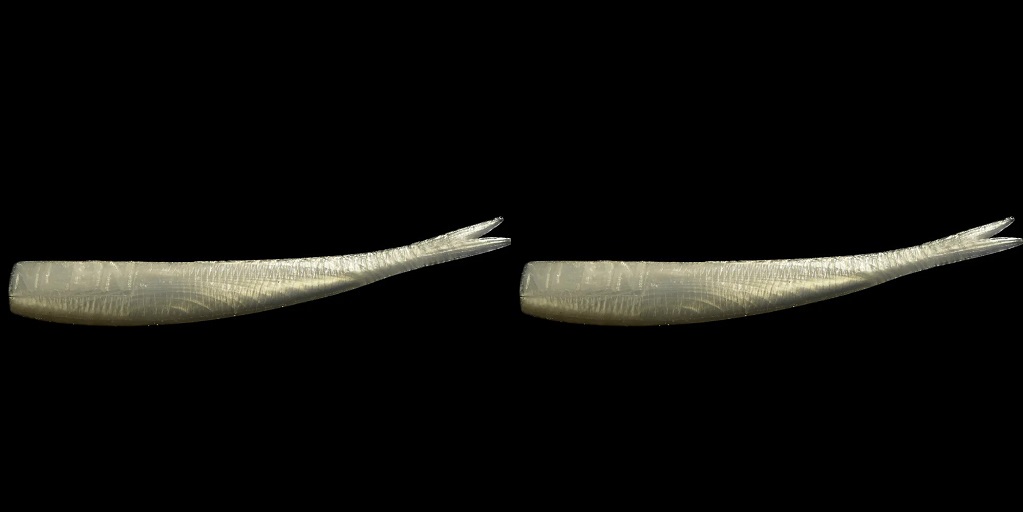
Soft plastic baits are every ounce as effective in saltwater as they are in freshwater, and in some instances, they have advantages over other conventional lures.
The vast majority of soft plastics are impregnated with effective scents, and some of them exhibit lifelike movement that no other jig or plug can replicate.
Needless to say, they work, which is why fishermen use them. All the same, it benefits the angler to have some know-how to fish them effectively. Here are some tips.
How to Rig Them
There’s more than one way to rig a soft plastic in saltwater, as in freshwater. Flukes can be fished weightless on a wide gap hook; trailers can be fished on jig heads, and so on and so forth.
Still, the main trick is to rig the plastic right, for success. Plastics that are bunched up or kinked on the hook will not exhibit a realistic presentation and while they will still get hit, may be passed up some of the time.
Make sure that your plastic is not twisted around the hook and has no unnatural kinks or bends in it. Also, if rigging on a jig head and it has a barb or retainer to “grip” the plastic, make sure you use it; it’s there for a reason and will help prevent the plastic from fouling.
How to Fish Them
Knowing how to fish soft plastics is just as important as knowing how to fish a popper or a slow pitch jig. Here are some pointers:
- Find structure and cast to that. Structure is what holds most fish.
- When you present the lure, let it drop for a good 5 seconds. On that initial drop is often when you will get thumped.
- Try different cadences when working the lure; you can slash the lure, fast or slow twitch it, force it to dart side to side, bounce it off the bottom or jig it vertically.
- When fishing soft plastics in saltwater, give the lure frequent pauses. These moments of inaction drive predators mad and often induce a strike.
To Make Them Last Longer…
After you fish a plastic, remove it from the hook and keep it in the plastic pouch it came in. For one thing, this will help prevent the hook or jig on which you fished it from rusting.
For another, it will help ensure that the lure itself is soaked in the oil/liquid it came in, helping to prevent it from drying out, losing its shape and action, and becoming brittle.
Once They Get Shredded
The one drawback to soft plastic lures is that they are not as durable as plugs and metals, and after a strike or two, that lure will be torn up.
If the lure has a tear or a hole, you can repair that with a flexible glue. Another tactic is to briefly submerged damaged soft plastics into boiling water before removing them. The hot water can help seal up the tears and reform the plastic.
What Are Some Popular Saltwater Soft Plastics?
There are numerous highly effective saltwater soft plastic brands and patterns. Among the most popular of these are:
- Berkeley Gulp soft plastics
- NLBN lures
- Zoom soft plastics like flukes
- Z-Man soft plastics, which are noted for their durability
- O.A. soft plastics
- Storm WildEye and Tsunami Swim Shad
- Felmlee Eels
- Red Gill Originals
- Hogy Paddletails
Of course this is just a short list, and nothing more than a place to start, as there are many other effective soft plastics out there for saltwater fishing.
Where to Stock Up on New Lures
Whether you’re here to stock up on NLBN lures or are interested in learning what else is available, you’ll find what you’re looking for at Johnny Jigs. Check out their website and if you have any questions, get in touch with them directly.
For more information about Split Ring Pliers and Grouper Jigs Please visit: Johnny Jigs.